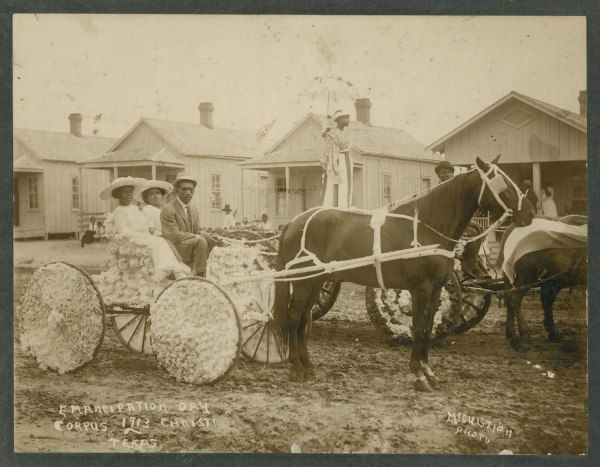
The attached photo shows two women and a man at a Juneteenth celebration in Corpus Christi, Texas, in 1913. For the occasion, they are not only wearing their finest clothes but also sitting in an elegantly decorated horse-drawn carriage. This picture of a flower-festooned vehicle was among several taken by George McCuistion (1878-1928) at that... Continue Reading →
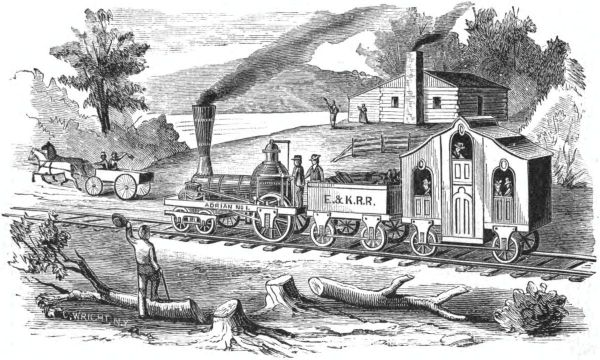
April 22, 1833 The Erie and Kalamazoo Railroad (E&KRR) was chartered in the then-Territory of Michigan, which became a state in 1837. This railroad ultimately ran from what was at that time Port Lawrence, Michigan (now Toledo, Ohio) near Lake Erie to the village of Adrian, Michigan, on the River Raisin to the northwest. E&KRR was... Continue Reading →
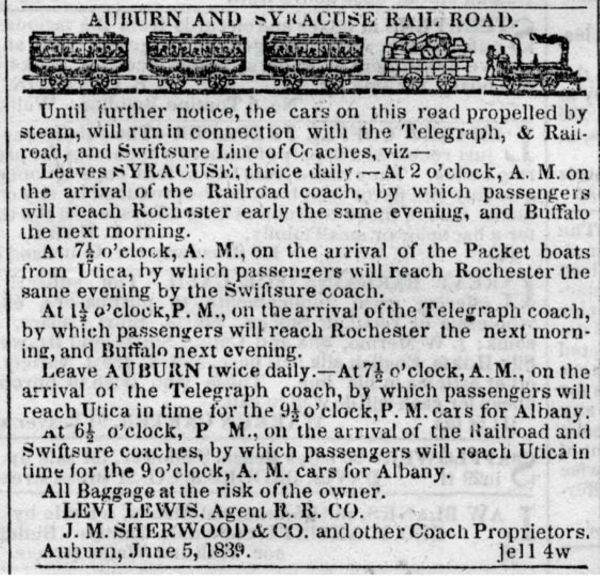
January 8, 1838 One of the first railroads to be built in New York -- and the entire northeastern United States, for that matter -- first went into service. The Auburn and Syracuse Railroad (A&S) was constructed to provide easy access for the village (present-day city) of Auburn and the factories in that area to the... Continue Reading →
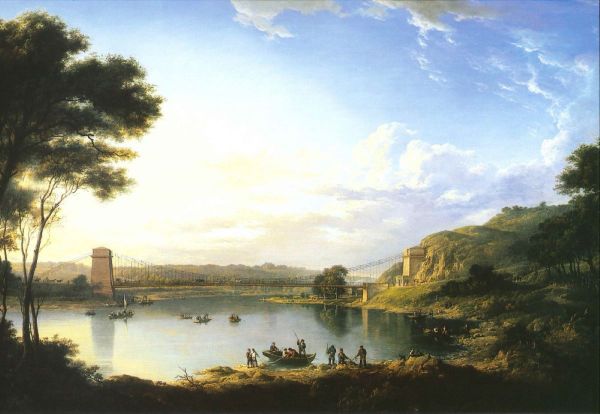
July 26, 1820 A dedication ceremony was held for the Union Chain Bridge spanning the River Tweed and serving as a link between the village of Horncliffe in England and the parish of Fishwick in Scotland. At the time of its opening, this structure – with a length of 449 feet (137 meters) – was... Continue Reading →
On June 19, 1865 -- nearly two-and-a-half years after President Abraham Lincoln issued the Emancipation Proclamation -- enslaved Americans in Galveston, Texas, at long last received official notification that they were free from bondage. That historic day is now called Juneteenth, a portmanteau of “June” and “nineteenth.” The Emancipation Proclamation applied only to those states... Continue Reading →
May 21, 1901 In response to the steady increase of automobiles on its roads, the state of Connecticut enacted a pioneering speed limits law. This law required that automobiles travel no faster than 12 miles (19.3 kilometers) per hour within cities and 15 miles (24.1 kilometers) per hour on roads elsewhere. The law also required automobile drivers... Continue Reading →
April 24, 1949 It was the end of a transportation era in San Diego, California, at 5:45 that morning. This was when streetcar no. 446 of the San Diego Transit Company (known as the San Diego Electric Railway up until September of the previous year) completed its final run by pulling into the car barn... Continue Reading →
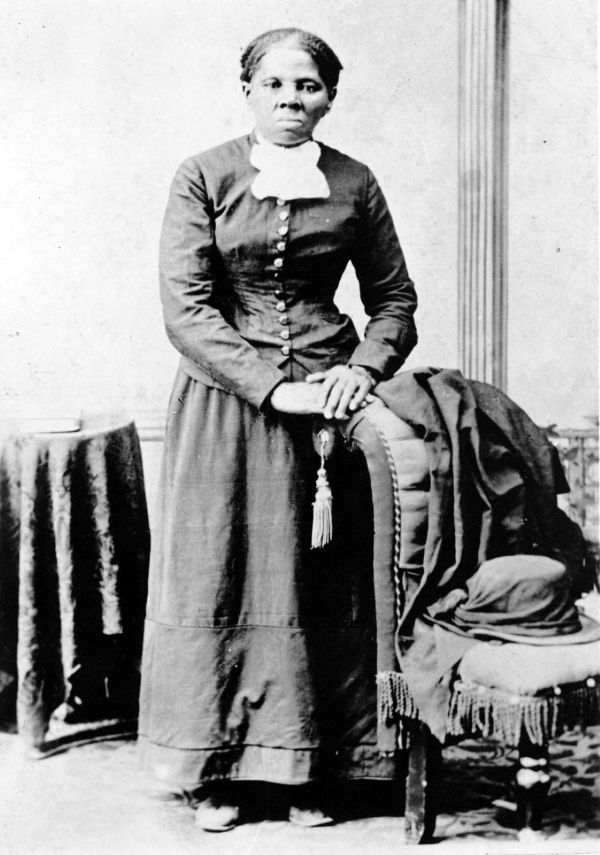
Harriet Tubman escaped from slavery in Maryland in 1849. She subsequently risked her life to help others from that state likewise escape to freedom. As an Underground Railroad conductor in those years prior to the American Civil War, Tubman led about 70 enslaved people to the North. In addition, it has been estimated that Tubman... Continue Reading →
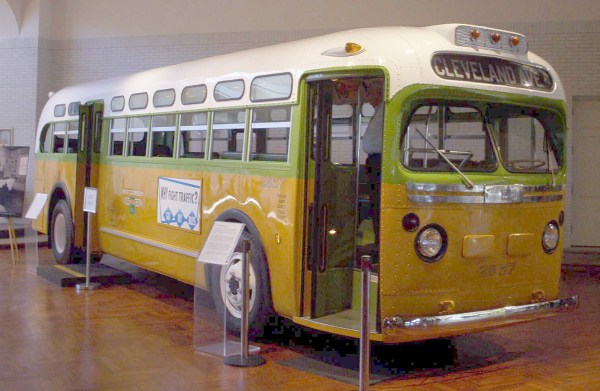
The Montgomery Bus Boycott, along with being a transportation-oriented protest against racial segregation practices in Alabama’s capital city, was a pivotal chapter in the larger civil rights movement in the United States. At the time of this boycott during the mid-1950s, longstanding Jim Crow laws that enforced segregation throughout the American South were very much... Continue Reading →
May 16, 1961 Automotive manufacturer Richard J. Corbitt died in Henderson, North Carolina, at the age of 88. Corbitt had first established residence in that community in 1894, and he entered the transportation business five years later with the launch of the Corbitt Buggy Company. For several years, this company built horse-drawn buggies for hauling agricultural... Continue Reading →