A new main line railway in the eastern region of present-day Germany began operations. The railway line was constructed within the Kingdom of Prussia to connect the cities of Berlin and Görlitz. (Just over four years after the railway made its debut, Prussia and several other independent states came together to form the German Empire.)... Continue Reading →
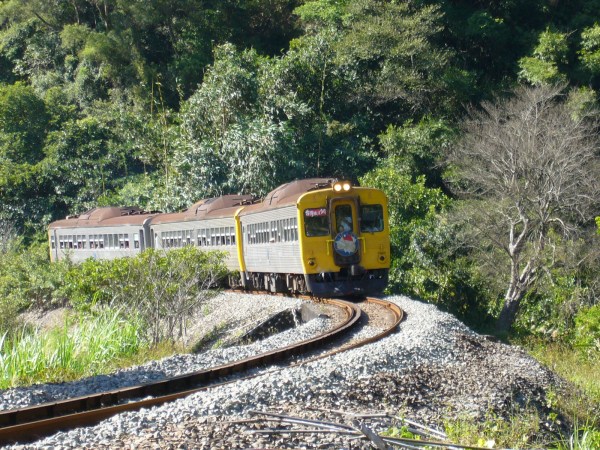
The Neiwan Line, a railway branch line in northwestern Taiwan, was completed. The line, which is run by the Taiwan Railways Administration, covers approximately 17 miles between Hsinchu City and the village of Neiwan in Hengshan Township. Notwithstanding its status as a branch line, the Neiwan Line was built to standards similar to those of... Continue Reading →
On New Zealand’s South Island, a railway between Christchurch and Dunedin made its official debut. “The opening of the Dunedin and Christchurch line, the great event of connecting the two commercial cities of the South Island by means of the iron horse, was consummated today,” announced the Wellington –based Evening post in its coverage of... Continue Reading →
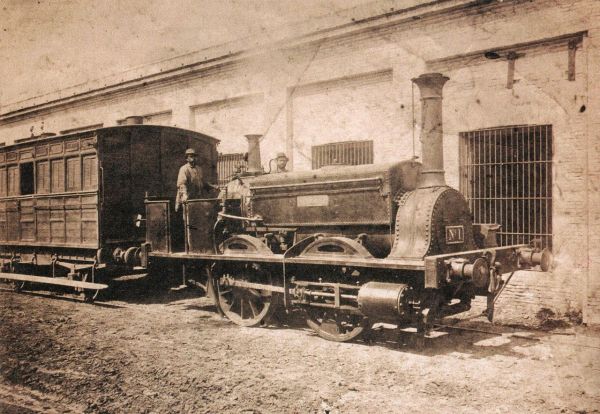
The Buenos Aires Western Railway was inaugurated in what was then the State of Buenos Aires. This railway was the first one to be built anywhere in present-day Argentina and helped set the stage over the next several decades for an extensive public transit network in that part of the world. (The republic known as... Continue Reading →
Inoue Masaru, who became known as the Father of the Japanese Railways for his contributions to transit services, was born in the city of Hagi on Japan’s main island of Honshu. In 1863, Inoue – along with four other students from the region of Honshu that was then known as the Chōshū Domain (a feudal... Continue Reading →
A new railway bridge, crossing the Rhine between the city of Waldshut (present-day Waldshut-Tiengen) in the Kingdom of Württemberg (now part of southwestern Germany) and the community of Koblenz in northern Switzerland, was officially opened. The Waldshut-Koblenz Rhine Bridge, which was built to carry the Turgi-Koblenz-Waldshut Railway over one of Europe’s major rivers, had the... Continue Reading →
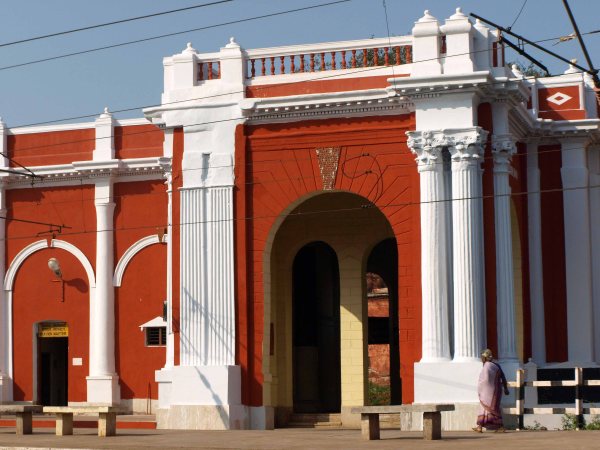
The first passenger railway train in eastern India (at the time under the rule of the British East India Company) steamed out of the present-day city of Howrah at 8:30 a.m. for the city of Hooghly. The trip took a total of 91 minutes. This segment of the East Indian Railway Company – ultimately known... Continue Reading →
The last mainline passenger train hauled by a steam locomotive made its run on British Rail before the implementation of a steam ban the next day. The so-called Fifteen Guinea Special (15 guineas was the equivalent of 15 pounds, 15 shillings in the pre-decimal British currency, or £15.75 today - a very high price for... Continue Reading →
The Trans-Siberian Railway was officially completed after more than a decade of construction throughout a large stretch of the Russian Empire. Thousands of workers helped build this network of railways linking Moscow with the Russian Far East. While formally finished, trains had already been running on some portions of the system; other segments, however, would... Continue Reading →
Pictured: The first Jaffa–Jerusalem train arriving in Jerusalem, 1892 The end of an era in Middle East transportation took place when Amos Uzani, chief executive officer of the state-owned Israel Railways, decided to completely close the Tel Aviv-Jerusalem railway line that had long served as a transit link between those major cities. The final train... Continue Reading →