March 15, 1902 In the English market town and civil parish of Beverley, a vessel constructed there by the shipbuilding company Cook,Welton & Gemmell was launched. This 149-foot (45-meter)-long vessel was named King Edward, the country’s reigning monarch at the time, and her original owner was James Holliday. In 1911, this vessel ended up in... Continue Reading →
March 7, 1925 After more than a quarter-century of service in both the Pacific and Atlantic oceans, the U.S. Navy tugboat USS Iroquois (AT-46) was decommissioned. This steam tugboat was the second Navy vessel named after a confederacy of Native Americans and First Nations peoples originally based in the northeastern part of North America. The... Continue Reading →
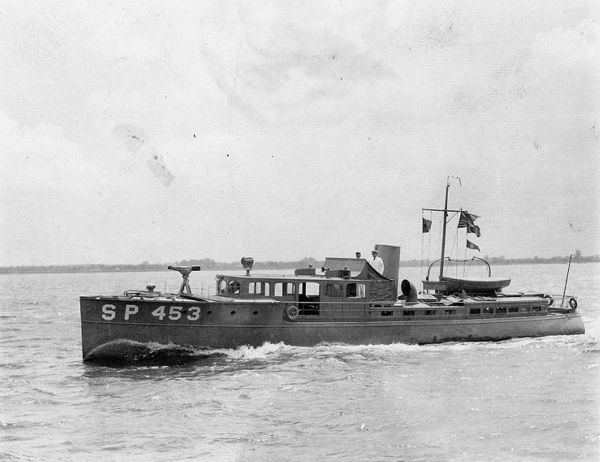
June 14, 1917 A little over two months after the United States entered World War I on the side of the Allied Powers, the steam yacht Legonia II was commissioned in Baltimore for service in the U.S. Navy. This vessel had been purchased only eight days earlier from William B. Hurst, a prominent Baltimore resident.... Continue Reading →
May 30, 1914 The Cunard Line ship RMS Aquitania, in her maiden voyage, left Liverpool, England, for New York. In doing so, Aquitania joined the RMS Mauretania and RMS Lusitania as Cunard Line’s “grand trio” of express ocean liners providing regular transatlantic service. Aquitania would be nicknamed “Ship Beautiful” due to her reputation as one... Continue Reading →
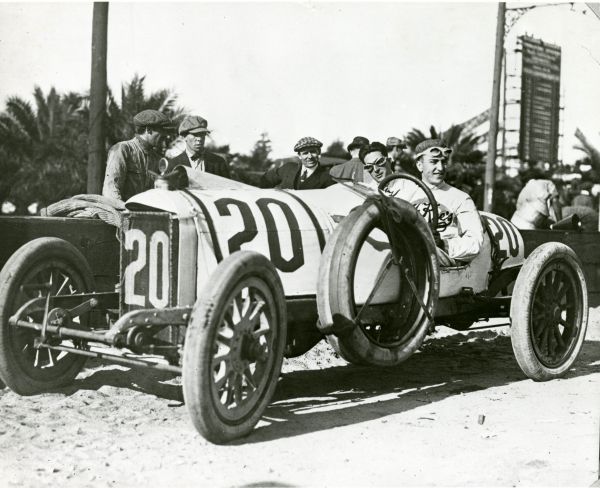
May 16, 1961 Automotive manufacturer Richard J. Corbitt died in Henderson, North Carolina, at the age of 88. Corbitt had first established residence in that community in 1894, and he entered the transportation business five years later with the launch of the Corbitt Buggy Company. For several years, this company built horse-drawn buggies for hauling agricultural... Continue Reading →
May 12, 1917 Nearly a month-and-a-half after the United States entered World War I on the side of the Allied Powers, a private motorboat named Althea was commissioned into the U.S. Navy under the command of Ensign E.L. Anderson of the U.S. Naval Reserve Force. This vessel had been acquired from James H. Moore. Althea... Continue Reading →
May 9, 1896 The Nord Express (Northern Express) train service was introduced by the Belgian company Compagnie Internationale des Wagons-Lits (CIWL). This train transported passengers from Paris, France, to Saint Petersburg, Russia, traveling between those two points via the cities of Brussels, Cologne, Hanover, Berlin, Konigsberg (present-day Kalingrad), and Dvinsk (now known as Daugavpils). Following World War... Continue Reading →
Aviation pioneer Helen Hodge was one of the first American women to earn a pilot’s license. She was born in Omaha, Nebraska, in 1892, and received her secondary school education at Brownell Hall (now Brownell-Talbot School) in that city. By 1909, Hodge and her family had moved to Oakland, California. Over time, both Hodge and... Continue Reading →
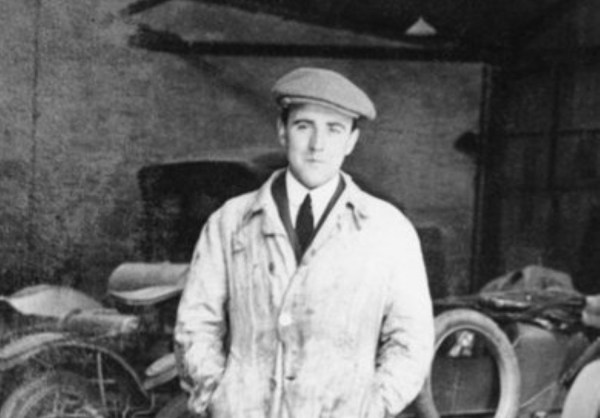
January 27, 1989 Aviation pioneer Thomas Sopwith died at his mansion near the city of Winchester in southern England. He was 101. “The Genius of Flight is Dead,” announced a headline in the London-based Evening Standard. Sopwith was born on January 18, 1888, in the Royal Borough of Kensington (now part of the Royal Borough of Kensington and Chelsea) in... Continue Reading →
December 28, 1894 In the town of Cromer on England’s eastern coast, an 18-year-old local resident named Henry Blogg first saw action at sea as a member of the crew of RNLB (Royal National Lifeboat) Benjamin Bond Cabbell II. Blogg had actually joined that crew nearly a year earlier, but it was that holiday-season mission... Continue Reading →