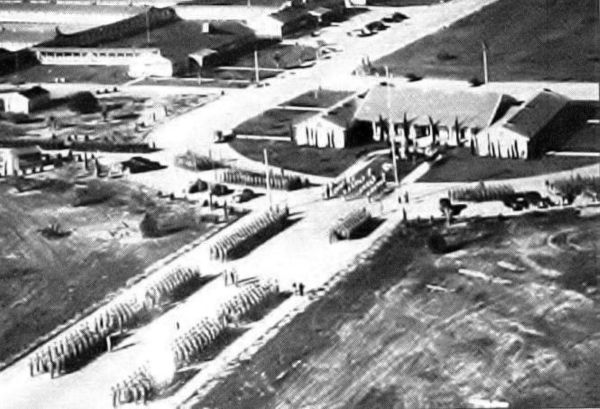
July 21, 1941 The basic infrastructure for a U.S. Army Air Forces (USAAF) airfield in southern California was completed as part of a rapid-construction project. This infrastructure included runways, airplane hangars, and a control tower for the recently designated airfield, which was located nine miles (14.5 kilometers) southeast of the city of Taft. This construction... Continue Reading →

July 18, 1945 About a month-and-a-half before World War II ended altogether with the surrender of Japan to the Allies, the U.S. Navy patrol yacht USS Tourmaline (PY-20) was decommissioned. This vessel had been used for various patrol assignments throughout the war. Tourmaline had actually started out as a private yacht named Sylvia. She was... Continue Reading →

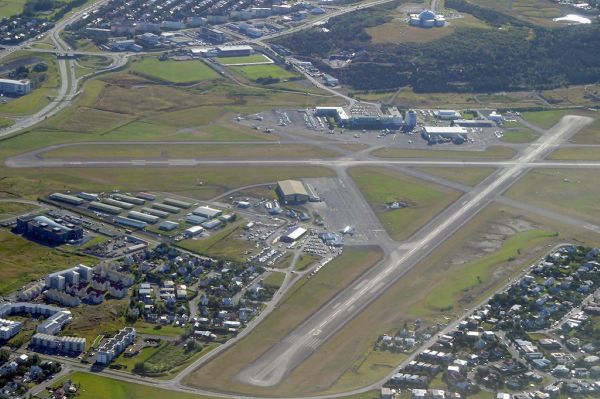
July 6, 1946 An airport of the United Kingdom’s Royal Air Force (RAF) was formally handed over free of charge to the government of Iceland. This military airport, located on the outskirts of Iceland’s capital city of Reykjavík, was transferred to that Nordic island country about 14 months after World War II in the European... Continue Reading →

In the early part of 1942 – not long after the United States entered World War II on the side of the Allies -- the Kaiser Shipbuilding Company established an emergency shipyard along the Columbia River in Vancouver, Washington, to construct vessels for the global fight against the Axis powers. The Vancouver Shipyard started out... Continue Reading →

March 14, 1918 The first seagoing American ship made out of concrete was introduced. This ship, a steamer called SS Faith, was launched from Redwood City, California. Concrete ships had been around since 1848, when one was built in France. In addition, the first ocean-worthy vessel of that type made her debut in Norway in 1917. SS... Continue Reading →

February 4, 1883 Stephen Latchford, a U.S. diplomat who became one of his country’s foremost authorities on aviation law and a key influence when it came to that mode of transportation, was born in Annapolis Junction, Maryland. Perhaps Latchford’s birth in a community that owed its name to being a rail junction presaged a transportation-themed career... Continue Reading →

January 12, 1933 The ocean liner SS Lurline left New York City for her maiden voyage. She subsequently traveled to San Francisco via the Panama Canal and then to Sydney, Australia, and other ports in that region of the world.  This luxurious ship was the third Matson Lines vessel named Lurline. She also had the... Continue Reading →

December 16, 1944 The transport ship USS Queens (APA-103), which had been named after one of New York City’s five boroughs, was commissioned for service in the U.S. Navy during World War II. Captain John J. Mockrish of the U.S. Navy Reserve became the first commanding officer of this vessel. After a period of testing... Continue Reading →

December 7, 1941 Without a formal declaration of war or any other explicit warning, the Empire of Japan attacked the U.S. naval base at Pearl Harbor in what was then the Territory of Hawaii. The Japanese Imperial Navy’s surprise strike left in its wake a staggering number of deaths and injuries – both military and... Continue Reading →

During World War II, Thomas “Tom” Oxendine became the first Native American to be commissioned as a pilot in the U.S. Navy. Oxendine was a member of the Lumbee Tribe of North Carolina. Most of the members of this tribe have lived in Robeson, Cumberland, Hoke, and Scotland counties in North Carolina. Oxendine was born... Continue Reading →

Create a website or blog at WordPress.com

Up ↑