June 2, 1851 The clipper ship Flying Cloud, making her maiden voyage, departed from New York City at 2:00 p.m. Under the command of Captain Josiah Perkins Creesy, the vessel went on to establish a new sailing record for the fastest passage between that city and San Francisco. After leaving New York City, Flying Cloud... Continue Reading →
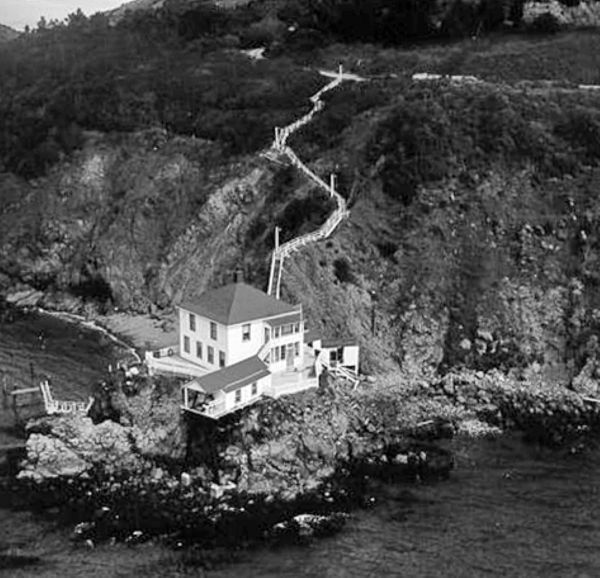
June 1, 1882 Belyea’s Point Lighthouse went into service along the Saint John River in the Canadian province of New Brunswick. Construction on this navigational aid in the vicinity of the community of Morrisdale had been initiated during the previous year. Spafford Barker Belyea was this lighthouse’s first keeper. During the 1930s, Belyea’s Point Lighthouse... Continue Reading →
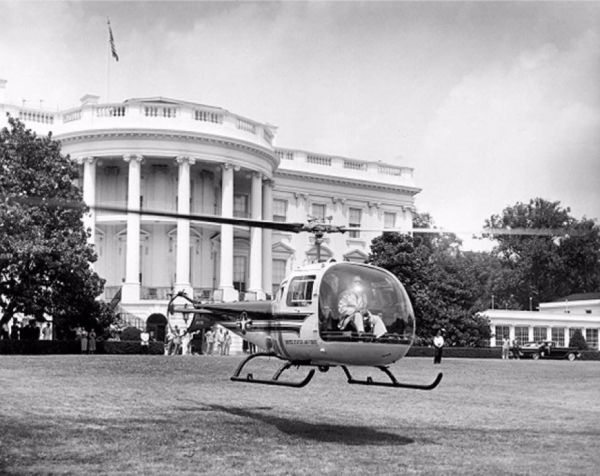
May 27, 1972 The U.S. International Transportation Exposition -- best known as Transpo ‘72 -- was formally opened at Dulles International Airport in northern Virginia (26 miles [41.8 kilometers] west of Washington, D.C.). U.S. Transportation Secretary John A. Volpe presided over the opening of that extensive nine-day trade show. “Flying trains, square dancing helicopters and the... Continue Reading →
May 25, 1878 U.S. Army officer and civil engineer Frederick Mears, whose legacy includes notable large-scale transportation infrastructure projects in various regions of the world, was born in Omaha, Nebraska. Mears enlisted in the Army in 1899. He was assigned the following year to the Philippines, where he handled several engineering assignments. Mears left the Philippines... Continue Reading →
May 21, 1914 With 1914 nearly halfway over, 28-year-old Swedish immigrant Eric Wickman was dealing with more than his usual share of challenges. He had arrived in the United States in 1905, and found work as a drill operator in iron ore mines in the northeastern city of Hibbing, Minnesota. In 1914, however, Wickman was laid... Continue Reading →
May 20, 1959 The Ford Motor Company introduced the concept model of the Levacar Mach I, an air-propelled automobile, in the Ford Rotunda in Dearborn, Michigan. The guiding force behind the design for the single-passenger, wheels-free Levacar was Andrew A. Kucher, vice president of engineering for the Ford Motor Company and the head of its... Continue Reading →
May 17, 1992 A Baltimore-area light rail system that is operated by the Maryland Transit Administration (MTA) began regular train runs. The initial segment of this system covered 13 miles (20.9 kilometers) between the community of Timonium in Baltimore County and the then-new Major League Baseball stadium (formally named Oriole Park at Camden Yards and... Continue Reading →
May 14, 1920 The Michigan Avenue Bridge, which spans the main stem of the Chicago River in downtown Chicago, was officially opened. This structure is widely believed to have been the first double-deck bridge built with roadway on both levels – the upper level for automobiles, the lower level for heavy commercial vehicles. In addition, the bridge... Continue Reading →
May 11, 1930 August Charles Fruehauf, a freight transportation pioneer, died at his home in Grosse Pointe Park, Michigan, at the age of 61. Fruehauf was born in Fraser, Michigan, in 1868. By 1914, he had established himself in Detroit as a blacksmith and carriage builder. The turning point in Fruehauf’s career took place that same... Continue Reading →
May 10, 1901 George M. Hendee and Carl Oscar Hedström introduced what became the first commercially successful, gasoline-powered motorcycle in the United States. The debut and demonstration of their prototype motorcycle took place on a steep hill on Cross Street in Springfield, Massachusetts. The two men had officially entered into a business partnership only about four... Continue Reading →