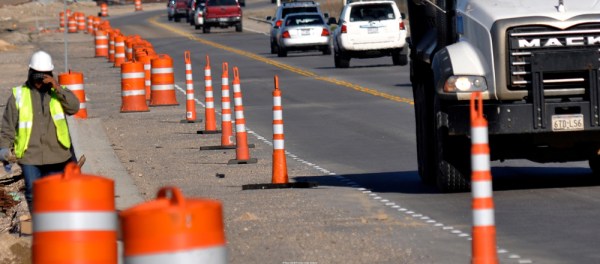
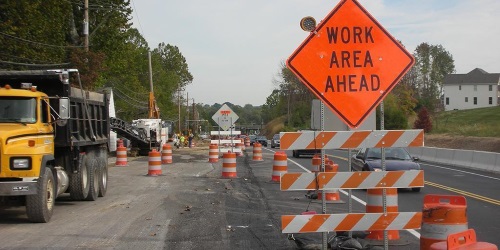
There has been a longtime need throughout the United States to adequately acknowledge and appreciate the tasks undertaken by workers in road construction and maintenance areas, and an equally vital need to better ensure the safety of those individuals when they are on the job. These priorities were emphasized as far back as the winter... Continue Reading →

High-visibility safety vests have long been a key part of the protective clothing worn by those who work in road construction areas. The yellow-and-orange safety vests certified by the American National Standards Institute (ANSI) as Class 3, for example, are customarily worn by those working on highways where the speed limit is at least 50... Continue Reading →

 Orange is a color that often stands out among the other hues, tints, and tones perceptive to the human eye. That color can be bright and unique. Unsurprisingly, orange has therefore long been a valued color for use within construction work zones and for other safety purposes along highways across the United States.    An example of... Continue Reading →

The first National Work Zone Awareness Week (NWZAW) was held in April 2000. It took place about four months after a memorandum of agreement (MOU) to create such a week was jointly signed by Kenneth R. Wykle, administrator of the Federal Highway Administration (FHWA); Thomas R. Warne, president of AASHTO and executive director of the... Continue Reading →

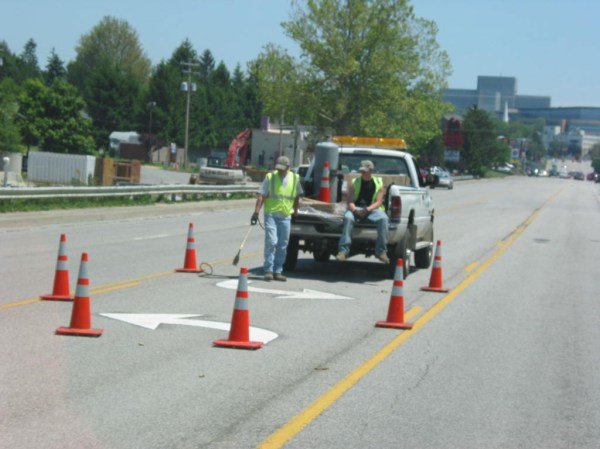
To help commemorate this year’s Work Zone Safety Awareness Week, here is something about one of the more readily identifiable features of many of those road construction areas across the country: the humble but important traffic cone. Many people trace the origins of the traffic cone to 1914, which also happens to be the year... Continue Reading →

April 15, 1997 A groundbreaking ceremony was held to launch the reconstruction of Interstate 15 (I-15) in the vicinity of Salt Lake City. This project, which involved renovating 16.2 miles (26.1 kilometers) of I-15 between 600 North Street in Salt Lake City and 10600 South Street in the city of Sandy, became first major Interstate... Continue Reading →

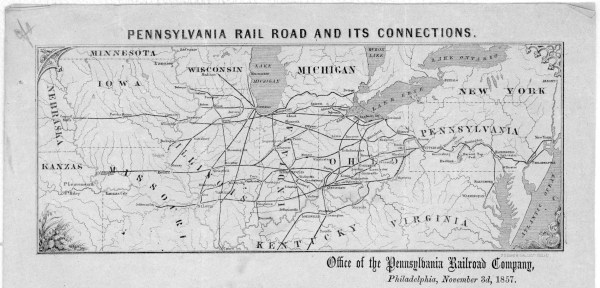
April 13, 1846 The Pennsylvania Railroad (PRR) received its charter. The first president of this railroad was Samuel Vaughan Merrick, who had been born in Maine in 1801. He moved to Pennsylvania as a teenager, settling in Philadelphia. Merrick subsequently acquired a strong knowledge of engineering, and in 1824 he helped establish what was then... Continue Reading →

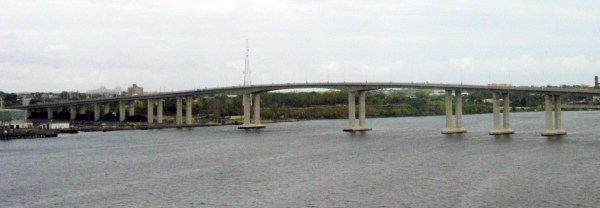
April 8, 2005 In north-central New Jersey, a major phase of the construction project for the new Victory Bridge was completed. This phase involved installing segments of the superstructure (the part of a bridge supporting the deck and linking one substructure to another) on the northbound section of the bridge. This bridge was built as... Continue Reading →

April 7, 1911 An early experiment in long-distance truck delivery took place between New York City and Philadelphia. A British-made Commer truck was used for the Friday morning delivery by New York City’s automotive firm Wyckoff, Church & Partridge (WCP), which owned the U.S. rights for promoting and selling those heavy-duty vehicles. As the New York... Continue Reading →

April 1, 1913 A legislative measure creating the first highway agency in Arkansas officially went into effect. This measure had been signed into law only the day before by Acting Governor Junius Marion Futrell. (As president of the Arkansas Senate, Futrell was acting governor because of Joseph Taylor Robinson’s resignation from that office so that... Continue Reading →

Create a website or blog at WordPress.com

Up ↑