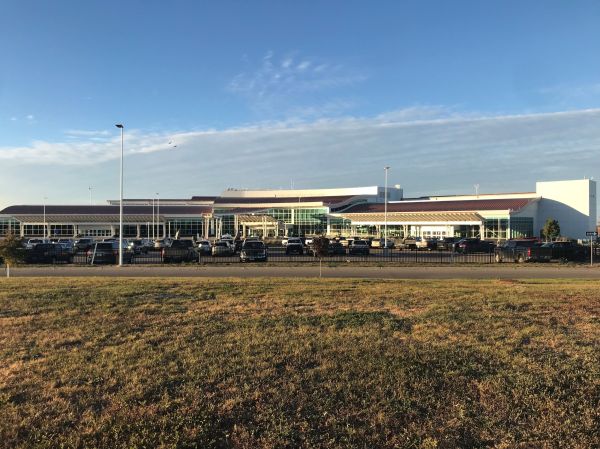
September 28, 2019 In the Brazilian state of Santa Catarina, a new terminal for a longtime airport near the municipality of Florianópolis was officially opened. (Florianópolis is the capital of Santa Catarina.) This airport, which traces its origins to the 1920s, was named after Hercilio Pedro da Luz (1860-1924). Luz’s public service on behalf of... Continue Reading →

José Antonio Muñiz, an aviator whose U.S. military career included service in Southeast Asia during World War II, was born on October 16, 1919, in the city and municipality of Ponce on Puerto Rico’s southern coast. He was a student at elementary and secondary schools in Ponce. Muñiz then enrolled at the Ponce-based Colegio Ponceño... Continue Reading →

September 21, 2007 The multi-purpose, single-engine helicopter Alouette III was formally retired from service with the Irish Air Corps. Over the course of more than four decades, a total of eight of these helicopters had been used by the Irish Air Corps for various high-priority tasks. The Irish Air Corps, which traces its origins to... Continue Reading →

September 13, 1964 In southeastern Australia, a regional airport in the state of New South Wales (NSW) was opened to the public. This airport is located 2.3 miles (3.7 kilometers) northeast of the NSW city of Albury, which is on NSW’s border with the neighboring state of Victoria. Albury Airport serves not only its namesake... Continue Reading →

August 12, 1908 In Michigan, a new era in motorboats began when marine designer John L. Hacker purchased the vessel manufacturer Detroit Launch & Power Company and renamed it the Hacker Boat Company. The 31-year-old Hacker, bringing into play his expert craftsmanship and a wealth of ideas for design improvements, would revolutionize the use of... Continue Reading →

May 6, 2006 After making its final flight, the Lockheed C-141C Starlifter strategic airlift plane best known as “Hanoi Taxi” touched down at 9:30 a.m. at Wright Patterson Air Force Base (WPAFB) in Ohio for a formal retirement ceremony there at the National Museum of the U.S. Air Force (USAF). This plane, which was delivered... Continue Reading →

April 27, 2005 In the skies over southeastern France, the largest-ever passenger plane made its first flight. The 308-ton (279.4-metric ton), double-decked Airbus A380 -- with a length of 238 feet and seven inches (72.7 meters) and a wingspan of  261 feet and eight inches (79.8 meters) -- made it back to Toulouse Blagnac International Airport three hours... Continue Reading →

Kathryn Dwyer Sullivan was born in Paterson, New Jersey, in 1951. She earned a B.S. degree in earth sciences from the University of California, Santa Cruz, in 1973 and a Ph.D. in geology from Dalhousie University in the Canadian province of Nova Scotia in 1978. It was also in 1978 that Sullivan formally became one... Continue Reading →

February 4, 1883 Stephen Latchford, a U.S. diplomat who became one of his country’s foremost authorities on aviation law and a key influence when it came to that mode of transportation, was born in Annapolis Junction, Maryland. Perhaps Latchford’s birth in a community that owed its name to being a rail junction presaged a transportation-themed career... Continue Reading →

Bobby Charles Wilks, who was born in St. Louis in 1931, achieved several key “firsts” as an African American aviator. In 1956, he graduated with a commission of ensign from the U.S. Coast Guard (USCG) Reserve Officers’ Candidate School in New London, Connecticut. Not long after receiving this commission, Wilks was assigned as a flight student... Continue Reading →

Create a website or blog at WordPress.com

Up ↑