February 2, 1917
Mary Ellis, who would achieve renown for her achievements as a pilot during World War II, was born at Langley Farm in South East England’s village and civil parish of Leafield. As someone who grew up near a couple of Royal Air Force (RAF) bases, she developed a strong interest in aviation at an early age.
A formative experience for Ellis in this regard took place when aviation pioneer Alan Cobham’s Flying Circus — a popular combination of airborne acts featuring skilled pilots who performed various barnstorming and joyriding stunts — visited that region of England. Ellis, who was eight at the time, not only attended this event but persuaded her father to let her ride as a passenger in one of the aerial circus’s Avro 504 biplanes. As a result of that excursion into the skies, Ellis decided that she would someday learn to fly.
Ellis made good on that resolve. When she was 16, she began taking flight lessons in the market town of Witney. After she earned a private pilot’s license, the sky was the limit for Ellis as she flew planes extensively for fun.
The outbreak of World War II, however, ultimately opened a more somber but significant chapter for Ellis and her flying skills. She joined the Air Transport Auxiliary (ATA), a British civilian organization established at the onset of the war to ferry military aircraft to and from locations such as airfields; factories; maintenance units; and transatlantic deliver points. Approximately 10 percent of those ferry pilots were women. In a first for the British government, these women began receiving pay equal to that of their male counterparts starting in 1943.
In the course of her wartime service in ATA, Ellis flew more than 1,000 planes of 76 different types. A few of the planes that she piloted were Harvards, Hurricanes, Spitfires, and Vickers Wellingtons. ATA was disbanded shortly after the end of the war in 1945, but Ellis continued to ferry aircraft on behalf of the RAF. It was during this stage of her career that she became one of the first women to fly the Gloster Meteor, England’s first jet fighter.
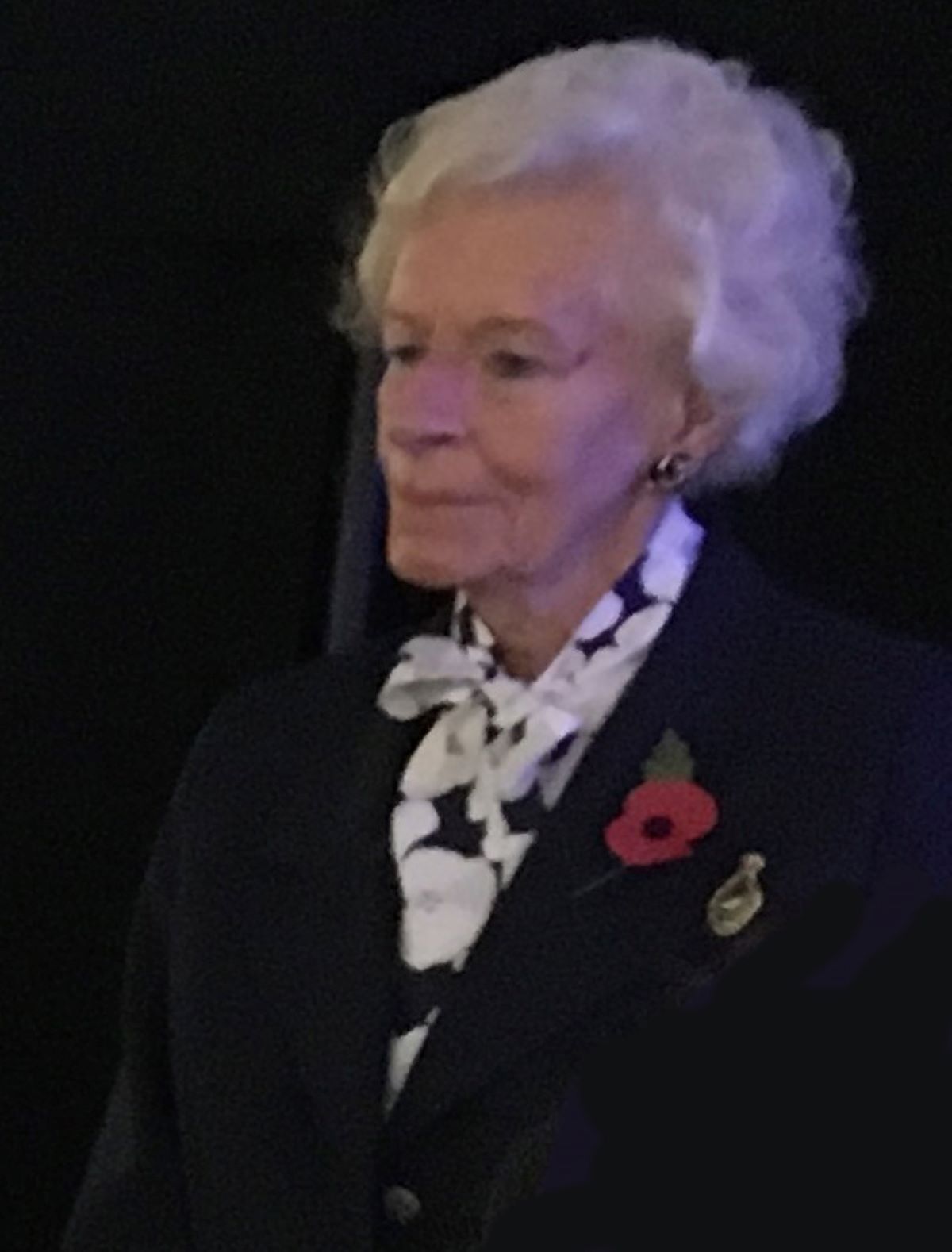
In 1950, Ellis became the manager of Sandown Airport on England’s Isle of Wight. This made her the first female air commandant in all of Europe. Ellis managed that airport for two decades. In addition, she founded the Isle of Wight Aero Club. Her autobiography A Spitfire Girl was published in 2016. (The accompanying photo of Ellis was taken that same year at the Royal British Legion Festival of Remembrance at Royal Albert Hall in London.)
Ellis died at her home in the seaside resort town and civil parish of Sandown on the Isle of Wight on July 24, 2018. She was 101. At the time of her death, Ellis was one of the last surviving British female pilots from World War II.
Photo Credit: Rob enwiki (licensed under the Creative Commons Attribution-Share Alike 4.0 International license at https://creativecommons.org/licenses/by-sa/4.0/deed.en)
For more information on Mary Ellis, please check out https://en.wikipedia.org/wiki/Mary_Ellis_(pilot)


Leave a Reply