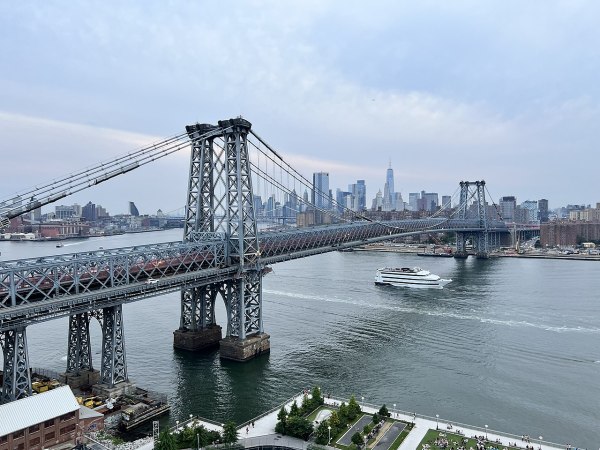
December 19, 1903 New York City’s Williamsburg Bridge, which crosses over the East River, was formally opened. This structure was the first major suspension bridge in the United States to have steel towers rather than masonry towers. At the time of its debut, the 7,308-foot (2,227-meter)-long structure also enjoyed the distinction of being the world’s longest suspension... Continue Reading →
December 10, 2009 A cable-stayed swing bridge in Dublin, the capital city of the Republic of Ireland, was formally opened to pedestrians. Emer Costello (born in 1962), the lord mayor of Dublin, officiated at these inaugural festivities. The bridge was first opened to motor vehicle traffic the next morning. This 403.5-foot (123-meter)-long structure crosses the... Continue Reading →
As a senior astronautical engineer at NASA, Irma Aracely Quispe Neira (widely known as Aracely Quispe) has made several noteworthy contributions to space and flight operations on behalf of that agency. Her accomplishments to date include becoming the first woman of Latin American descent to help oversee and lead three separate NASA missions. These major... Continue Reading →
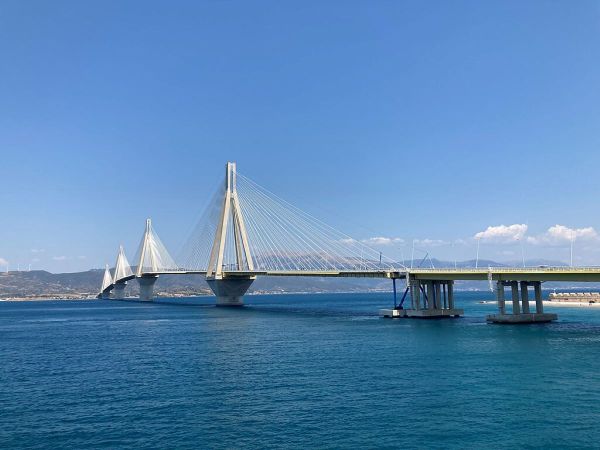
August 12, 2004 In Greece, a bridge crossing the Gulf of Corinth (an inlet of the Ionian Sea) was opened to the public. This bridge serves as a link between the towns of Rio (also known as Rion) on the Pelponnese peninsula and Antirrio on the country’s western mainland. The Rio-Antirrio Bridge carries the Greek... Continue Reading →
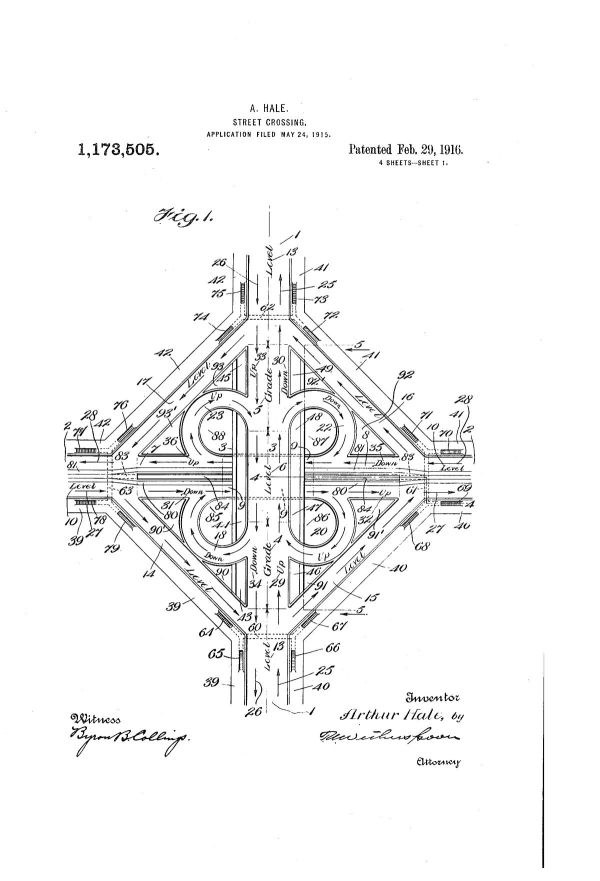
May 24, 1915 Civil engineer Arthur Hale applied for a patent for his design of a road interchange focused on facilitating the flow of automobile traffic. Hale, who resided in the village of Rowlandsville in Maryland, characterized this design as one that contained “certain new and useful improvements in street crossings.” Hale’s proposed interchange consisted... Continue Reading →
On April 19, 2021, the autonomous NASA helicopter Ingenuity (nicknamed Ginny) lifted off the surface of Mars for what turned out to be a flight of 39.1 seconds. While decidedly brief, this ascent was also historic because it made Ingenuity the first aircraft to carry out a powered, controlled extra-terrestrial flight. NASA’s Jet Propulsion Laboratory... Continue Reading →
May 2, 1906 Thomas F. Airis, who would become director of the District of Columbia’s Department of Highways and Traffic (a predecessor of the present-day District Department of Transportation) was born in the town of Eau Claire, Wisconsin. He earned his degree in, civil engineering from the University of Wisconsin. In 1929, Airis joined the... Continue Reading →
March 19, 1947 William Starling Burgess, whose transportation legacy spans multiple means of mobility, died at his home in Hoboken, New Jersey. He was 68. Burgess was born in Boston on Christmas Day in 1878. His father, Edward Burgess, was a renowned yacht designer. Early on in life, William Starling Burgess demonstrated a high level... Continue Reading →
Francis J. Mee, whose service in the U.S. Navy spanned more than three decades, was born on August 11, 1899, on the White Earth Indian Reservation in northwest Minnesota. This reservation is home to the federally recognized White Earth Band of the Minnesota Chippewa Tribe (also known as the White Earth Nation). Mee’s mother was... Continue Reading →
Aerospace engineer Powtawche N. Valerino, who has been extensively involved in various space exploration efforts, is an enrolled member of the Mississippi Band of Choctaw Indians (one of three federally recognized tribes of the Choctaw people). She was born to a Mississippi Choctaw mother and an African American father. Valerino has emphasized the extent... Continue Reading →