May 3, 1856 A newly built lighthouse at Jones Point in Alexandria, Virginia, first went into service. Jones Point Light is located along the Potomac River, just north of where that body of water intersects with Hunting Creek. This lighthouse is a rectangular clapboard building with a circular lantern on its pitched cedar roof. Jones... Continue Reading →
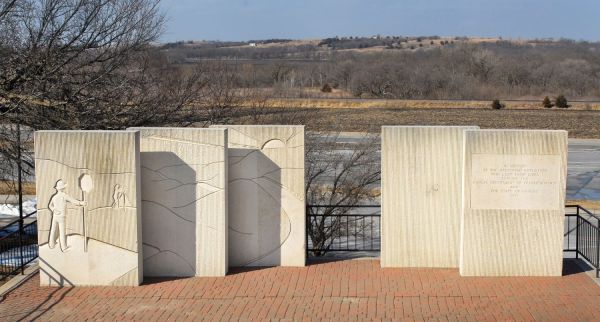
On April 8, 1996, a dedication ceremony was held for the Kansas Department of Transportation (KDOT) Employee Memorial near the city of Paxico in the northeastern region of the Sunflower State. This memorial, which is specifically located at the Paxico Safety Rest Area on Interstate 70, commemorates state highway employees who have lost their lives... Continue Reading →
Aviation pioneer Helen Hodge was one of the first American women to earn a pilot’s license. She was born in Omaha, Nebraska, in 1892, and received her secondary school education at Brownell Hall (now Brownell-Talbot School) in that city. By 1909, Hodge and her family had moved to Oakland, California. Over time, both Hodge and... Continue Reading →
March 28, 1922 The U.S. Congress formally authorized funds for both the establishment and improvement of navigational aids in Alaska, a longtime territory that would achieve statehood 37 years later. One of the end results of this congressional appropriation was the construction of a replacement lighthouse at Point Retreat, a cape on the northern tip... Continue Reading →
March 21, 1850 Trailblazing bicycle manufacturer Albert H. Overman was born in Fulton County, Illinois. Early on in life, he developed a strong interest in the mechanics of transportation. Overman said in an 1897 interview with the New York-based World newspaper, “I have all my life been engaged in experimental work connected with man-propelled machinery,... Continue Reading →
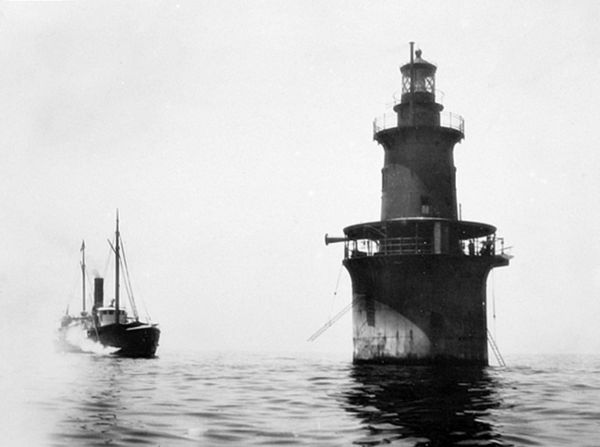
March 15, 1906 A caisson lighthouse in the Gulf of Mexico was lit for the first time. (Each caisson lighthouse has a superstructure resting on a concrete or metal caisson in order to better withstand potentially severe weather conditions.) This addition to American lighthouses off the Gulf Coast of the United States was specifically installed... Continue Reading →
Elizabeth Whitney Williams was one of the longest-serving lighthouse keepers in American history. In 1904, the Detroit Free Press underscored both the challenges and significance of Williams’ lifesaving role on behalf of maritime transportation. This article stated, “For more than three decades she has been in charge of one of Uncle Sam’s lighthouses on the... Continue Reading →
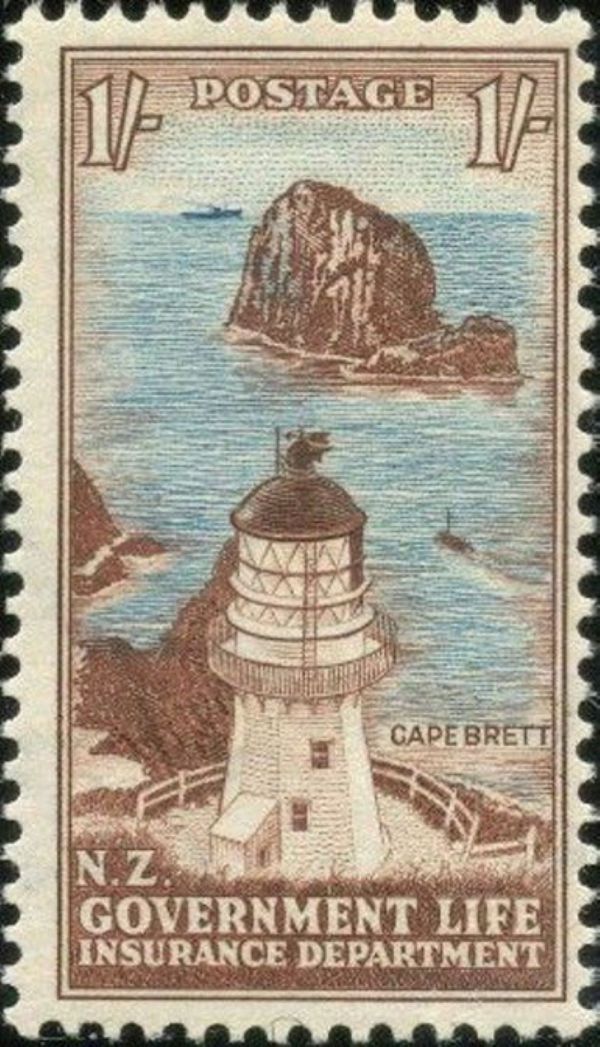
February 21, 1910 On New Zealand’s North Island, a lighthouse on the tip of Cape Brett Peninsula was first lit. The first keeper for the Cape Brett Lighthouse was Robert McIver; Frances Earnest Lee served as this navigational aid’s first assistant keeper. Cape Brett Lighthouse was built to help better guide and protect the numerous... Continue Reading →
February 9, 1809 The South Stack Lighthouse in the Irish Sea first went into service. This navigational aid is located on a stack, a geological landform consisting of steep columns of rock in the sea. South Stack is near the Welsh island of Anglesey, which is off the northwestern mainland coast of Wales. The... Continue Reading →
January 18, 1852 A new version of Barra Rio Grande Lighthouse in southern Brazil first went into service. (At the time, most of the territory comprising the present-day Federative Republic of Brazil was instead part of the Empire of Brazil.) This lighthouse is specifically located on a sandy strip between the Lagoa dos Patos (the... Continue Reading →