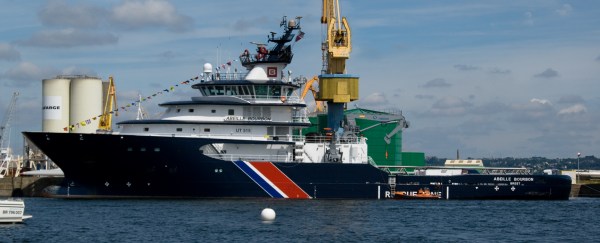
The salvage tugboat Abeille Bourbon was launched at the city of Brest on the western edge of France. Abeille Bourbon is owned by Les Abeilles International, a unit of the shipping company Groupe Bourbon, and was chartered to the French Navy for use as a deep-sea emergency tow vessel. The yacht-like Abeille Bourbon was designed... Continue Reading →
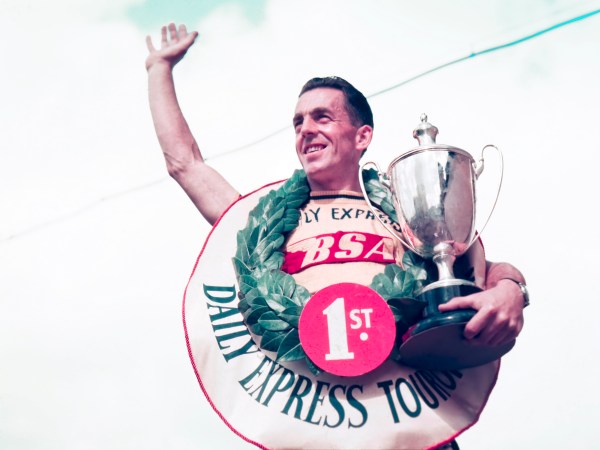
British cyclist Gordon W. “Tiny” Thomas died in the city Peterborough in eastern England at the age of 91. He had been born in the town of Shipley in northern England’s county of West Yorkshire in 1921. Thomas acquired the nickname “Tiny” when, as a 12-year-old joining a local cycling group known as the Yorkshire... Continue Reading →

The twin-screw turbine steamer SS Ben-my-Chree was launched at North West England’s Cammell Laird shipyard, where she had been constructed. The steamer was the fourth Cammell Laird vessel to be named Ben-my-Chree, which means “girl of my heart” in the Manx language that is native to that region’s Isle of Man. This latest version of... Continue Reading →

A pedestrian and cycle bridge in the British city and unitary authority area of Derby was first opened to the public. This opening of the Cathedral Green Footbridge, which spans the River Derwent, took place 13 days before the official dedication ceremony for the new structure. The footbridge was built in a section of Derby... Continue Reading →

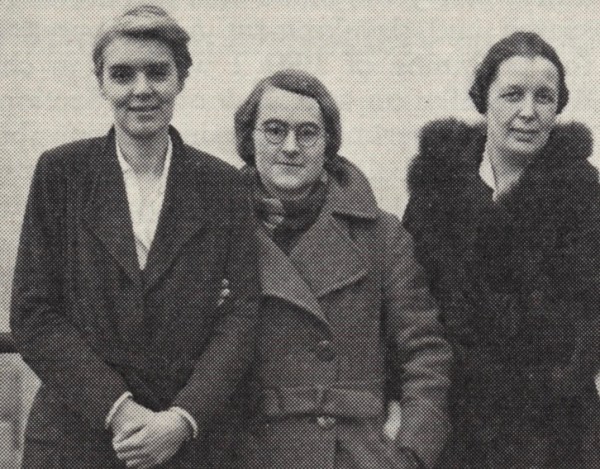
Image: Portraits of three women engineers: Margaret Rowbotham, Beatrice Shilling, and Margaret Partridge Beatrice “Tilly” Shilling, who left her mark as an aeronautical engineer as well as a motorbike and car racer, was born in Waterlooville, England. At age 14, she bought her first motorbike. By that time, she had also developed a strong interest... Continue Reading →

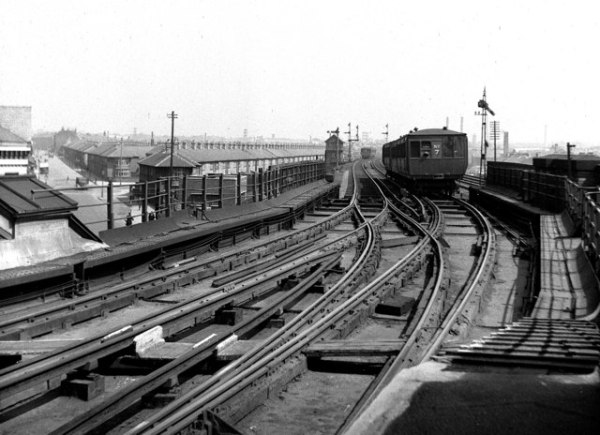
A pioneering railway officially began operations in the city of Liverpool in northwestern England at seven o’clock in the morning. In reporting on the first runs of the railway’s trains that day, the Liverpool Echo noted that “the carriages appear to be fairly well filled with passengers.” The Liverpool Overhead Railway, which originally spanned five... Continue Reading →

Sir William Arrol, one of the most renowned civil engineers of the Victoria Era, died at his home in the Scottish town of Ayr at the age of 74. “A GREAT BRIDGE BUILDER,” proclaimed the headline in the next day’s edition of the London Standard for the article announcing his death. The article stated, “Sheer... Continue Reading →

In northeastern England, a new bridge was officially dedicated. The Surtees Bridge, carrying the A66(T) road across the River Tees near the borough of Stockton-on-Tees, replaced a structure that had been built there in 1981 with two vehicular lanes in each direction. The original Surtees Bridge, while initially estimated to have a design life of... Continue Reading →

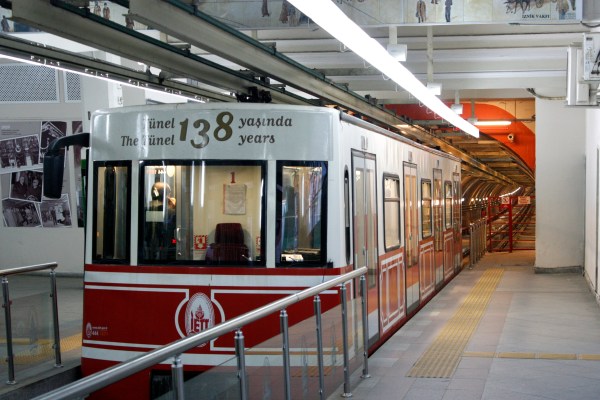
In the present-day Republic of Turkey, an underground rail line made its official debut in Constantinople (now Istanbul). At the time, Constantinople was the capital of the Ottoman Empire. The Tünel (the Turkish word for “tunnel”) is located at the northern shore of the Bosphorus strait’s primary inlet popularly known as the Golden Horn. The... Continue Reading →

Carl von Ghega, who established himself as one of the leading transportation engineers of the Austrian Empire, was born in Venice, Italy. (At the time of von Ghega’s birth, Venice was under Austrian rule.) His father was an Austrian Navy officer, but von Ghega pursued engineering as his life’s work instead. After studying mathematics in... Continue Reading →

Create a website or blog at WordPress.com

Up ↑