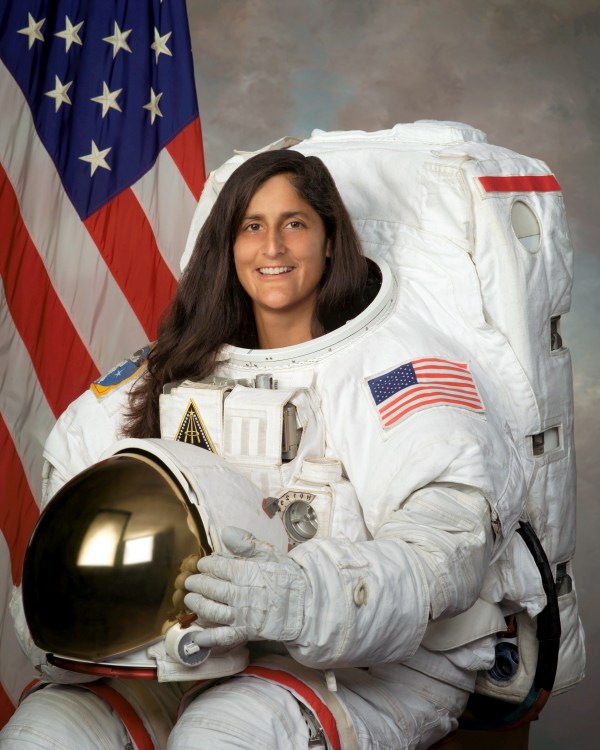
In 1983, Sally Ride became the first American woman to fly into outer space. (Two female USSR cosmonauts, Valentina Tereshkova and Svetlana Savitskaya, had already traveled into orbit.) Ride, who was 32 at the time of her first space flight, also established a still-intact record as the youngest U.S. astronaut to make such a journey.... Continue Reading →

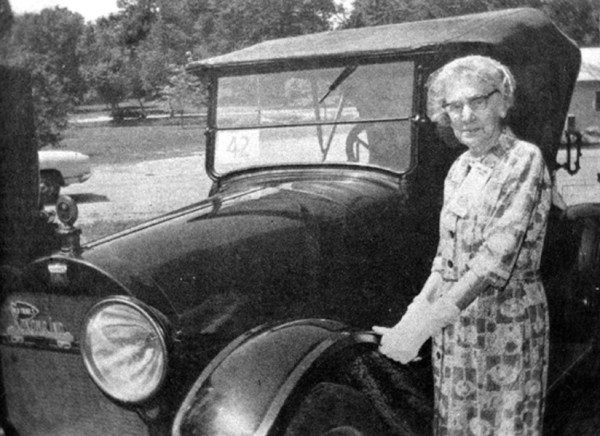
The American Red Cross (ARC) Motor Corps was an all-women’s service established during World War I to provide transportation support on the home front for the U.S. military as well as the ARC. The women who served as volunteers for the ARC Motor Corps wore uniforms (initially khaki, then Oxford grey) and were expected to... Continue Reading →

In 1983, Carmen E. Turner made history as the first African-American woman to lead a major transit agency when she became general manager of the Washington Metropolitan Area Transit Authority (WMATA). Her appointment to this position also reflected the overall strides being made by women at the time when it came to assuming key leadership... Continue Reading →

Margaret “Maggie” Gee became an aviation pioneer during World War II when she was one of only two Chinese-Americans to serve in the Women Airforce Service Pilots (WASP). The organization, which was formed in August 1943 from both the Women’s Auxiliary Flying Training Detachment and Women’s Auxiliary Ferrying Squadron, consisted of female pilots who performed... Continue Reading →

Mary Millicent Miller (1846-1894) was a maritime transportation pioneer who started out life in Louisville, Kentucky, as the daughter of a steamboat engineer. She set upon a career path similar to her father’s after she married a riverboat operator named George Miller. Using a steamboat called the Saline, the couple regularly transported passengers and freight... Continue Reading →

In 1983, Elizabeth “Liddy” Dole was appointed by President Ronald Reagan to serve as the eighth U.S. secretary of transportation. She was the first woman to serve in the role. Dole’s accomplishments as secretary of transportation included facilitating the transfer of control of Washington National (now Ronald Regan National) Airport and Washington Dulles International Airport... Continue Reading →

Sarah Clark Kidder (c. 1839-1933) was the first woman in the world to run a railroad. Her husband John Flint Kidder, whom she married in 1870, became president of the California-based Nevada County Narrow Gauge Railroad (NCNGRR) in 1884. After he died in 1901, Sarah – who now found herself in control of three-fourths of... Continue Reading →

One of the more memorable motorcyclists during the 1910s -- an era that has been characterized as the Golden Age of American Motorcycling -- was a woman named Della L. Crewe. She was born in Wisconsin in 1884 and eventually made her way to Texas. By 1910, she was living in Waco and working there... Continue Reading →

Kathleen “Kate” Moore devoted most of her long life serving at the Connecticut-based Black Rock Harbor Light during an era in which lighthouse duties in the United States were generally handled by men only. Her father Stephen Moore became the keeper at the lighthouse, located on Fayerweather Island (just south of Bridgeport), in 1817. Kate,... Continue Reading →

Mary Anderson (1866-1953) was an entrepreneur who worked at various times during her long life as a rancher, real estate developer, and viticulturist (someone who grows grapes). In addition, the Alabama native made a major contribution to transportation by inventing the first practical windshield wiper. Anderson was inspired to create her version of this device... Continue Reading →

Create a website or blog at WordPress.com

Up ↑