The American Red Cross (ARC) Motor Corps was an all-women’s service established during World War I to provide transportation support on the home front for the U.S. military as well as the ARC. The women who served as volunteers for the ARC Motor Corps wore uniforms (initially khaki, then Oxford grey) and were expected to... Continue Reading →
Boliviana de Aviación (BoA), which serves as the national airline of Bolivia and is entirely owned by the South American country’s government, formally began operations with its first commercial flight. This flight was made by a Boeing 737 airliner traveling between the cities of La Paz (the capital) and Cochabamba. Evo Morales, Bolivia’s president since... Continue Reading →
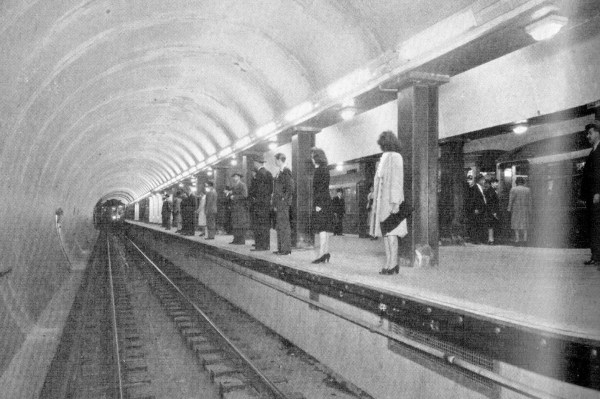
In 1983, Carmen E. Turner made history as the first African-American woman to lead a major transit agency when she became general manager of the Washington Metropolitan Area Transit Authority (WMATA). Her appointment to this position also reflected the overall strides being made by women at the time when it came to assuming key leadership... Continue Reading →
After more than three years of construction, a railway bridge in the city of Krasnoyarsk in Siberia (part of the Russian Empire at the time) was completed. The six-span Krasnoyarsk Railway Bridge, measuring 3,300 feet in length, was built to carry the Trans-Siberian Railway over the Yenisei River. Construction on the railway line, which is... Continue Reading →
Margaret “Maggie” Gee became an aviation pioneer during World War II when she was one of only two Chinese-Americans to serve in the Women Airforce Service Pilots (WASP). The organization, which was formed in August 1943 from both the Women’s Auxiliary Flying Training Detachment and Women’s Auxiliary Ferrying Squadron, consisted of female pilots who performed... Continue Reading →
Boat builder and designer Archibald Logan died in the New Zealand city of Auckland. According to the next day’s edition of the New Zealand Herald, “Such was his genius in the construction of yachts that he had an international reputation, and craft of his own design have proved eminently successful, not only in [New Zealand],... Continue Reading →
Mary Millicent Miller (1846-1894) was a maritime transportation pioneer who started out life in Louisville, Kentucky, as the daughter of a steamboat engineer. She set upon a career path similar to her father’s after she married a riverboat operator named George Miller. Using a steamboat called the Saline, the couple regularly transported passengers and freight... Continue Reading →
The initial segment of Australia’s first-ever freeway was opened to traffic in Sydney in the state of New South Wales (NSW). Joseph Cahill, NSW’s premier at the time, inaugurated the overhead portion of the freeway and made clear his high expectations for the new route and what it would mean for Sydney. “Cahill Sees Roadway... Continue Reading →
In 1983, Elizabeth “Liddy” Dole was appointed by President Ronald Reagan to serve as the eighth U.S. secretary of transportation. She was the first woman to serve in the role. Dole’s accomplishments as secretary of transportation included facilitating the transfer of control of Washington National (now Ronald Regan National) Airport and Washington Dulles International Airport... Continue Reading →
The Argentine Navy icebreaker ARA Almirante Irízar, which was built and launched in Finland, first arrived in Argentina. The vessel was named in honor of Admiral Julián Irízar, who played an important role in modernizing the Argentine Navy’s fleet. He also commanded the ARA Uruguay when the gunboat rescued members of the 1903 Swedish Antarctic... Continue Reading →