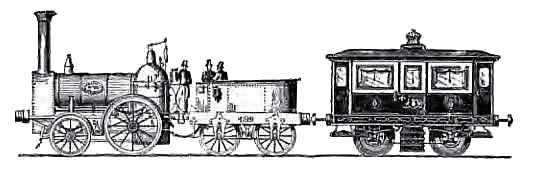
June 13, 1842 Queen Victoria took her first train ride. Victoria, whose reign as British monarch lasted 63 years altogether, was also the first in that royal lineage to ride a train. Her inaugural ride took her from the Slough railway station (near Windsor Castle) to Bishop’s Bridge near Paddington in London. The name of... Continue Reading →

May 31, 1879 A new type of electric locomotive was introduced in Germany at the Berlin Industrial Exhibition. This locomotive, developed by engineer Werner von Siemens, did not need batteries to operate. This marked the first time that a generator provided the electrical energy needed to power a locomotive. Originally constructed for use in a... Continue Reading →

In a ceremony at the U.S. Labor Department headquarters in Washington, D.C., approximately 12,000 Chinese immigrant laborers were inducted into the Labor Hall of Honor for their work on the First Transcontinental Railroad during the 1860s. These laborers were the first Asian Americans to be inducted into the Hall of Labor since its establishment in... Continue Reading →

Southeastern England’s Canterbury and Whitstable Railway – also known by its nickname the “Crab and Winkle Line” – was officially opened. That public railway, linking the famed cathedral city of Canterbury with the seaside town of Whitstable, was created to transport both passengers and freight. The railway relied on cable haulage by steam engines over... Continue Reading →

In Oregon, the Astoria and Columbia River Railroad (A&CR) was incorporated to build a long-deferred line connecting the port city of Astoria – located near where the Columbia River meets the Pacific Ocean -- with the rest of the United States. The Salem-based Statesman Journal reported, “The capital stock is fixed at $2,000,000, with A.B.... Continue Reading →

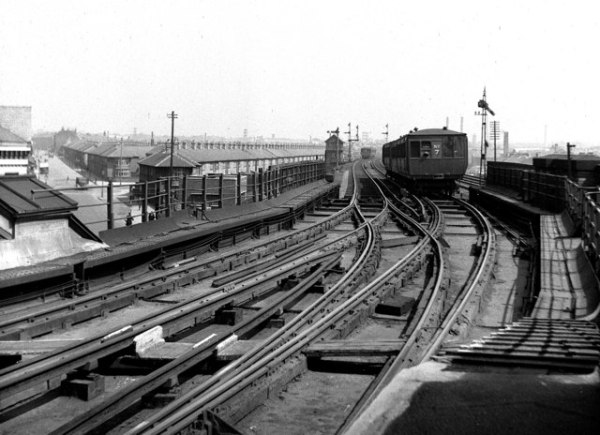
A pioneering railway officially began operations in the city of Liverpool in northwestern England at seven o’clock in the morning. In reporting on the first runs of the railway’s trains that day, the Liverpool Echo noted that “the carriages appear to be fairly well filled with passengers.” The Liverpool Overhead Railway, which originally spanned five... Continue Reading →

Frederick Douglass, who became a leading statesman and abolitionist of unsurpassed eloquence, was born into slavery on Maryland’s Eastern Shore. (As was the case with many other slaves, Douglass grew up not knowing the exact date of his birth; ultimately, however, he chose February 14 as the date for celebrating his birthday each year.) By... Continue Reading →

Construction began on a tunnel for the Northern Pacific Railway in the Cascade Mountains of the Territory of Washington. (A little less than four years later, Washington became the 42nd state.) The site selected for the tunnel was just south of Stampede Pass. Work on the Stampede Tunnel commenced with the operation of hand drills... Continue Reading →

The Sand Springs Railway in northeastern Oklahoma was incorporated. By that May, the railway formally began operations on 8.6 miles (13.8 kilometers) of track between the community of Sand Springs and the city of Tulsa. The major force behind the new railway was a Wisconsin-born businessman and philanthropist named Charles Page. He and his family... Continue Reading →

Internationally renowned railroad executive Ralph Budd died in Santa Barbara, California, at the age of 82. His obituary in the New York Times noted, “Mr. Budd, a bulky, exuberant man who spent a half-century on railroading, approached the work with the drive of a locomotive churning through a tunnel.” Budd had been born on a... Continue Reading →

Create a website or blog at WordPress.com

Up ↑