October 2, 1988 The innovative automobile designer Alexander “Alec” Arnold Constantine Issigonis died in Edgbaston, a town and suburban area of Birmingham, England, at the age of 81. In announcing his death, the London-based Guardian newspaper highlighted him as “not only a great and original car designer but someone who put his stamp on a... Continue Reading →

As a nurse, Maria Esperanza Garcia Roach was one of an estimated 400,000 to 500,000 Hispanic Americans who served in the U.S. Armed Forces during World War II. Her own lifesaving role in this global conflict very much depended on airborne transportation. Maria was born on July 16, 1915, in the city of Piedras Negras... Continue Reading →
John J. Herrera, an attorney who fought long and hard for the civil rights of Mexican Americans, was born in Cravens, Louisiana, in 1910 to Antonia Jiménez and Juan José Herrera. While best known for helping to win one landmark case that declared school segregation of Hispanics illegal and an equally ground-breaking case which ruled the... Continue Reading →
September 23, 1913 French aviator Roland Garros established two new airborne records when he successfully undertook the longest overseas plane trip up to that point in time and also became the first person to fly across the Mediterranean Sea. The 24-year-old pilot, flying on his own in a two-seat Morane-Saulnier G monoplane, departed the Fréjus... Continue Reading →
September 20, 1910 The ocean liner SS France, which sailed for the French shipping company Compagnie Generale Transatlantique (CGT), was launched into the River Loire at Saint-Nazaire, France. Approximately 2,000 people were on hand to witness the ship’s grand debut. The France, measuring 712 feet (217 meters) in length, became one of the fastest and... Continue Reading →
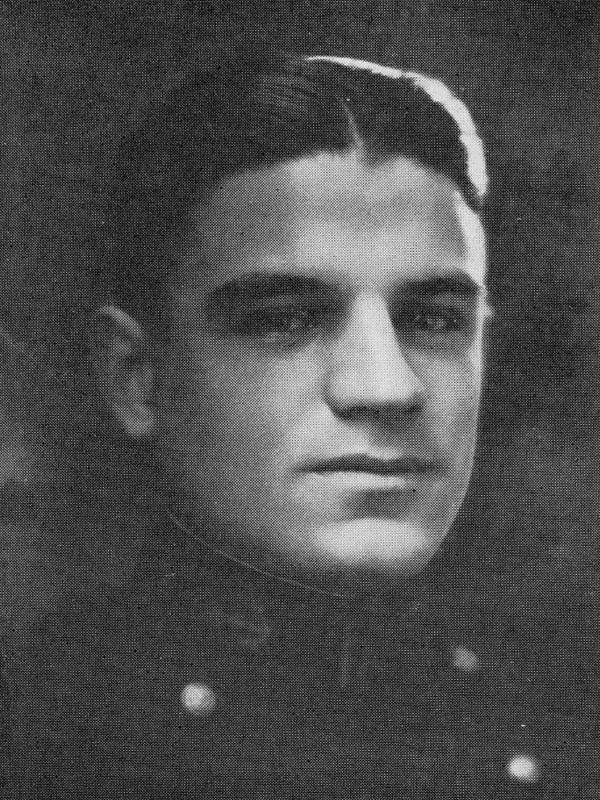
José M. Cabanillas, whose longtime U.S. Navy career included service in two wars, was born in 1901 in the city of Mayagüez in western Puerto Rico. In 1920, he received an appointment to attend the U.S. Naval Academy. After graduating in 1924, Cabanillas was commissioned an ensign in the Navy. Over the next several years,... Continue Reading →
September 18, 1899 The Gyeongin Line, the first railway built on the Korean peninsula, was opened after two-and-a-half years of construction. The initial segment of the line, covering approximately 21 miles (33.8 kilometers) in what is now the northwestern region of South Korea, linked the capital city of Seoul with the port city of Jemulpo (present-day... Continue Reading →
In 2018, Serena Maria Auñón-Chancellor became only the second woman of Hispanic descent to fly into outer space. (Ellen Ochoa, who is of Mexican descent, made her first spaceflight in 1993.) Auñón-Chancellor (she pronounces Auñón as ON-un) was born in Indianapolis in 1976. Her father, Dr. Jorge Auñón, is a Cuban exile who arrived in... Continue Reading →
September 12, 1978 On New Zealand’s North Island, the Kamai Tunnel along the East Coast Main Trunk Railway was formally opened. Construction on the rail tunnel, which runs for 5.5 miles (8.9 kilometers) underneath the heavily forested Kamai Range, started in 1965 with a turning-of-the-sod ceremony officiated by New Zealand’s Works Minister Percy Allen. The... Continue Reading →
September 11, 2001 More than six years after being retired from service by the New York City Fire Department (FDNY), the fireboat John J. Harvey returned to action when she assisted in the large-scale relief and evacuation efforts at the World Trade Center following the deadly terrorist attacks there. Launched in 1931, the Harvey was named... Continue Reading →