May 23, 1960 In central California, the San Mateo-based newspaper The Times reported on a U.S. Coast Guard (USCG) helicopter rescue the previous night at a beach in the region. “‘Copter Saves Injured Pair From Beach,” read the article’s headline. The trouble began while a young couple was picnicking and sunbathing along the edge of... Continue Reading →

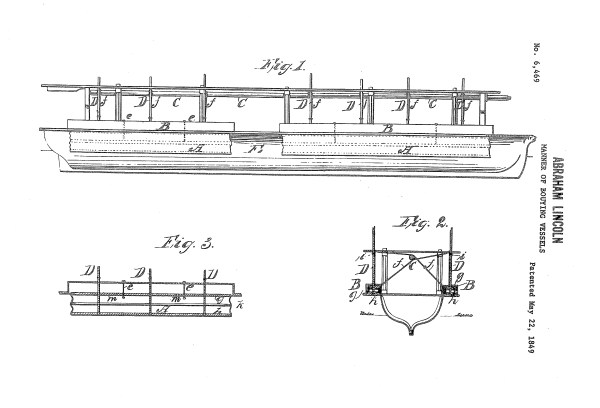
May 22, 1849 Abraham Lincoln, at the time 40 years old and a self-described "prairie lawyer" from Illinois (as well as a recently retired one-term U.S. congressman), was issued a patent for a flotation device for the movement of boats in shallow water. To date, this patent is the only one ever registered to somebody... Continue Reading →

May 21, 1979 The U.S Air Force (USAF), in a key victory for a group of American women who had flown planes in support of their country during World War II, officially recognized the active military status of the Women’s Airforce Service Pilots (WASP) during that global conflict and issued honorable discharges to those aviators.... Continue Reading →

May 18, 1997 The STS-84 spaceflight mission was very much in progress three days after its seven-member crew lifted off from John F. Kennedy Space Center (KSC) in Florida on board Space Shuttle Atlantis. This mission was part of the Shuttle-Mir Program, a collaborative effort between the United States and Russia that included having American... Continue Reading →

May 17, 1976 The first commuter aerial tramway in North America was officially opened in New York City. This tramway, spanning the East River, serves as a public transit connection between Roosevelt Island and the Upper East Side of Manhattan. (An aerial tramway is a means of overhead transportation in which as many as two... Continue Reading →

The Board of Road Commissioners for Alaska – better known as the Alaska Road Commission (ARC) – was organized by order of U.S. War Secretary (and future president) William Howard Taft to oversee construction of highways in what was then an American territory. The ARC was created in response to a steadily growing demand for adequate... Continue Reading →

In the midst of World War II, U.S. Navy Commander Gordon Paiʻea Chung-Hoon (1910-1979) took over command of the Fletcher-class destroyer USS Sigsbee in the Pacific Theater. Chung-Hoon, who was born in Honolulu to a Chinese-English-Hawaiian father and a Hawaiian mother, had made history in 1934 as the first Asian American/Pacific Islander graduate of the... Continue Reading →

The Los Angeles Times highlighted an important but increasingly overlooked aviation pioneer from the World War II era. Hazel Ying Lee was the first Chinese-American woman to fly in support of U.S. military efforts, and the article in the Los Angeles Times focused on a 1944 letter from her to one of her still-surviving relatives.... Continue Reading →

The Argentine Navy ship ARA Buenos Aires was launched. The vessel, which Marine Engineer magazine characterized at the time as “a very remarkable cruiser,” was built by British manufacturer Armstrong, Mitchell & Co. Ltd. The launch of the Buenos Aires took place at the company’s shipyard in the city of Newcastle in northeastern England. “She... Continue Reading →

In a ceremony at the U.S. Labor Department headquarters in Washington, D.C., approximately 12,000 Chinese immigrant laborers were inducted into the Labor Hall of Honor for their work on the First Transcontinental Railroad during the 1860s. These laborers were the first Asian Americans to be inducted into the Hall of Labor since its establishment in... Continue Reading →

Create a website or blog at WordPress.com

Up ↑