June 12, 1979
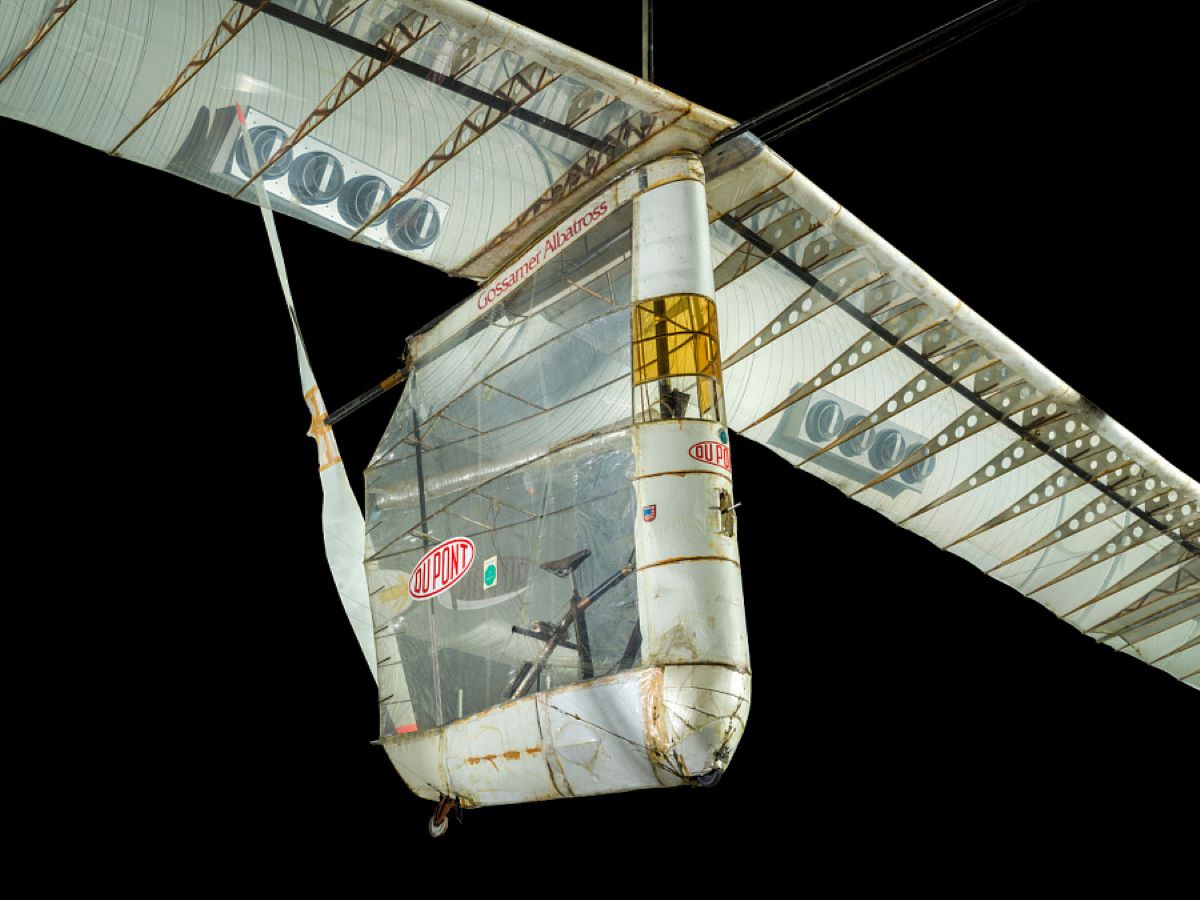
The original version of the Gossamer Albatross became the first human-powered aircraft to cross the English Channel. This aircraft had been designed and built by a team led by aeronautical engineer Paul B. MacCready at the American technology company AeroVironment.
Amateur cyclist Bryan Allen was the one who piloted the Albatross across the Channel. He completed that crossing of 22.2 miles (35.7 kilometers) by using pedals to drive a two-bladed propeller and achieving a top speed of 18 miles (29 kilometers) per hour and an average altitude of five feet (1.5 meters) in the process. The amount of time that Allen spent flying in the Albatross from the southeastern English port of Folkestone to the French coast was two hours and 49 minutes.
This successful flight earned MacCready his second Kremer prize, a monetary award given to pioneers of human-powered flight. He and his team also created a second Gossamer Albatross, which was the back-up craft if needed for the Channel crossing. The Gossamer Albatross II set a record of its own in the Houston Astrodome by making the first controlled indoor flight by a human-powered aircraft.
The Gossamer Albatross I piloted by Allen across the English Channel can be seen today at the Smithsonian National Air and Space Museum’s Udvar-Hazy Center, which is located near Washington Dulles International Airport in Virginia.
Photo Credit: Smithsonian National Air and Space Museum
Additional information on the Gossamer Albatross I and its pioneering 1979 flight across the English Channel is available at https://en.wikipedia.org/wiki/MacCready_Gossamer_Albatross

 Transportation History
Leave a comment