August 2, 1889
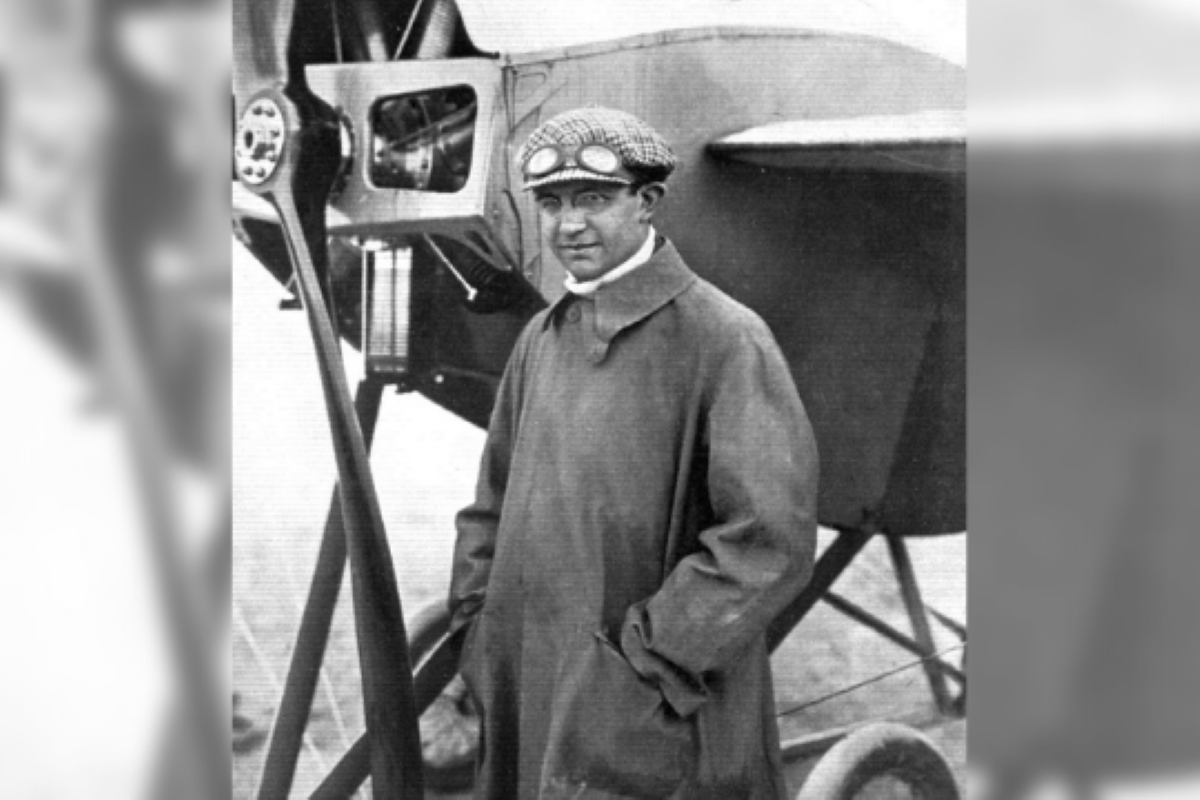
Charles Terres Weymann, who earned international fame for his achievements involving two modes of transportation, was born in Haiti’s capital city of Port-au-Prince. He was the son of a Haitian mother and American father.
Just a few years after the Wright Brothers’ pioneering flight at Kitty Hawk, Weymann learned how to operate a plane; in 1908, he was issued American Aero Club pilot’s license number 24. Weymann soon established himself as a formidable pilot in plane races across the globe. A key example of this took place in 1911, when he represented the United States in the international flight competition known as the Gordon Bennett Trophy race at the Royal Aeronautical Society’s flying field at the village of Eastchurch on England’s Isle of Sheppey.
Weymann, piloting a Nieuport II monoplane at an average speed of 78.1 miles (125.7 kilometers) per hour, won that race. “Victory of Weymann in Eastchurch Meet Surprise to Other Entrants,” proclaimed a subsequent headline in the Spokane Chronicle.
The other airborne competitions that Weymann won included the French Army’s 1911 Reims Military Aviation Competition in northeastern France; and a 1912 international race from the English Channel island of Jersey to the port of Saint-Malo in France’s Brittany region.
As a result of his considerable experience as a pilot, Weymann learned a great deal about the manufacturing of fuselages for planes. He eventually applied that technical knowledge to the development of similar fabric bodies for road vehicles. Throughout much of the 1920s, there was a huge public demand for this type of automotive bodywork and Weymann ended up opening factories for his products in Paris in 1921, London in 1923, and Indianapolis in 1928.
Another noteworthy part of Weymann’s automotive legacy was his participation in the 1928 edition of the 24 Hours of Le Mans, an endurance-focused sports car race that is still held annually in France. Weymann, driving a DV16 Blackhawk automobile manufactured by the Indianapolis-based Stutz Motor Car Company, finished second in that race.
Weymann, who died in France in 1976, did not completely abandon his interest in aviation after becoming more involved in the automotive world. During the 1930s, for example, he worked with French engineer Georges Lepére to design a multipurpose biplane that became known as the Weymann 66.
Photo Credit: Public Domain
For more information on Charles Terres Weymann, please check out https://news.miami-airport.com/haitian-heritage-month-heroes-charles-terres-weymann/

 Transportation History
Leave a comment