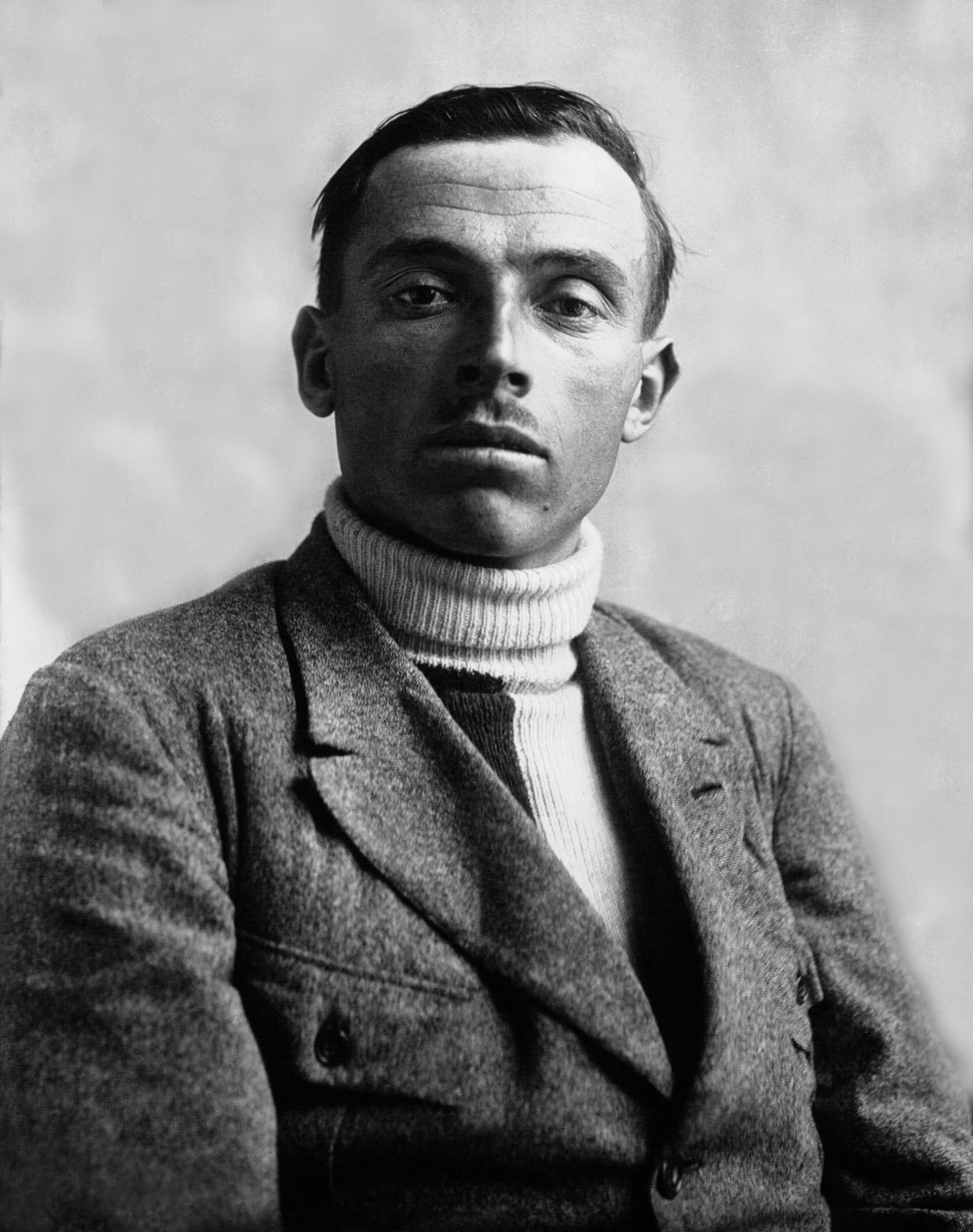
August 1, 1894
Ottavio Bottecchia, who would achieve widespread renown as a champion cyclist, was born in the comune of Colle Umberto in northeastern Italy. He was the eighth of nine children. Bottecchia had only one year of formal schooling. His earliest jobs included working as a shoemaker and then a bricklayer.
After Italy entered World War I on the side of the Allied powers, Bottecchia joined the Royal Italian Army. His assignments during this tour of duty included using a folding bicycle to deliver messages as well as supplies to the front lines.
Within a couple of years after the armistice ending the war went into effect, Bottecchia became a professional cyclist. In 1923, he finished fifth in the 11th annual bicycle race known as the Giro d’Italia (Tour of Italy) — the highest ranking for someone riding on his own rather than as part of a team.
Bottecchia’s overall performance in that race led to his being invited to join a French cycling team. He accepted this invitation and soon found himself traveling to France to train with the team. One of the major challenges that Bottecchia had to deal with involved his significantly limited fluency in French. The only words that he could speak in that language at the time were “No bananas, lots of coffee, thank you.”
Another one of Bottecchia’s struggles was achieving literacy in his native language. His friend and training partner Alfonso Piccin worked with him in this regard and together they read on a regular basis both the Italian daily Gazzetta dello Sport and anti-fascist pamphlets strongly criticizing their country’s dictator Benito Mussolini. Along with his new team (known as the Automoto team), Bottecchia competed in the 1923 Tour de France. He won the second stage of this race and ended up finishing second overall.
The following year, Bottecchia again took part in the Tour de France. This time around, he won the first, sixth, seventh, and fifteenth stages of the race. Bottecchia also maintained the lead from start to finish and, in doing so, became the first Italian cyclist to win the Tour de France. Another one of his triumphs by this time was his ever-improving command of the French language. “Not tired,” he said. “French and Belgians good friends, cycling good job.”
In the 1925 Tour de France, Bottecchia again finished first. He also won the first, sixth, seventh, and eighteenth stages of that year’s edition. Bottecchia did not fare nowhere near as well in the 1926 Tour de France and announced that he planned to retire from professional cycling.
Ultimately, though, tragedy befell Bottecchia. On May 23, 1927, his brother Giovanni was riding a bicycle near northeastern Italy’s commune of Conegliano when an automobile struck and killed him. Giovanni’s death resulted in the subsequent return of Ottavio Bottecchia from France to Italy.
On June 3, a farmer outside the village of Peonis found Ottavio lying unconscious on the roadside. Bottecchia’s skull was cracked and several of his bones had been broken. In addition, the bike he had been riding was in the vicinity. There were not any discernible signs on the pedals or handlebar indicating that Bottecchia might have lost control nor were there any skid marks nearby suggesting that a vehicle had forced him off the road.
Bottecchia died twelve days later without ever regaining consciousness. He was only 32. The mystery of his untimely end remains unsolved, even though there has speculation over the years that the Mussolini regime – infuriated by Bottecchia’s public stance against fascist rule – might have been responsible for his death.
“Bottecchia was a revelation,” eulogized the French newspaper Miroir des Sports. “His name will stay inseparable from the Tour de France.” Bottecchia has also been immortalized in other ways. A monument to him stands along the section of the Tagliamento River in the Italian comune of Trasaghis, for example. In addition, Bottecchia is mentioned at the end of Ernest Hemingway’s classic 1926 novel The Sun Also Rises.
Another one of Bottecchia’s legacies is a bicycle manufacturing company that bears his name. In 1926, Bottoecchia began working with frame-maker TeodoroCarnielli to create racing bikes. This Italy-based business, known as Bottecchia Cicil S.r.l., is still in operation today and produces approximately 70 models of bicycles.
Photo Credit: Public Domain
Additional information on Ottavio Bottecchia is available at https://www.procyclingstats.com/rider/173753

 Transportation History
Leave a comment