January 23, 1942
Nearly six weeks after the United States’ entry into World War II on the side of the Allies, a vessel constructed for the U.S. Navy by Ingalls Shipbuilding was launched. This Friday afternoon event took place at the company’s shipyard in the city of Pascagoula in Jackson County, Mississippi. The new ship was named USS Pascagoula and she was described as “beautiful and impressive” by the Mississippi Press.
“She will be used as a transport auxiliary by the United States Navy,” reported this newspaper. “Several other ships of this same design now under construction at the Pascagoula yards are scheduled to be converted into transports and will be named for other cities of the Gulf Coast, Navy officials have confirmed.”
The ceremonial duties for launching the ship into the Pascagoula River were handled by Hattie Rhea Gautier (1894-1961), a local resident significantly involved at the time in activities on behalf of the war effort. She was the wife of Hermes F. Gautier (1894-1969), a member of the Jackson County Board of Supervisors. He had been instrumental in having Ingalls Shipbuilding establish one of its manufacturing plants in Pascagoula.
Even though USS Pascagoula had been built for the Navy, she was handed over to the U.S. Army a little less than eight months following her launch. This vessel was renamed after the prominent Army officer and civil engineer George W. Goethals (1858-1928). Throughout the remainder of the war, USAT (United States Army Transport) George W. Goethals was extensively used for carrying troops across the Atlantic Ocean. These regular runs were made in the United States to and from ports in Boston and New York City as well as on the Gulf Coast; and — on the other side of the Atlantic– to and from ports in the United Kingdom, North Africa, and France.
After the end of the war, USAT George W. Goethals made similar transatlantic runs between the Europe and the United States for military dependents. In March 1946, for example, the Winston-Salem Journal reported that the ship had just completed a voyage from the French city of Le Havre to New York City. The passengers on board USAT George W. Goethals, according to that newspaper announcement, were “446 Dutch, Belgian, French and Luxembourg war brides and children.”
After being reacquired by the Navy in 1950, USAT George W. Goethals was assigned to that military branch’s Military Sea Transportation Service (MSTS). She was redesignated as USNS George W. Goethals (T-AP-182). The prefix USNS stands for “United States Naval Ship” and is used to identify non-commissioned vessels that belong to the Navy. During her subsequent MSTS tours of duty, USNS George W. Goethals was staffed by a civilian crew and used for the continued transport of troops to and from New York.
During most of the 1950s, USNS George W. Goethals was also deployed for more far-ranging missions across the globe. She routinely delivered troops and cargo to destinations such as England, West Germany (now part of the Federal Republic of Germany), North Africa, Italy, Turkey, and Greece. This ship was used as well for rotating troops on a regular basis to U.S. military bases in the Caribbean. An illustration of her busy schedule can be readily seen in several of her activities between 1956 and 1959, when she made a total of 30 round trips to the Caribbean and 18 deployments to ports in Western Europe.
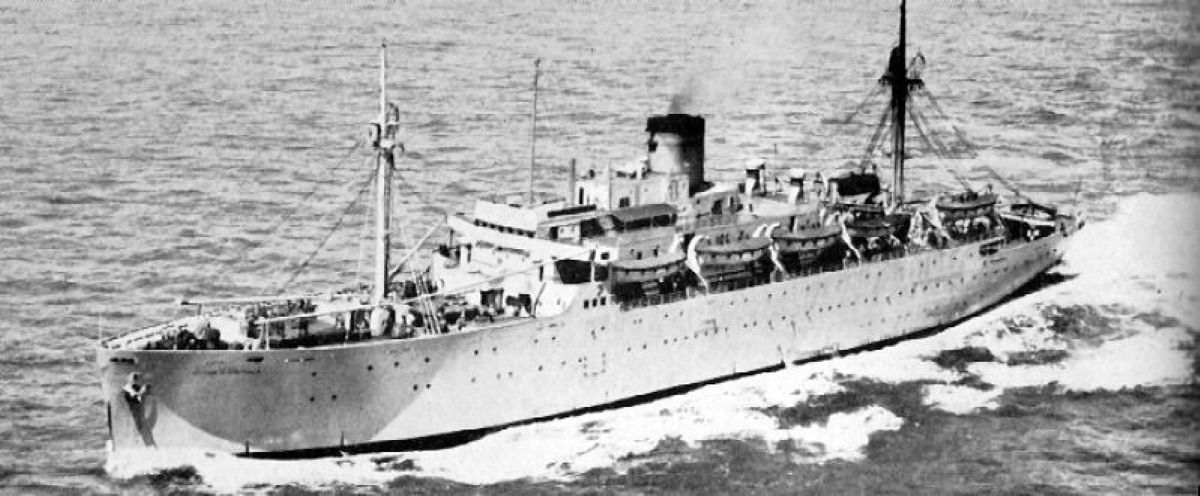
After completing a trip to New York on September 29, 1959, USNS George W. Goethals was inactivated. She was transferred to the U.S. Maritime Administration and became part of the National Defense Reserve Fleet. This ship was ultimately scrapped in 1971. (The accompanying photo of that vessel was taken during her service as USNS George W. Goethals.)
Photo Credit: Public Domain
Additional information on the U.S. military ship George W. Goethals — originally named USS Pascagoula — is available at https://www.navsource.org/archives/09/22/22182.htm

 Transportation History
Leave a comment