August 19, 1913
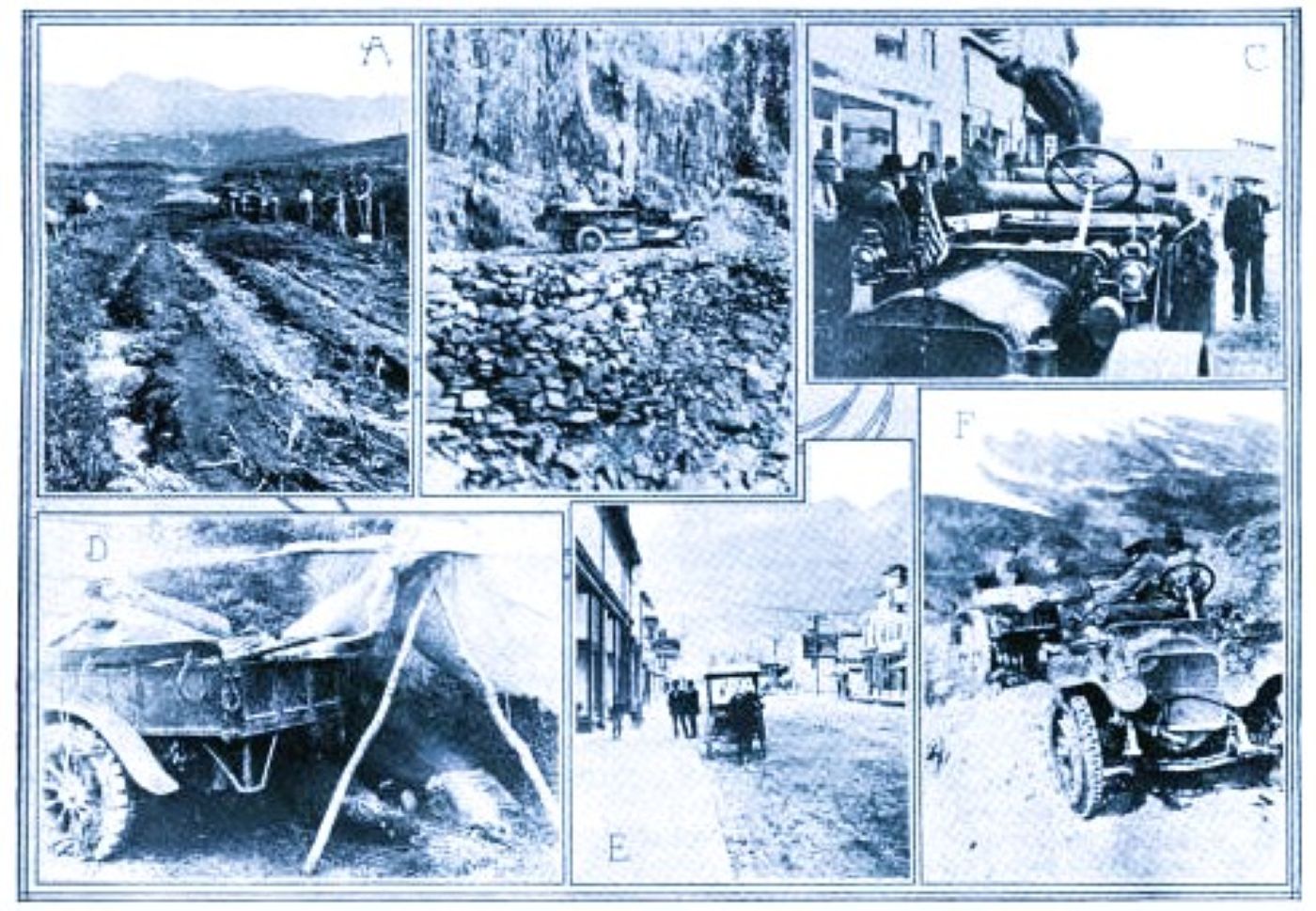
An unprecedented round trip of U.S. Army personnel and other individuals in a large White Motor Company truck came to an end when they returned to the city of Valdez on the southern coast of the then-Territory of Alaska 22 days after the journey began there. (Alaska, which had been purchased from the Russian Empire in 1867, was officially designated as an organized incorporated territory of the United States in 1912 and would retain this status until becoming the 49th state in 1959.)
That military expedition into the Alaskan wilderness encompassed 826 miles (1,329 kilometers) altogether and strongly reflected the sequence of experimental and ambitious long-distance motor vehicle runs across the American landscape throughout the 1910s — travels that ranged from the pioneering 1912 trip taken by a Packard truck transporting a three-ton (2.7-metric ton) load between New York City and San Francisco to the better-known tour of the U.S. Army’s 1919 Transcontinental Motor Convoy between Washington, D.C., and the California coast.
The person leading the first-a-kind truck tour between Valdez and central Alaska’s city of Fairbanks was Lieutenant Colonel Wilds P. Richardson, who served as president of the U.S. War Department’s Alaska Road Commission (ARC) from 1906 to 1917. Those accompanying him on the journey were Jack Ingram, ARC superintendent; Lieutenants Glen Edgerton and James Gordon Steese; and – alternating along the way as the drivers of the 1,500-pound (226.8-kilogram) truck – Thomas H. Parramore, Jr., and Homer Jones.
The primary goal of their test run on behalf of the Army involved assessing the feasibility of a full-fledged motor vehicle route deep within the interior region of Alaska. Richardson and his party departed from Valdez for Fairbanks amid drizzly weather on July 28. In its account of the trip, the October 1913 issue of Motor Truck magazine reported that vehicle carried “a load of supplies and mail for the different camps along the military trail.” This article also noted, “Some of these camps had not received mail for more than a year.”
After reaching Fairbanks, Richardson and his party headed southeast to the communities of Chitina and Gulkana before returning to Valdez. During this part of the trek, those riding in the truck encountered plenty of major challenges involving rough terrain that was alternately icy, muddy, steep, quicksand-like, and dense with trees and massive boulders. When this expedition reached its finish line at 4:00 p.m. on August 19, Richardson took time to speak to someone with the Valdez Daily Prospector about the journey and in particular the final portion of it after they left Fairbanks.
“We started from Fairbanks after the recent heavy rains and were thus able to pass over the road at is worst,” Richardson said. “Had we left a day earlier we would have been enabled to make a fast trip, but I am glad we were delayed in order that we could see the road at its worst.” Richard further asserted, “I find that the road is in such condition that an automobile can go over it, but it is not yet what you would call an automobile road, but it can be made one if Congress so directs.” The Richardson Highway, covering a total of 368 miles (562 kilometers), now serves as both a legacy of that 1913 trip and a major link between Valdez and Fairbanks.
Image Credit: Motor Truck magazine (October 1913)
For more information on the Alaska Roads Commission, please check out https://en.wikipedia.org/wiki/Alaska_Road_Commission

 Transportation History
Leave a comment