March 13, 1886
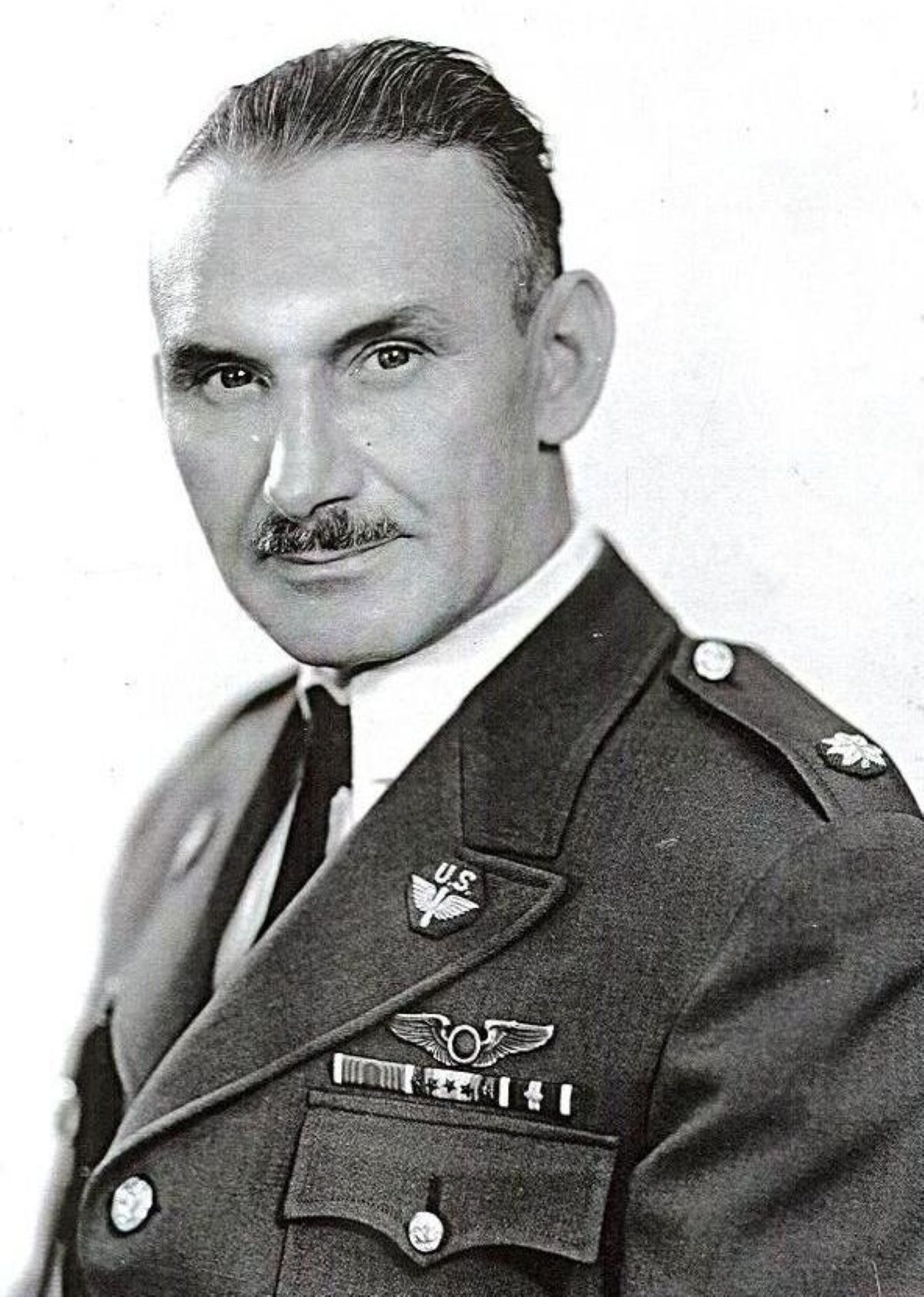
Albert William Stevens, who achieved renown as a balloonist and aerial photographer during his service in the U.S. Army, was born in the city of Belfast, Maine. He was the third child of Nathan and Alice Whitten. After his mother died only five months after his birth, he was adopted by Andrew and Nancy Stevens.
Albert William Stevens graduated from the University of Maine with a master’s degree in electrical engineering in 1909. Over the next several years, he worked as an electrical and mining engineer in the gold fields of Alaska, California, Idaho, and Montana. It was during this time that Stevens — who had first mastered being a photographer as a college student — further refined his own unique style for the art and science of creating images.
A new and more consequential chapter of Stevens’ life opened in 1918 when he enlisted in the army as a private. Stevens was with the aviation section of the U.S. Army Signal Corps until this unit was officially replaced in large part by the U.S. Army Air Service in May of that year. With the United States fighting in World War I on the side of the Allied Powers at the time, Stevens ended up serving as the commanding officer of the 6th photo section of that unit’s 88th observation in France and playing a pivotal surveillance role in just about all the major military engagements of American troops there. (The U.S. Army Air Service was replaced by the U.S. Army Air Corps [USAAC] in 1926; USAAC, in turn, would be renamed the U.S. Army Air Forces in 1941.)
In the first couple of decades following the end of World War I, Stevens continued to make extensive and even historic use of his photographic skills. While flying in the skies above South America in 1930, for example, he took a first-of-a-kind photo of Earth in which the horizon’s curvature can clearly be seen. Two years later, Stevens took an unprecedented photo of the Moon’s shadow projected onto Earth during a solar eclipse.
Stevens’ other notable airborne contributions in the 1930s involved balloon flights that were sponsored by the National Geographic Society in cooperation with the USAAC. The first of these flights took place on July 29, 1934, Stevens joined fellow USAAC officers Major William Kepner and Captain Orvil Arson Anderson in flying over the northwestern area of Nebraska in a balloon named Explorer I. One of the aims of this journey into the stratosphere was to set a new altitude record for manned flight. However, at a height of 60,613 feet (18,474.8 meters) and short of the existing record, the balloon ruptured. All three men managed to parachute to safety before the balloon’s gondola crashed into a farm field.
On November 11 of the following year, Stevens and Anderson undertook the second of those flights in a balloon named Explorer II. This ascent into the skies above the western region of South Dakota was more successful, with Explorer II establishing a record altitude of 72,935 feet (22,066 meters) for manned balloons. This flight record remained intact until 1956. Stevens was awarded a total of two Distinguished Flying Crosses, one of each of these flights.
Due to failing health, Stevens was medically discharged from the army in 1942. He died at Letterman General Hospital in Redwood City, California, less than two weeks after his 63rd birthday.
Photo Credit: Public Domain
For more information on Albert William Stevens, please check out https://www.thisdayinaviation.com/10-october-1928/

 Transportation History
Leave a comment