November 12, 2008
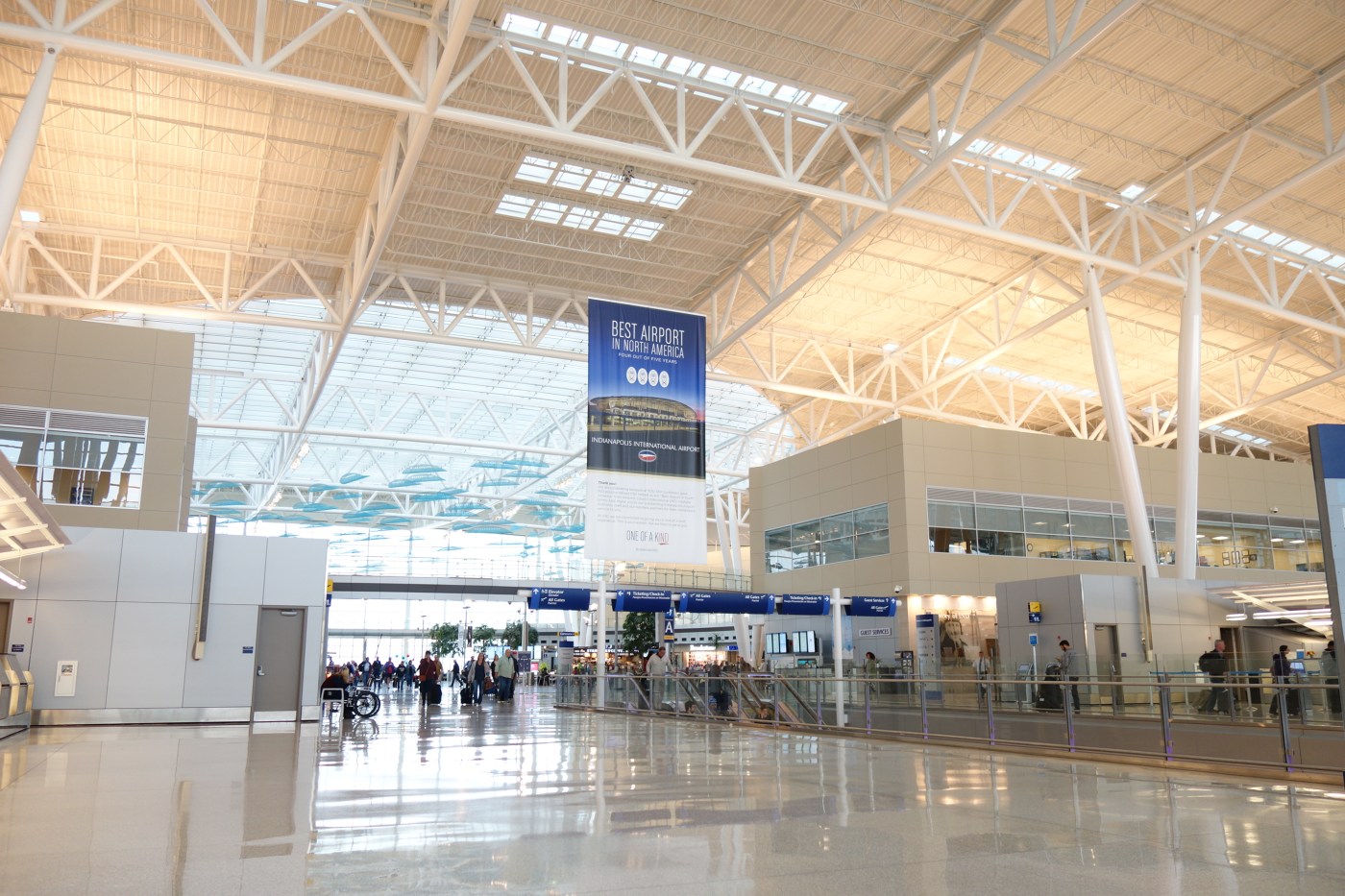
Operations fully began for a state-of-the-art terminal at Indianapolis International Airport. (This airport, which dates back to 1931, was originally known as Indianapolis Municipal Airport.) The new terminal was named after H. Weir Cook, one of the Hoosier State’s most prominent miliary heroes and aviation trailblazers.
Cook had been born in 1892 in the Indiana town of Wilkinson, which is about 30 miles (48.3 kilometers) east of Indianapolis. During World War I, he was a fighter ace serving on the Western Front as part of the U.S. Army Air Service’s 94th Aero Squadron. Following the end of the war, Cook established himself as a leading pioneer in commercial aviation not only in his home state but also nationwide. He was promoted to the rank of colonel in the 38th Division of the Indiana Air Guard shortly after the United States’ entry in World War II. Cook went on to serve during this global conflict in the Pacific Theater, where he trained new pilots for airborne combat. In 1943, he was killed when his airplane crashed in New Caledonia.
Indiana Municipal Airport was subsequently renamed Weir Cook Municipal Airport in memory of him and his achievements. The changing of the name of this airport to Indianapolis International Airport in 1976 was met with an outcry from veterans’ groups in the region. This protest ultimately helped bring about the decision to name the airport’s current terminal after Cook more than three decades later.
Colonel H. Weir Cook Terminal replaced the following facilities at the airport: a passenger terminal that had made its debut in 1957; and the International Arrivals Terminal, which opened in 1976. The first official flight out of the new terminal on November 12, 2008, was a US Airways plane that took off for New York City at 5:39 a.m. “Things are going great,” asserted John Kish, the airport’s executive director, later that day. “We can’t be more happy.”
The next day’s edition of the Indianapolis Star highlighted the celebratory atmosphere surrounding the inauguration of Colonel H. Weir Cook Terminal. “Opening day at the new Indianapolis International Airport took off with little turbulence but lots of pomp and patriotism Wednesday,” noted reporter Dan McFeely. “Crowded shuttle buses and the occasional computer glitch provided minor bums for thousands of travelers who made their way through the $1.1 billion terminal. But airport officials were pleased that no major mishaps or breakdowns marred the day.”
Will Higgins, another Indianapolis Star reporter, described an especially notable and heartfelt event occurring at the terminal on that day – the arrival of 100 soldiers who were among the first of the approximately 3,300 members of the Indiana National Guard’s 76th Infantry Brigade Combat Team to return home from a military mission in Iraq.
“They were the second group of Hoosier soldiers back from Iraq but the first to return to Indianapolis’ new airport terminal, so they got star treatment,” recounted Higgins. “An enormous American flag was unfurled in the grand Civic Plaza, a huge rotunda and food court that’s the centerpiece of the airport’s $1.1 billion terminal; firefighters on the tarmac saluted with water cannons; and a miliary brass band played.”
In 2021, a six-person panel of Indianapolis residents belonging to the American Institute of Architects formally identified the Colonel H.Weir Cook Terminal as one of the 10 most “architecturally significant” buildings constructed in Indiana’s capital and most populous city since the World War II era.
Photo Credit: gnutar (https://www.flickr.com/photos/gnutar/) – licensed under the Creative Commons Attribution 2.0 Generic license at https://creativecommons.org/licenses/by/2.0/deed.en
For more information on Indianapolis International Airport, please check out https://indyencyclopedia.org/indianapolis-international-airport/
Additional information on H. Weir Cook is available at https://inahof.org/members/legacy-class/harvey-weir-cook/

 Transportation History
Leave a comment