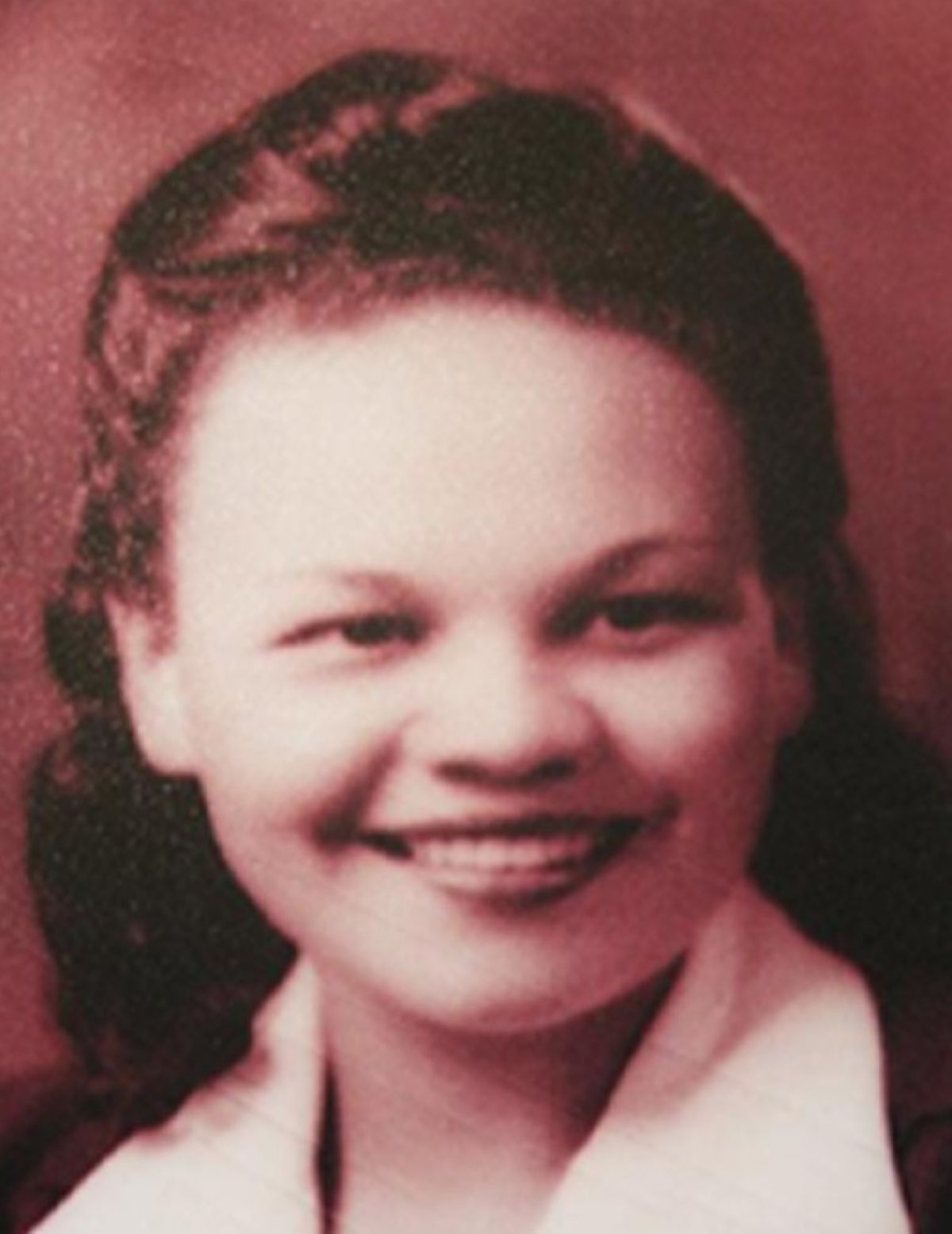
A trailblazing pilot, Mildred Hemmons Carter started out life in the community of Isabella (also known as Benson) in central Alabama. She was born there on September 14, 1921, to Mamie and Luther Hemmons. Mildred and her family eventually moved to the city of Tuskegee in the eastern part of the state. After living there for a brief time, they moved to the town of Enfield, North Carolina. Luther Hemmons worked there as the business manager for Bricks Junior College. After that all-black educational institution closed due to the economic ravages of the Great Depression, the Hemmons family moved to the city of Holly Springs, Mississippi.
It was during her family’s time in Holly Springs that Mildred Hemmons Carter graduated from high school at the age of 15. After she and her family ended up returning to Tuskegee, Carter enrolled at the Tuskegee Institute (now called Tuskegee University) as a business major. During her time as a student there, Carter worked in the office that processed applications for the Tuskegee Institute’s newly established branch of the Civilian Pilot Training Program (CPTP). Her own application for this program was rejected the first time around because she was not yet 18. After she had reached that age, however, Carter reapplied and was accepted.
Carter graduated with the Tuskegee Institute’s first class of CPTP trainees and, in February 1941, was awarded her private pilot’s certificate. As a result of this certificate, Carter – who was flying a rented Piper J-3 Cub light aircraft at the time — became the first black female pilot in Alabama. Another milestone for Carter during her years at the Tuskegee Institute was meeting her future husband. She and fellow student Herbert Carter first crossed paths there on campus in 1939. By coincidence, it turned out that he was likewise enrolled in the CPTP. They became romantically involved after going to a campus dance together.
Their relationship eventually encountered significant hurdles when Herbert Carter, as a cadet in Class 42-F of the now-legendary group of primarily black military pilots and other aviation personnel collectively known as the Tuskegee Airmen, was not permitted to date other Tuskegee Institute students or even leave the air base during his training. As proof positive that love conquers all, though, they found a way to get around those official restrictions.
Herbert made arrangements on a regular basis to take planes out for routine maintenance flight checks on weekends. He would fly those planes to Lake Martin, a reservoir located about 30 miles (48.3 kilometers) northwest of Tuskegee. Mildred, piloting her rented aircraft, would meet up with Herbert in the skies above that reservoir. As their planes flew past each other, the couple would each affectionately blow kisses and also wave to each other. After Herbert completed his cadet training, they were married at the Tuskegee Army Airfield chapel on August 21, 1942.
With the United States very much embroiled in World War II by this time, Herbert Carter was assigned to serve overseas as a both chief of maintenance and a fighter pilot in the 99th Squadron Flying Training Squadron. He ultimately flew a total of 77 combat missions in the North African, Mediterranean, and European theaters of the war.
Mildred Carter, for her part, sought to put her own piloting skills to good use on behalf of the war effort on the home front. She traveled to Alabama’s capital city of Montgomery with Charles Alfred Anderson, the chief flight instructor at the Tuskegee Institute, to enlist in the Civil Air Patrol. Even though Carter achieved another milestone as the first black woman to join the Montgomery Civil Air Patrol Squadron, racial discrimination prevented both she and Anderson from ever being called upon to take part in any flights on behalf of that squadron.
This was not the only obstacle to serving her country that Carter faced at the time. Due to her gender, she was formally prohibited as well from any more advanced training via CPTP. Consequently, Carter applied to join the Women Airforce Service Pilots (WASP). Notwithstanding her qualifications and the fact that she had logged at least 100 hours of flying time, she was asked by that civilian organization to withdraw her application because of her race.
For the remainder of the war, Carter worked instead as chief clerk of the Quartermaster Corps at the Army flight facility Moton Field (present-day Moton Field Municipal Airport), which is 3.5 miles (5.6 kilometers) north of Tuskegee’s central business district. Along with performing various administrative duties in this position, Carter operated a bulldozer to clear airstrips as needed at the facility.
In the years following the end of World War II, Carter and husband had three children and eventually made Tuskegee their permanent home. By this stage of her life, Mildred Carter had become a sought-after role model for other black women aspiring to serve as pilots. She was also a mentor for black women whose aviation career goals involved positions ranging from aerospace engineers to flight nurses.
Carter finally gave up flying in 1985 because of a broken hip. She would go on to have some of the major wrongs against her at least partially righted, In February 2011, for example, she was officially declared a WASP nearly seven decades after her hopes of joining the organization had been dashed. In addition, Carter was awarded a post-war, late-in-life designation as an honorary Tuskegee Airman.
After a long illness, Carter died in Tuskegee on October 21, 2011, at the age of 90. Her husband joined her the following year, when he passed away at the age of 93.
Image Credit: TradingCardsNPS (https://www.flickr.com/people/75426880@N06) – licensed under the Creative Attribution 2.0 Generic license at https://creativecommons.org/licenses/by/2.0/deed.en
For more information on Mildred Hemmons Carter, please check out https://en.wikipedia.org/wiki/Mildred_Hemmons_Carter and https://www.blackpast.org/african-american-history/mildred-louise-hemmons-carter-1921-2011/

 Transportation History
Leave a comment