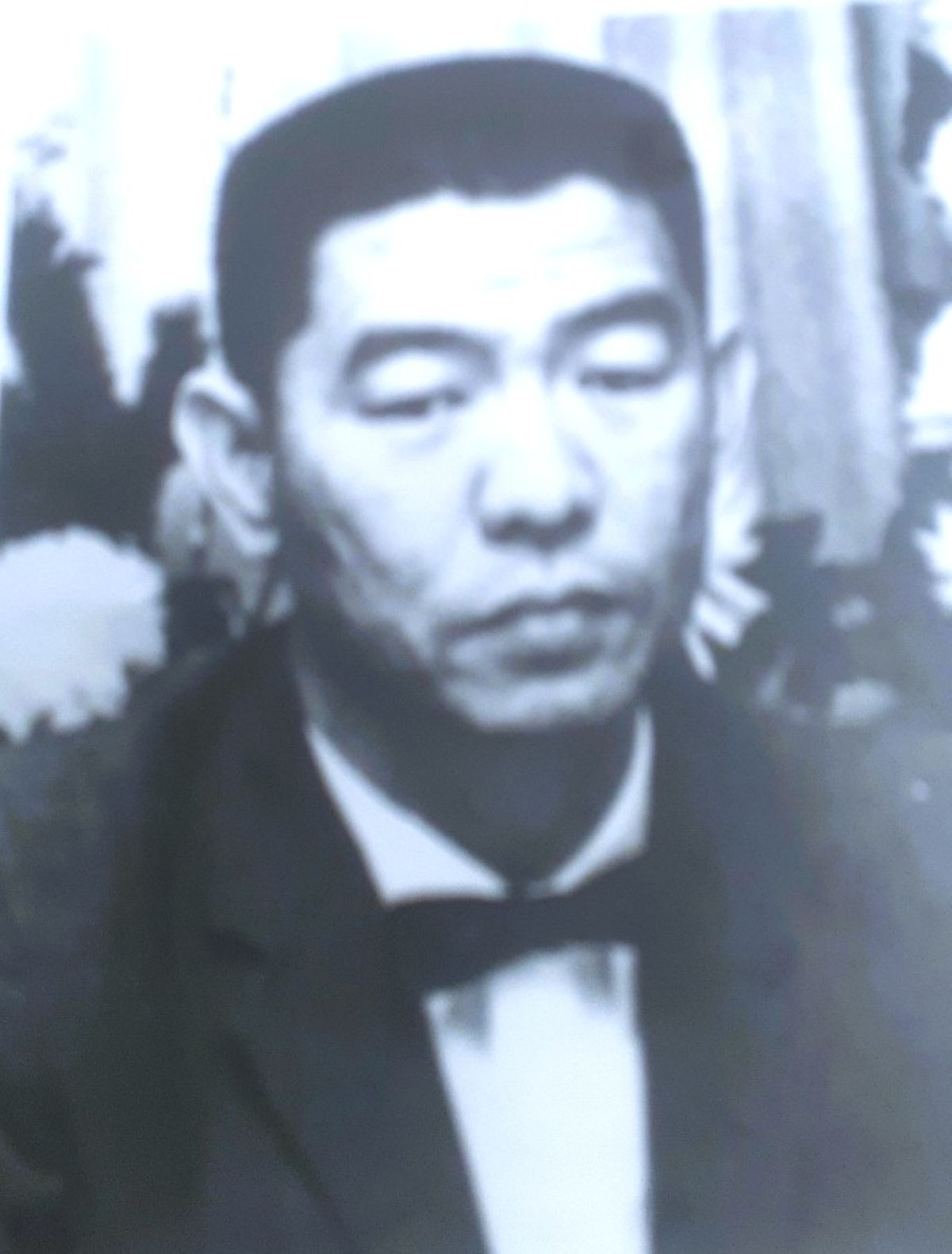
Fujio Matsuda was born in Honolulu on October 18, 1924. His parents Yoshio and Shimo had both emigrated to Hawaii from Japan. They taught Fujio, who would later be affectionately called “Fuj” — a nickname ultimately modified to “Fudge” — to embrace a wide range of traditional Japanese values that included gambare (to persevere), kansha (gratitude), and doryoku (hard work). Matsuda grew up in the Honolulu neighborhood of Kaka’ako. He graduated from McKinley High School in Hawaii’s capital city in 1942.
Matsuda subsequently enrolled at the University of Hawaii (UH). He ended up studying there for only one semester, however. This was because, with the United States heavily engulfed in fighting in World War II at the time, Matsuda joined the 442nd Regimental Combat Team of the U.S. Army. This infantry unit was composed almost entirely of second-generation American soldiers of Japanese ancestry and it became the most decorated military unit in American history. The motto for the 442nd Regimental Combat Team was “Go for Broke.” Matsuda specifically served in this unit’s 232nd Combat Engineer Company. He was eventually assigned to the European Theater and awarded the Bronze Star for his tour of duty there.
Following the end of World War II, Matsuda resumed his studies at UH. He continued there for two years before transferring to the Indiana-based Rose Polytechnic Institute (now known as Rose-Hulman Institute of Technology), where he graduated in 1947 with a bachelor of science degree in civil engineering.
Matsuda went on to earn a doctorate in structural engineering from the Massachusetts Institute of Technology (MIT) in 1952. He worked as a research engineer at MIT over the next two years before working as both a researcher and assistant professor at the University of Illinois for two years. Matsuda and his wife Amy — along with Bailey, Thomas, and Sherry (the first three of their six children) — then made their way back to Hawaii. Between 1955 and 1962, Matsuda worked at UH as a professor of civil engineering and ultimately the chairman of that department. During this time, he also helped establish the civil engineering firm SMS Associates.
A major career change for Matsuda took place in 1963, when he became director of the Hawaii Department of Transportation (HDOT). He would serve in this role for a decade. During his tenure as director, Matsuda oversaw a broad array of upgrades, expansions, and additions for the state’s transportation network.
“Under Dr. Matsuda’s direction, Hawaii became the first area to develop a statewide transportation plan,” reported American Highways magazine (published by the American Association of State Highway Officials) in its July 1973 issue. “Utilizing the most advanced planning techniques, his efforts resulted in an accelerated highway construction and improvement program and installation of new highway safety features.” This article also noted, “His highway program encountered controversy, but he was able to guide it with steady progress. His efforts resulted in Honolulu International Airport being the first in the U.S. to have terminal and gate facilities to handle the then new B-747 jumbo jet.”
Matsuda’s other key accomplishments as HDOT director included co-sponsoring the first Pacific Area Cargo Conference in 1971. This conference brought together various government and industry leaders to discuss air cargo priorities and the most pressing needs in this regard. With respect to other modes of transportation, Matsuda initiated the creation of master plans for both Hawaii’s harbor system for small boats and a web of bikeways within the Aloha State.
Matsuda formally stepped down as director on May 15, 1973. Two days later, he became the first nonfederal transportation official to be honored by the U.S. Department of Transportation (USDOT) under its External Award Program. The presentation of USDOT’s Award for Exceptional Service to Matsuda was held during a National Transportation Week luncheon at the Ilikai Hotel in Honolulu. Jack C. Webb, the Federal Aviation Administration’s administrator for that region of the United States, presented the award. He also read the citation provided by Claude Brinegar, the U.S. secretary of transportation.
“For a decade, Dr. Matsuda has shown outstanding leadership in creating a statewide integrated transportation system utilizing intermodal coordination,” proclaimed Webb on Brinegar’s behalf. “Under ideal conditions, it would have been a major accomplishment in itself. But given the unique island environment of Hawaii, Dr. Matsuda’s work is all the more remarkable.” This citation further asserted, “His work went far beyond the State of Hawaii. He became the transportation leader for the entire Pacific Rim. His record might well serve as a model of Federal-State cooperation across the entire spectrum of transportation efforts.”
That same year, Matsuda’s achievements during his tenure at HDOT also earned him election to the National Academy of Engineering (NAE). Membership in NAE is considered to be one of the highest professional distinctions for an engineer.
After leaving HDOT, Matsuda returned to UH to serve as its vice president of business affairs. The following year, he was named the university’s ninth president. Matsuda had the distinction of being the first person of Asian descent — as well as the first Hawaii-born individual — to assume this role. (He was also the first Asian American to become president of a major university in the United States.) Matsuda remained president until resigning in 1984. Over the next dozen years, his positions included serving as director of UH’s Research Corporation and the president of the Japan America Institute of Management Science. In addition, Matsuda was on the boards of several non-profit organizations.
Matsuda’s other notable honors included being formally designated as one of the Living Treasures of Hawaii in 2004. Matsuda died at his home in Honolulu on August 23, 2020. He was 95. “Throughout the later stages of his career, Fudge and Amy were kind and generous mentors to their grandchildren, passing on their values and life lessons to build the next generation,” noted his obituary in the Honolulu-based Star-Advertiser. “By the time their grandchildren were going on to higher education and starting families of their own, Grandpa Fudge could see that his dream of passing down core humanitarian values to future generations was being fulfilled.”
Photo Credit: American Highways (July 1974)
For more information on Fujio Matsuda, please check out https://www.nae.edu/28928/Dr-Fujio-Matsuda and https://obits.staradvertiser.com/2020/09/06/dr-fujio-matsuda-06092020/

 Transportation History
Leave a comment