December 12, 1951
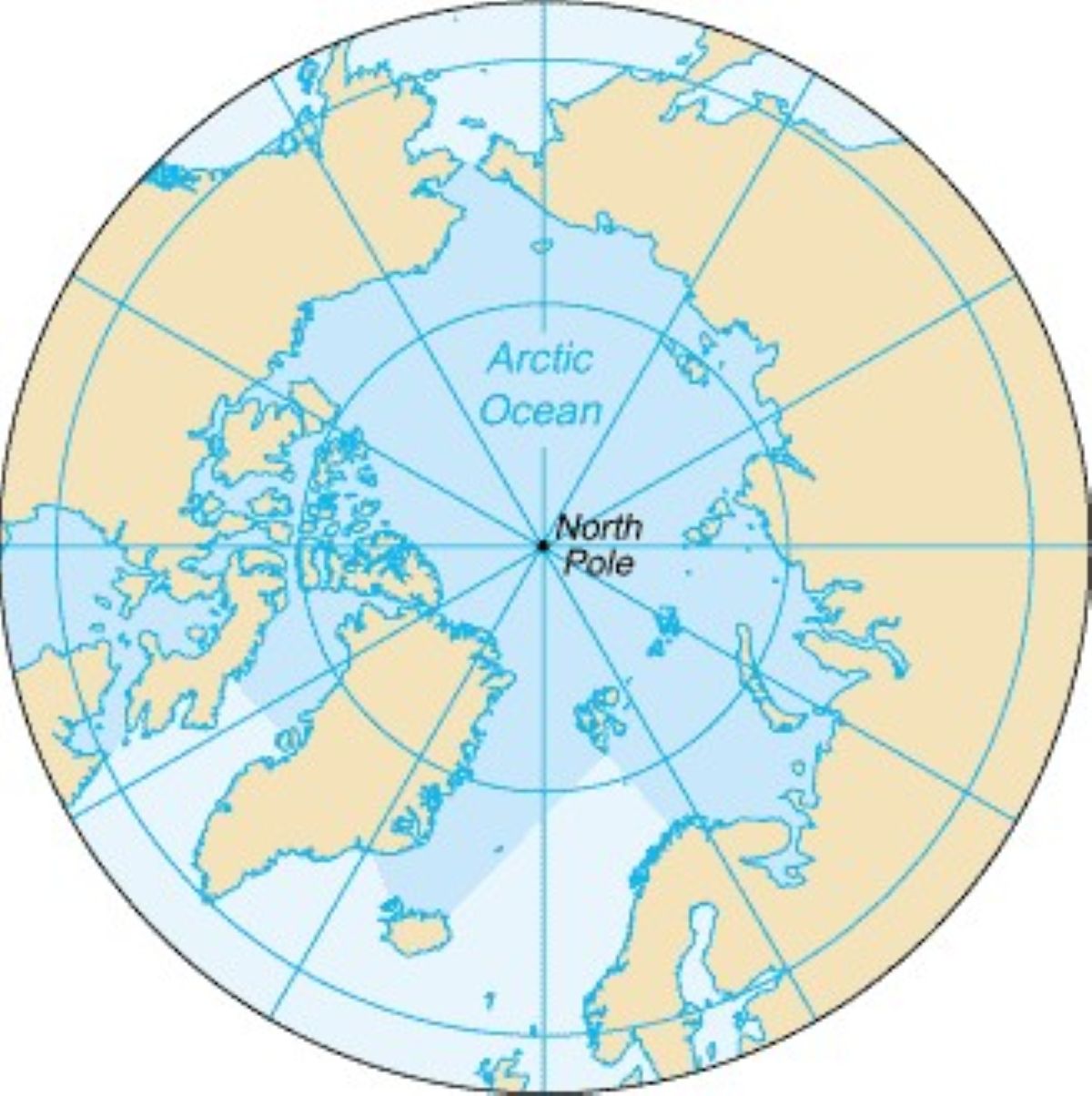
With the holiday season in full swing throughout much of the globe, a four-engined Douglas DC-4 airliner made its way over the North Pole to deliver more than 5,000 letters to Santa Claus. This jolly old elf had been identified as a resident there at least as far back as 1866, when – in a Harper’s Weekly cartoon drawn by Thomas Nast – he was depicted as having both his home and workshop at Earth’s northernmost point.
Alaska Airlines not only provided the plane for this ambitious mail-delivery effort but also served as its sponsor. The flight marked the first one by a commercial airliner in the skies above the North Pole. The chief pilots for this airborne journey were Larry Flayhart and J. Robert Long. The others on board the aircraft — nicknamed the North Pole Express — were Charles Hall and Dan McClain, co-pilots; Wayne Wistling, navigator; Jack Cannon, radio operator; Henry O’Neill, flight engineer; and Don Shaft, steward. All but one of them hailed from Anchorage, Alaska; the exception was Wistling, who came from Portland, Oregon.
The airliner’s polar route from Alaska to the top of the world had been prepared by the 58th Weather Reconnaissance Squadron at Eielson Air Force Base, located about 26 miles (42 kilometers) southeast of Fairbanks, Alaska. The plane’s takeoff from Fairbanks on December 11 was delayed an hour due to an engine problem that had to repaired.
It was also at this point that Jack Peck, operations manager for Alaska Airlines, warned that the plane would need to be flown higher than the overcast estimated to be 6,000 feet (1,828.8 meters) in altitude along the route. “If they can’t stay above the overcast, the flight’s off,” Peck said. “They must be able to see the stars in order to navigate.”
The plane left Fairbanks at 12:59 p.m. Alaska Time (AKST). Those who were on hand to watch this departure included Fairbanks Mayor Robert Hoopes; and actress and singer Carolina Cotton. The 26-year-old Cotton, who had achieved fame for both her yodeling skills and her roles in movie westerns featuring cowboy stars such as Gene Autry, kissed each of the plane’s crew members before they began their journey to the North Pole.
While she evidently wished to travel to the North Pole on this first-of-a-kind flight, Cotton was not allowed to do so due to rules set forth by both Alaska Airlines and the Civil Aeronautics Administration (forerunner of the present-day Federal Aviation Administration) that barred civilians from such a trip.
Another woman prohibited from traveling on the flight was Audree Vance, who had come up with and vigorously pursued the idea of this novel mail-delivery mission. Vance, who became known as “North Pole Nellie,” was equanimous when discussing her exclusion from the flight that she had essentially made possible in the first place. “Naturally, I’m disappointed that I can’t go,” she said, “but it’s a real thrill to see something you’ve worked on so hard to begin to work out.”
After a stop at Point Barrow (the northernmost part of Alaska) for refueling, the North Pole Express continued its Yuletide expedition to Santa’s home base mostly by moonlight. “Stars were used to navigate the ship to the top of the world,” reported a subsequent news story by United Press Associations (now called United Press International). The time at which the airliner reached its destination on December 12 was 12:58 a.m. (AKST) – exactly 12 hours after the departure from Fairbanks.
Along with dropping off the numerous letters on board the plane, the crew also had a nine-foot (2.7-meter) steel pole to throw out onto the polar cap below. This red-and-white striped pole was specially created by Stan Garson, a former naval oil reserve worker at Point Barrow. Just like Cotton and Vance, he was not allowed to be a passenger on the flight.
United Press Associations (UP) recounted, “The candy-striped marker was dropped at the North Pole as the eight-man crew of the Alaska Airlines plane shattered the stilling of the arctic night with yodels.” Those yodels were performed as a tribute to Cotton. UP further stated, “Thousands of youngsters’ letters to Santa Claus tumbled out of the DC-4 along with the pole which was standing upright in Santa’s back yard.”
Flayhart later went into detail about how the dropping of the pole was handled. “We tied a flashlight to it, so we could watch it fall,” he explained. “The light disappeared when the pole hit the ice.” As Flayhart also noted, this particular drop took about 15 seconds from an altitude of 7,000 feet (2,133.6 meters). He mentioned as well that the temperature in the vicinity of the North Pole was -15° F (-26.1° C). After confirming the successful drop-off of the letters as well as the pole, Flayhart proceeded to turn the airliner around for a direct flight back to Fairbanks.
The North Pole Express landed at Fairbanks at 9:31 a.m. (AKST) that same day. Those awaiting this return flight included Cotton, who once more took the time to kiss all of the plane’s crew members.
Image Credit: Public Domain
For more information on the 1951 flight of the North Pole Express, please check out San Bernardino Sun – 13 December 1951
Additional information on aviation milestones in 1951 is available at https://en.wikipedia.org/wiki/1951_in_aviation

 Transportation History
Leave a comment