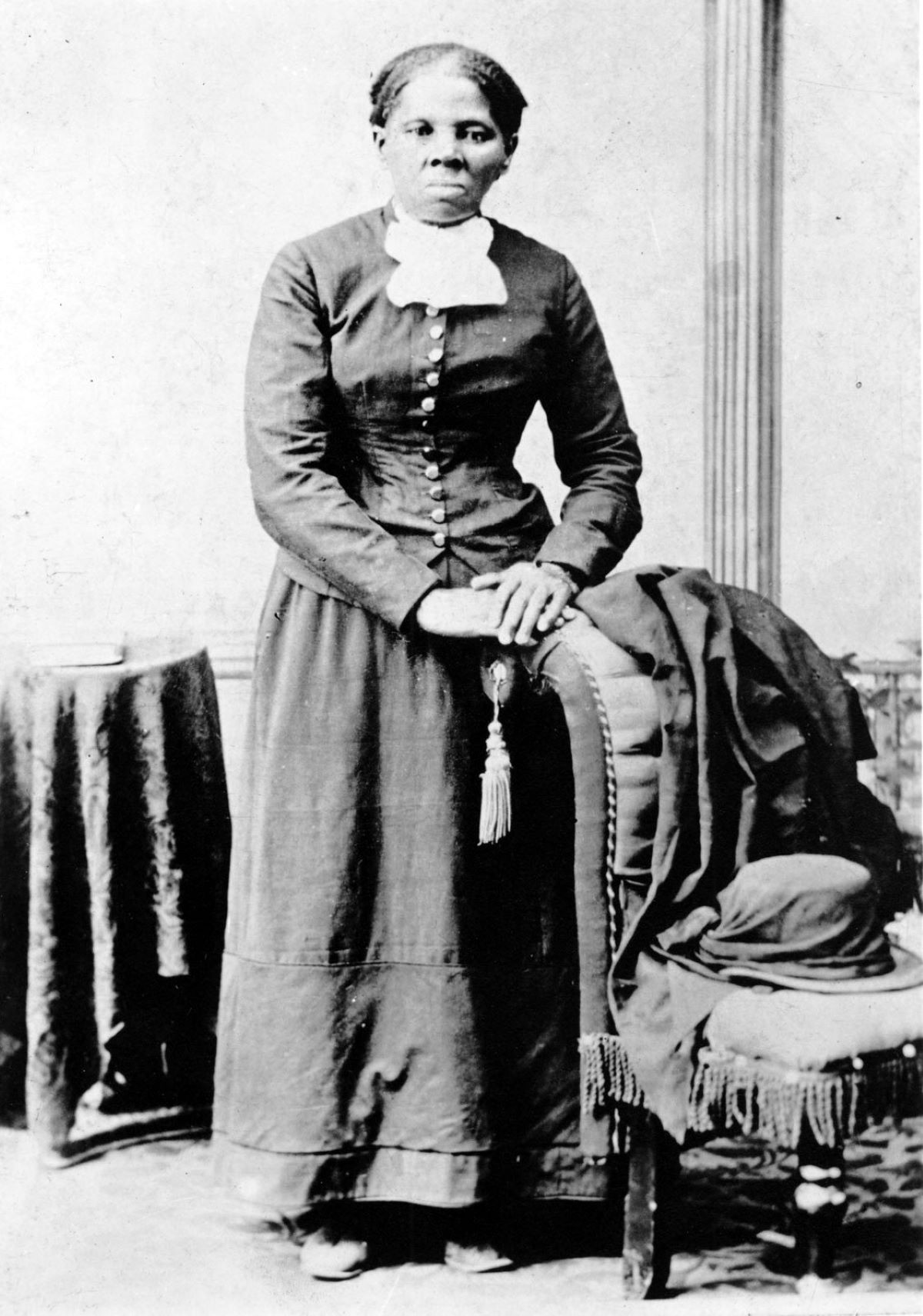
Harriet Tubman escaped from slavery in Maryland in 1849. She subsequently risked her life to help others from that state likewise escape to freedom. As an Underground Railroad conductor in those years prior to the American Civil War, Tubman led about 70 enslaved people to the North. In addition, it has been estimated that Tubman gave guidance to at least 70 other individuals escaping from slavery on their own. Tubman’s courageous and effective efforts as part of the Underground Railroad established her powerful and still-inspiring reputation as a fierce champion of freedom.
One of Tubman’s more challenging and audacious efforts in this regard took place in 1856, when she went to Baltimore to find an enslaved woman known to us today as Tilly and help her escape to safety in Philadelphia. Tubman undertook this escape attempt in response to a request from Tilly’s fiancé, a former enslaved person who had made his way to Canada during the late 1840s and long hoped that they would eventually be reunited.
That 1856 rescue mission is now widely remembered as the Tilly Escape, and Tubman fully understood that it would be anything but easy. Tubman — armed with a letter of passage stating that she was a free woman from Philadelphia — had traveled to Baltimore on a steamship and via the Chesapeake & Delaware Canal. (She also had money provided by Tilly’s fiancé for needed expenses.) Tubman was strongly concerned, however, about both she and Tilly traveling together on that same direct route to get to Philadelphia. Among other things, Tubman thought that they might risk being jointly identified as women who had escaped from slavery and consequently captured. Tubman therefore needed to assess how to avoid that fate and figure out which modes of transportation would best enable them to get to their destination in the free state of Pennsylvania.
They ultimately headed in another direction aboard a vessel named Steamboat Kent, which made her way south from Baltimore and for about 40 miles (64 kilometers) on the Chesapeake Bay. This steamboat then traveled northeast via the Nanticoke River and landed at Seaford, Delaware. Tubman and Tilly spent the night at what was the only hotel in that town (now a city). A slave trader caught up with both women there but let them go after Tubman showed him forged passes indicating that she and Tilly were free citizens rather than fugitives.
Following that close call, Tubman and Tilly walked eight miles (12.9 kilometers) north to the town of Bridgeville, Delaware. It was there that they took a northbound train to the town of Camden, Delaware. William Brinkley, a free black man who was an Underground Railroad conductor, then transported them in a horse-drawn carriage for a 50-mile (80-kilometer) northward journey to the home of white abolitionist Thomas Garrett in the city of Wilmington, Delaware. Wilmington had the distinction of being the last city before Philadelphia that was within a slave state, and Garrett’s house served as a station of the Underground Railroad.
After finally reaching Philadelphia, Tubman and Tilly met up with the latter’s fiancé. The reunited couple soon traveled together to Canada. Tubman, for her part, journeyed back to Maryland for her next mission: rescuing a family of four from slavery. A key source of information on the Tilly Escape is a letter that Garrett wrote that same year to fellow abolitionist Eliza Wigham. Garrett described what he called a “remarkable” trip that “manifested great shrewdness.”
A historical marker commemorating the Tilly Escape is located at the corner of North Market and High Streets in Seaford. In 2013, this site officially became part of the series of historic landmarks within the National Park Service’s National Underground Railroad Network to Freedom.
(The accompanying photo of Harriet Tubman was taken in 1895.)
Photo Credit: Public Domain
For more information on the Tilly Escape, please check out https://en.wikipedia.org/wiki/Tilly_Escape

 Transportation History
Leave a comment