May 3, 1956
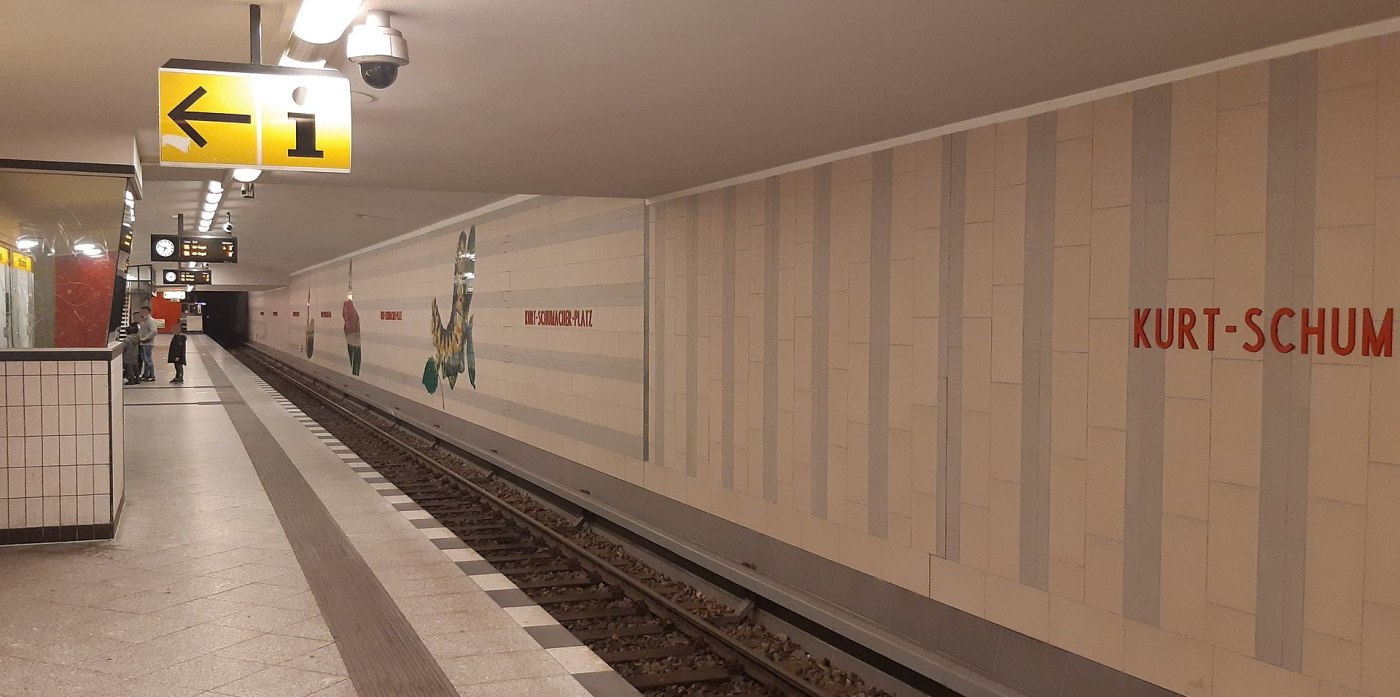
Kurt-Schumacher-Platz in Berlin, Germany, was officially opened. This underground station is a link in the Berlin U-Bahn, the rapid transit system serving the country’s largest city (and capital of the present-day Federal Republic of Germany). Kurt-Schumacher-Platz was built as part of the extension of the Berlin U-Bahn’s north-south line known as U6. This portion of the line was the first segment of the Berlin U-Bahn to be constructed and inaugurated in the post-World War II era.
Kurt-Schumacher-Platz was designed by Berlin-born architect Bruno Grimmeck. The more distinctive features of this station include the yellow tiles on its walls. This facility was named in memory of an outspoken and courageous statesman. A fierce critic of Adolf Hitler and Nazism, Kurt Schumacher was imprisoned in various concentration camps for about a decade prior to the end of World War II. He subsequently served as one of the founders of postwar German democracy up until his death at the age of 56 in 1952. (“Platz,” which is also part of the designation for the station bearing Schumacher’s name, is the German word for “place.”)
The Berlin U-Bahn encompasses a total of 96.7 miles (155.6 kilometers) and 175 stations. As one of nine lines within this system, U6 covers 12.4 miles (19.8 kilometers) and contains 29 stations.
Photo Credit: Dasas (licensed under the Creative Commons Attribution-Share Alike 4.0 International license at https://creativecommons.org/licenses/by-sa/4.0/)
For more information on Kurt-Schumacher-Platz, please check out https://en.wikipedia.org/wiki/Kurt-Schumacher-Platz_(Berlin_U-Bahn)

 Transportation History
Leave a comment