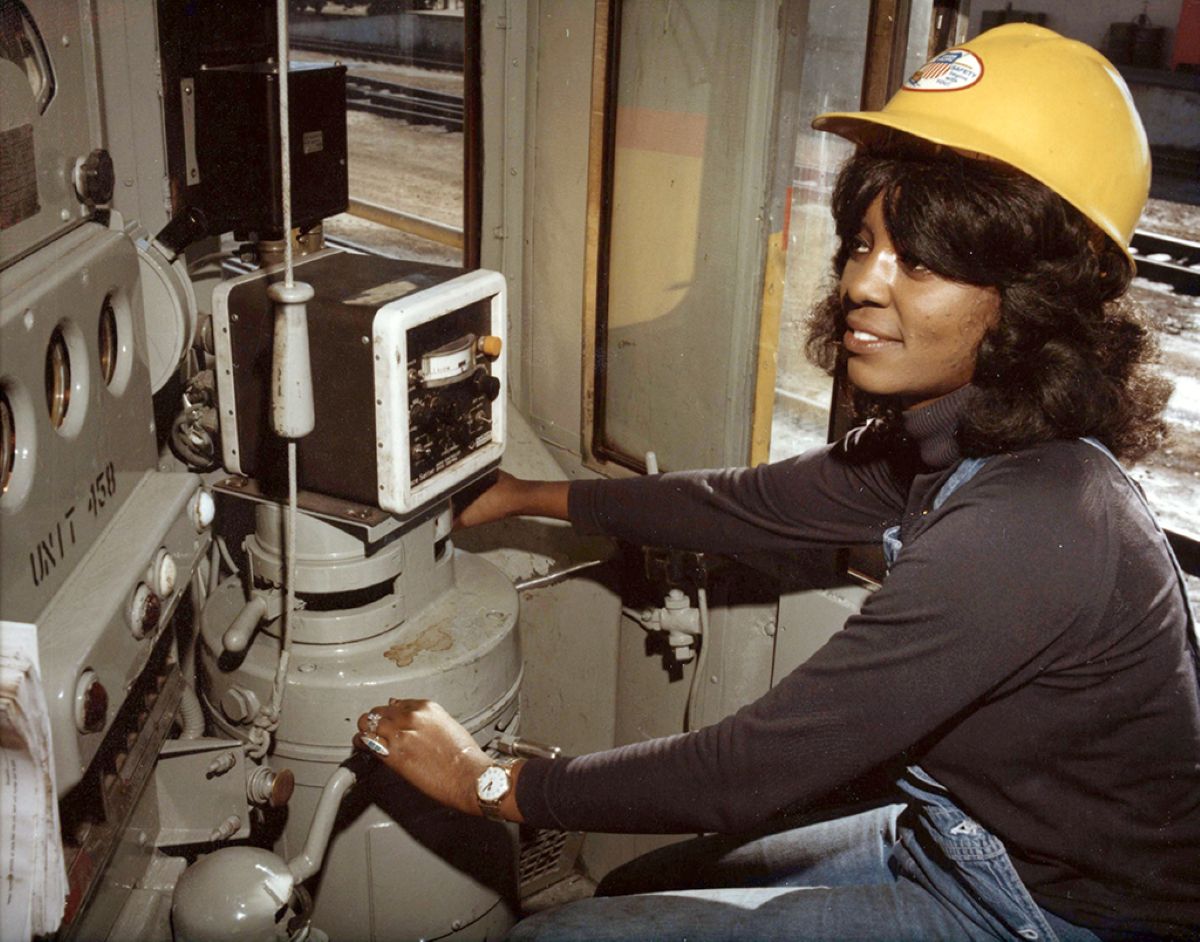
In 1976, Edwina Justus became the first black woman to work as a locomotive engineer for the Union Pacific Railroad (UP). Her life’s journey began on July 11, 1943, when she was born in Omaha, Nebraska, to Lee and Caldonia Isaiah Chaney. In one of her earliest trailblazing roles, she was the first black student to be enrolled at Brown Park Elementary School in the Cornhusker State’s largest city.
Justus went on to attend Omaha Technical High School. After graduating from there in 1960, she began working for Western Electric as a wireman. Justus eventually applied for a position at UP. Justus’s application, however, was rejected due to both her race and gender. In 1969, she left Western Electric to enroll at the University of Nebraska-Omaha (UNO) with hopes of becoming a social worker.
After learning about clerical job openings for women at UP in 1972, though, Justus again changed her career goals. She abandoned her studies at UNO and began work as a traction motor clerk at UP. Justus was one of only five black women at that company at the time. Her responsibilities in her first position at UP involved closely monitoring the condition of traction engines.
After Justus learned about a vacancy for a locomotive engineer at UP, she immediately applied for this position and was hired for it. In this pioneering role, Justus moved from Omaha to the Nebraska city of North Platte. She was one of only 80 blacks in a city of 22,000 residents and ended up encountering a large share of racist incidents both on and off the job. One such incident was the burning of a wooden cross in her front yard in 1979.
Despite all of the harsh treatment that she had to contend with, Justus prevailed by staying focused on her goals and working hard to carry out her job duties. She began this stage of her railroad career as a yard hostler, maneuvering locomotives and their cars in the train yard. Justus eventually made regular trips to Cheyenne, Wyoming, as well as the Nebraska cities of Gering and Scottsbluff to transport livestock, coal, corn, and sugar beets. Justus – sometimes working up to 12 hours a day – ultimately took on new and even more challenging responsibilities that included transporting larger cargo such as automobiles and airplane wings.
In 1998, Justus retired from UP after working for the company for more than two decades. She then moved back to Omaha with her husband Arthur Justus, whom she had met during her time at UP. In 2016, UP’s railroad museum in Council Bluffs, Iowa, opened an exhibit highlighting Edwina Justus’s life and legacy. This exhibit was titled “Move Over, Sir: Women Working on the Railroad.”
Photo Credit: U.S. Department of Labor
For more information on Edwina Justus, please check out https://www.blackpast.org/african-american-history/people-african-american-history/edwina-curlie-justus-1943/

 Transportation History
Leave a comment