July 22, 1904
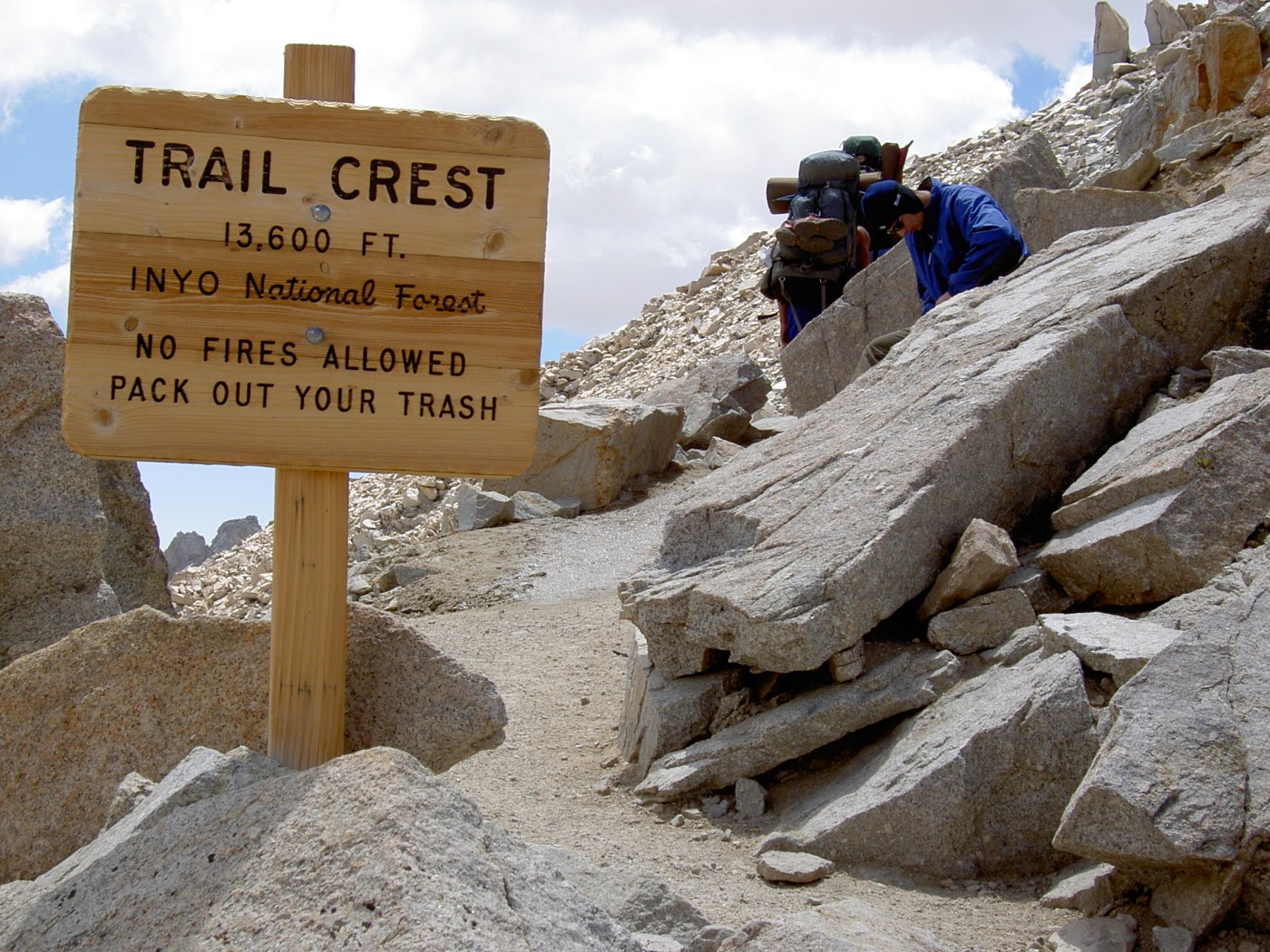
In east-central California, a hiking trail that climbs up the 14,505-foot (4,421-meter)-tall Mount Whitney – the highest point in the contiguous United States – was officially ready for public use. That day’s edition of the Inyo Independente included updates on the trail from Gustave Francis “Gus” Marsh (1869-1946), the local engineer overseeing construction of it.
The newspaper reported, “Mr. Marsh states the trail has been completed to the summit of Mt. Whitney and that a pack-train has been taken to the monument on the summit of the peak.” Marsh also confirmed that the festivities to commemorate the opening of the Mount Whitney Trail would include baseball games and a parade.
Well over a century later, the Mount Whitney Trail continues to be heavily used. This 11-mile (18-kilometer) trail and the record-breaking mountain on which it exists are part of Inyo National Forest.
Photo Credit: Sanjoy Ghosh (https://www.flickr.com/photos/66493466@N00/) – licensed under the Creative Commons Attribution 2.0 Generic license at https://creativecommons.org/licenses/by/2.0/deed.en
For more information on the Mount Whitney Trail, please check out https://en.wikipedia.org/wiki/Mount_Whitney_Trail and https://lonepinechamber.org/history/mt-whitney-history/

 Transportation History
The story of the Mount Whitney Trail’s completion highlights how access to great mountains begins with the vision and hard work of trailbuilders. Reading this makes me reflect on the trekking routes to Everest Base Camp in Nepal — also born from perseverance, shaped by history, and opening the world to stand in awe of towering peaks. Whether in California or the Himalayas, these trails are more than journeys; they’re living links to mountain heritage.
https://www.himalayaheart.com/trip/everest-base-camp-trek
LikeLike