August 14, 1957
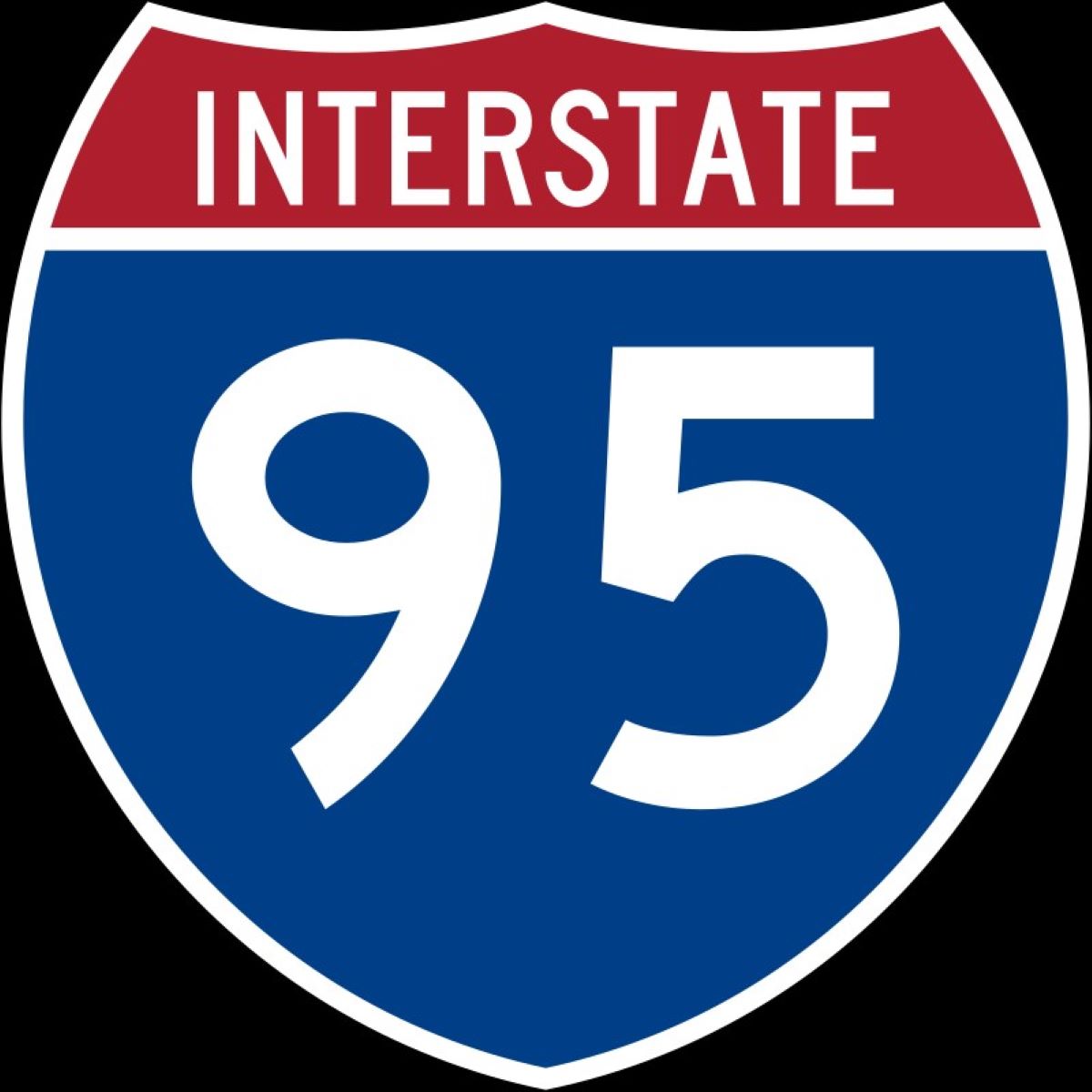
The Administration Committee of AASHO (now known as AASHTO) approved the now-familiar shield used on the Interstate Highway System. The committee made this decision in the wake of several months during which the association’s U.S. Route Numbering Committee sifted through and evaluated dozens of shapes and sizes for a possible route marker for that then-new highway network.
AASHO had formally asked the states to present suggestions for such a marker, and the entries included everything from a 2.2-inch (55-millimeter) color transparency to a four-foot (1.2-meter) square aluminum blank. Quite a few of the states incorporated the letter “I” for “Interstate” in their submissions.
In addition, several entries included imagery explicitly representing the country that the Interstate Highway System would someday crisscross. Submissions from both New Hampshire and New York, for example, featured outlines of the 48 contiguous states that then constituted the United States in its entirety. (Alaska and Hawaii did not join the union until a couple of years later.) Then there was the entry from Idaho depicting that longtime national symbol, the bald eagle. North Carolina, for its part, submitted a design that showed not just any “I” but one striped in glorious red, white, and blue.
The members of the U.S. Route Numbering Committee ended up selecting submissions from AASHO itself, Louisiana, New Hampshire, and Texas for further consideration. Full-size versions of each of those signs were set up along a route near what would soon become the site of the AASHO Road Test in the city of Ottawa, Illinois, which is about 80 miles (128.8 kilometers) southwest of Chicago.
The Administration Committee was holding a special meeting in the area at the time, and its members had the opportunity to assess the signs in an outdoors setting. Rather than approaching the signs by foot, these state highway officials traveled past those finalists via motor vehicles so that they could better appreciate what each image would potentially look like to people driving on Interstate highways.
The submission approved by the committee was the one from Texas. The person who designed this entry was Richard H. Oliver, a senior traffic engineer in the maintenance and operations division of the Texas Highway Department. (AASHO ultimately incorporated elements of an entry from Missouri into a revised version of what Oliver had submitted.) Bertram D. Tallamy, the head of the Federal Highway Administration and a past AASHO president, officially adopted the new shield the following month for nationwide usage along Interstate highways.
“This marker is the official marker which will be used on the routes of the National System of Interstate and Defense Highways throughout the United States,” noted an article in the October 1957 issue of AASHO’s American Highways magazine. “It will always be a reflectorized sign in full colors — red, white and blue.”
For more information on the selection of the Interstate Highway Shield, please check out https://www.fhwa.dot.gov/infrastructure/50sheild.cfm
Additional information on Richard H. Oliver is available at https://static.tti.tamu.edu/tti.tamu.edu/documents/TTI-2006-8.pdf

 Transportation History