November 6, 1926
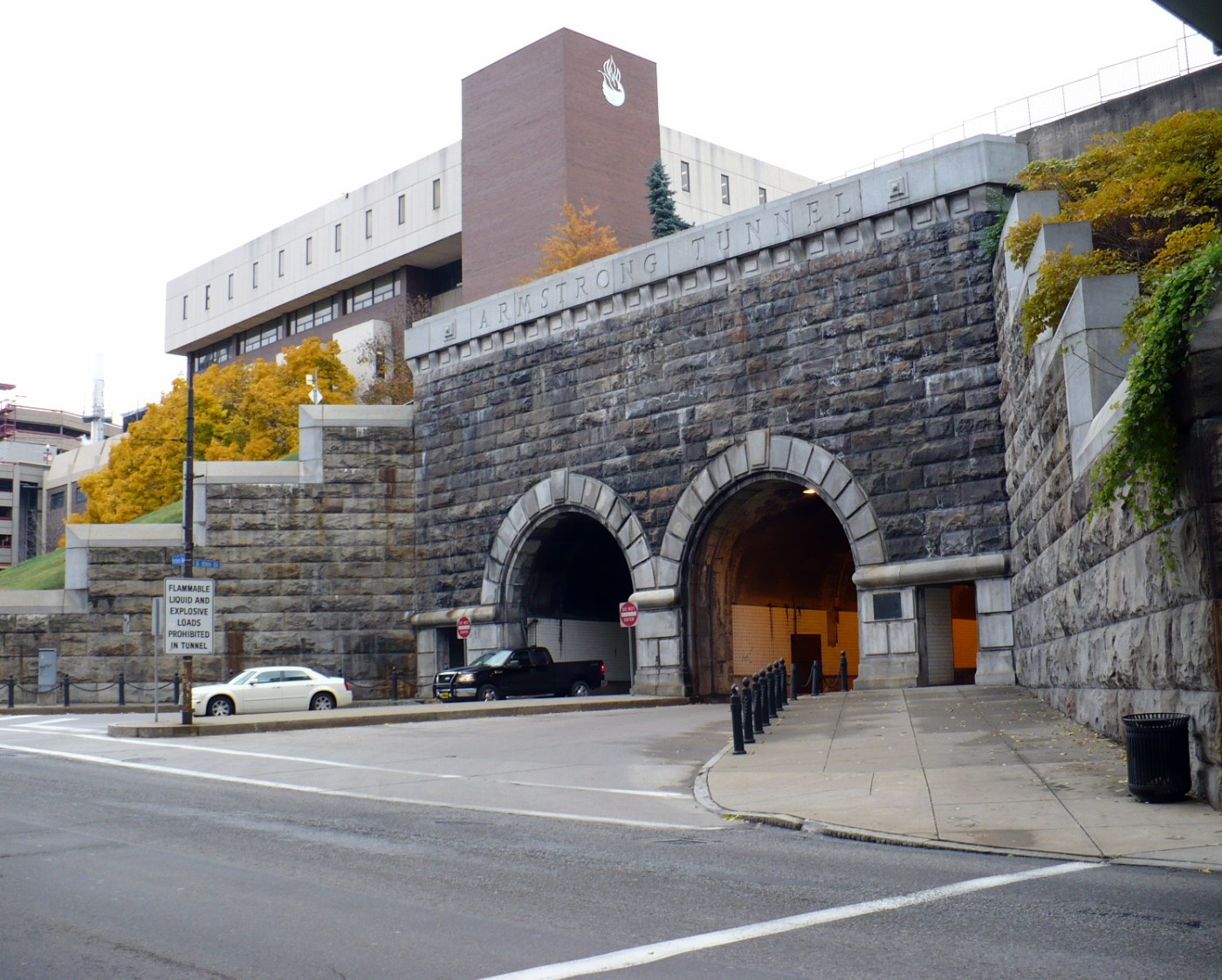
In Pennsylvania’s Allegheny County, hundreds of people showed up for the official dedication of a still-incomplete vehicular tunnel in Pittsburgh. This tunnel serves as a link between Second Avenue at the South Tenth Street Bridge and – via a section underneath Duquesne University and the Steel City neighborhood known as the Bluff – the portion of Forbes Avenue that is flanked by Boyd Street and Chatham Square.
The tunnel was named after Joseph G. Armstrong (1867-1931), a one-time glassmaker who had been born in Allegheny City (now part of Pittsburgh’s North Side and North Shore neighborhoods). While serving as mayor of Pittsburgh from 1914 to 1918, he earned the nickname “Joe the Builder” for the numerous public works projects in the city that he authorized and oversaw.
At the time of the dedication of the tunnel bearing his name, Armstrong was chairman of the Allegheny County Commission (the present-day Allegheny County Council). He had been elected to this commission in 1923 and would continue to serve as its chairman until his death.
The person in charge of the construction of the Armstrong Tunnel (widely pluralized as the Armstrong Tunnels early on in its existence) was Vernon R. Covell (1866-1949), chief engineer of the Allegheny County Public Works Department. Stanley L. Roush (1884-1946), superintendent of the department’s Bureau of Architecture, designed the tunnel’s four portals.
Norman F. Brown (1878-1937), director of the Allegheny County Public Works Department, formally introduced Armstrong at the November 6 ceremony celebrating the tunnel. That day’s edition of the Pittsburgh Press reported on Armstrong’s comments following that introduction.
This newspaper stated, “Armstrong thanked the public for cooperation in the project which will be thrown open to the public about February 1. He thanked the county engineers and Booth & Flinn, Ltd., the contractors.”
Edward V. Babcock (1864-1948), one of Armstrong’s fellow Allegheny County commissioners, used that festive event to hail the commission chairman as “the one man who never quit working for the tunnels to connect Forbes st. and the Tenth st. bridge.” (Babcock succeeded Armstrong as mayor of Pittsburgh; he served in this role until 1922 and joined Armstrong on the commission three years later.)
The Armstrong Tunnel was fully opened for service the following year on May 25, not February 1 as this structure’s namesake had predicted the previous fall. This tunnel, which is still in use today, was added to the National Register of Historic Places in 1984 and designated an architecturally significant structure by the Pittsburgh History & Landmarks Foundation in 2003.
Photo Credit: Alekjds (licensed under the Creative Commons Attribution 3.0 Unported license at https://creativecommons.org/licenses/by/3.0/deed.en)
For more information on the Armstrong Bridge, please check out https://catalog.archives.gov/id/71997808 and https://storymaps.arcgis.com/stories/3a516a75f9bb46a598ae86a999cf5834


Leave a Reply