January 29, 1914
Fred L. Baker (1872-1927) was a long way from his hometown of Los Angeles, but he had had an important reason for being in New York City on a Thursday in January. As president of the Automobile Club of Southern California — an affiliate of the federation of motor clubs of the American Automobile Association (AAA) — Baker was visiting the Eastern Seaboard to consult with his fellow national officers of AAA on the status of highways and automobiles along the Pacific coast. (Baker was not just president of one of the oldest and largest affiliates but also third vice president of AAA.)
In giving a report card to AAA colleagues on his part of the world, Baker underscored California’s commitment to the push for better highways. He also emphasized an ever-growing priority in a year that would culminate with the establishment of AASHO (now known as AASHTO): the need for increased federal support for road-building efforts at the state level.
“It is quite natural that California should be deeply interested in the present progress of the good roads movement generally and particularly in connection with Federal participation,” said Baker. “While we are fortunate in California in being able to finance our own road building, as is the case in the Eastern States, we realize that many of the States between the two coasts must have assistance from the National Government in order to bring about gradually a network of interstate roads which shall connect the sections of our great country.”
Baker also used his time in New York City to highlight what lay ahead for his native state not during that year but in the next when it came to motorized transportation. “California expects to entertain in 1915 an army of Eastern road users,” reported the New York Times in its summary of Baker’s remarks.
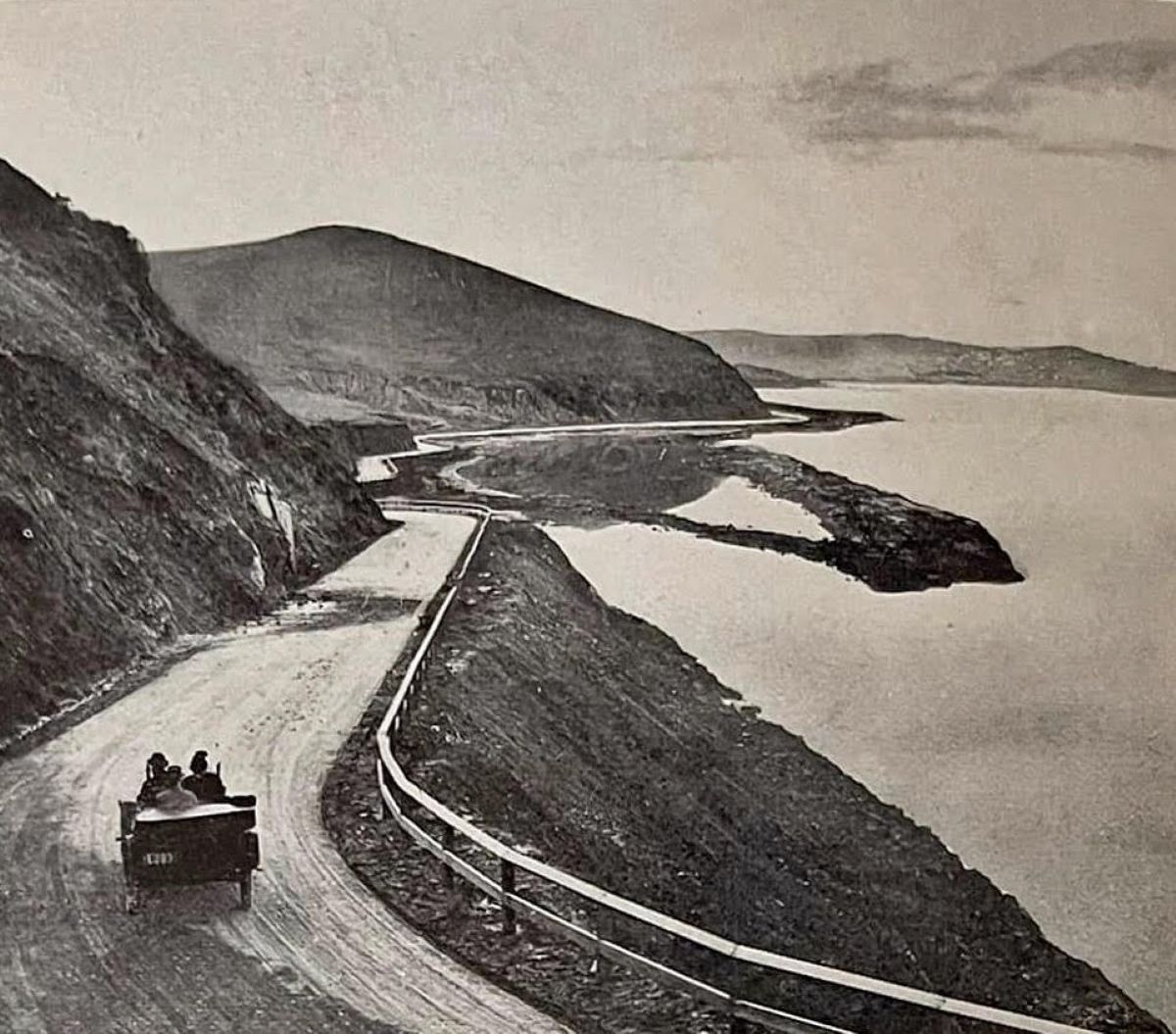
The two large-scale events of 1915 that were expected to bring that “army of Eastern road users” to the Golden State were the Panama-Pacific International Exposition to be held in San Francisco and the Panama-California Exposition taking place in San Diego. The accompanying photo of a portion of the Bay Shore Road in the San Francisco area was included in the visitors’ brochure for the Panama-Pacific International Exposition.
While the formal purpose of each exposition was to help celebrate the opening of the Panama Canal — on schedule to make its official debut by that time — both were also viewed by good-roads champions nationwide as not-to-be-missed opportunities to showcase something else: the benefits of highways in facilitating long-distance travel from one coast to the other.
Carl G. Fisher (1874-1939), as a matter of fact, had first publicly pitched the idea of the Lincoln Highway to automobile industrialists in 1912 by saying how it could be completed in time for the opening of the exposition in San Francisco. (This proved to be a goal based more on hope than reality.) Baker and his fellow members of the Automobile Club of Southern California, for their part, pent 1914 working with the National Old Trails Road Association — a group promoting another transcontinental route — to post signs to help motorists find their way to each exposition.
In talking to his AAA colleagues in New York City, Baker made it clear what he thought that he and his own affiliate could accomplish in paving the way for that projected influx of automotive traffic. “In the Yosemite Valley we are seeking the construction of an all-year-round route and also contending for an opening of this noted scenic playground commensurate with its greatness, and demanding, as it now does, the unhampered use of motor-propelled vehicles,” he asserted. “Situated between two expositions, we in Los Angeles anticipate exceptionally large number of visitors, and we want them to know that the Automobile Club of Southern California is well equipped to aid them in the latest information for their California touring.”
Baker’s active role in the promotion and improvement of highways was indisputable. A founder of the Automobile Club of Southern California, he had served as its president starting in 1910 and continued in this position until 1920. Baker’s interest and involvement in transportation, however, went well beyond just roads and automobiles. He served at one point as the general manager of the popular Mount Lowe Railway scenic mountain railroad service in his region of California, for example. Baker also established a major shipbuilding and maritime repair yard at Los Angeles Harbor and would also form the Los Angeles Steamship Company and other businesses focused on water transportation.
Photo Credit: Public Domain
For more information on Fred L. Baker, please check out https://en.wikipedia.org/wiki/Fred_L._Baker
Additional information on the history of California’s highways, roads, and trails is available at https://dot.ca.gov/-/media/dot-media/programs/environmental-analysis/documents/ser/caltrans-highways-a11y.pdf

 Transportation History
Leave a comment