May 27, 1903
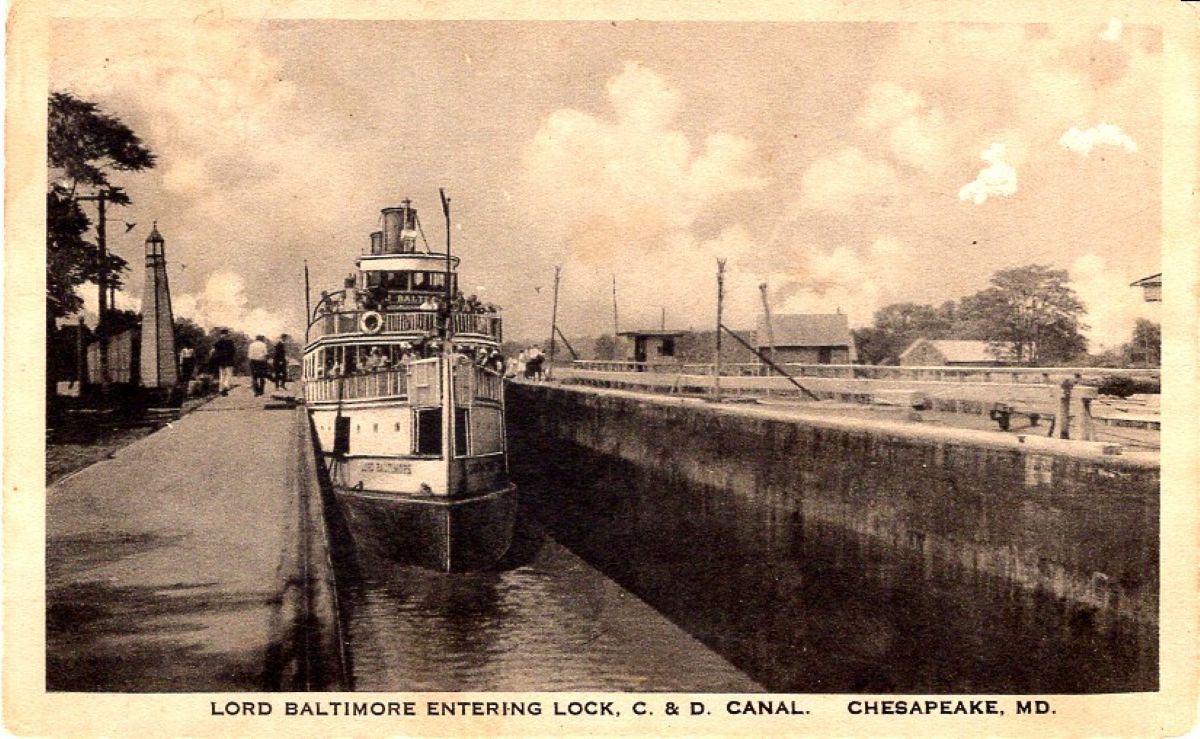
SS Lord Baltimore, a coastal passenger steamship, was launched at the shipyard of Harlan & Hollingsworth in Wilmington, Delaware. SS Lord Baltimore was built by Harlan & Hollingsworth for the Ericsson Line of the Baltimore and Philadelphia Steamboat Company. This vessel was named after Cecil Calvert, 2nd Lord Baltimore (1605-1675), who served as the first proprietor of what was then the English colony of Maryland. The city of Baltimore and the county adjacent to it in the present-day state of Maryland were likewise each named after him.
William Pinkney Maulsby Jr. (1843-1911), a longtime member of the Ericsson Line’s board of directors, was among those attending the Wednesday afternoon launch of SS Lord Baltimore into the Christina River. Along with pursuing a strong interest in maritime activities, Maulsby had served in the Union Army during the American Civil War and established himself as a prominent attorney in Frederick, Maryland. He was accompanied to the launch by his wife Henrietta Hanson Maulsby (1846-1931) and two of their children, Mary Shriver Maulsby (1877-1967) and Henry Hanson Maulsby (1887-1942).
It was the athletically gifted daughter who stole the show that afternoon. The next day’s edition of the Baltimore Sun reported, “Miss Maulsby performed the function of breaking the large bottle of champagne and spilling its contents over the bow of the vessel with a stroke that was said to have been acquired by her golf practice among the hills of Western Maryland, where she is regarded as a formidable opponent by those arrayed against her.”
Lord Baltimore was built with 10 staterooms altogether and could accommodate up to 1,000 passengers. The dining room aboard the vessel was able to seat 100 people at a time. About two-and-a-half months after her launch, Lord Baltimore began her sea trials in the Delaware River. She eventually served as one of the Ericsson Line ships providing regular passenger service between Baltimore and Philadelphia via the Chesapeake & Delaware Canal (C&D Canal), a 14-mile (22.5-kilometer) waterway connecting the Chesapeake Bay with the Delaware River.
Over the years, Lord Baltimore was deployed as well for various other purposes. During the winter of 1909-10, for example, she was used as an icebreaker in the vicinity of the Chesapeake Bay. Lord Baltimore remained in service until being retired in the late 1920s. She was subsequently broken apart for scrap.
Image Credit: Public Domain
For more information on SS Lord Baltimore, please check out https://archive.org/details/lord-baltimore-afloat-new-ves and https://archive.org/details/the-new-ericsson-line-steamer


Leave a Reply