May 28, 1870
Operations began for a funicular — a railway designed to travel both up and down steep slopes — on Mount Washington in Pittsburgh’s South Side area. This section of the Steel City is located along the Monongahela River and across from the city’s downtown area.
The origins of this funicular, which is known as the Monongahela Incline, can be traced to Pittsburgh’s ever-growing industrial base during the 1860s and the consequent need for a lot more people to work in factories, foundries, mills, and several other manufacturing centers within and near the city.
This large-scale demand for labor resulted in numerous German immigrants making their way to Pittsburgh to work in those jobs, but it also created a major shortage of available housing. Quite a few of these immigrants ended up settling in homes on the hilltop and hillsides of Mount Washington.
While this took care of living quarters for those new arrivals, the precipitous terrain of the hill posed significant transportation challenges for workers seeking to journey to and from their jobs in a safe and timely manner. The hairpin turns on Mount Washington’s trails were at best marginally passable for horse-drawn wagons, for example, and the narrower footpaths throughout the hill were similarly tough to navigate on a regular basis.
All of this led the workers and their families to advocate for a form of transportation just like the standseilbahns (German for “funicular railways”) that they had known and used in their homeland for traveling on steep slopes. Construction on the Monongahela Incline began in 1869.
This railway was designed by civil and mining engineer John J. Endres (?-1889), a Prussian immigrant and Cincinnati resident. He was assisted in this project by his American-born daughter Caroline Endres (1846-1930), who made history as one of the first women engineers in the United States.
Civil and mechanical engineer Samuel Diescher (1839-1915), a fellow immigrant who was born in what was then the Kingdom of Hungary, worked with them on the Monongahela Incline. In 1872, Diescher married Caroline Endres; they had six children, three of whom became engineers.
There were approximately 990 people who traveled on the Monongahela Incline on its first day of service. The following day, however, a total of 4,174 passengers rode on those cars. This railway has remained a popular means of transportation on Mount Washington for residents and tourists alike and it holds the record as the oldest continuously operating funicular in the United States.
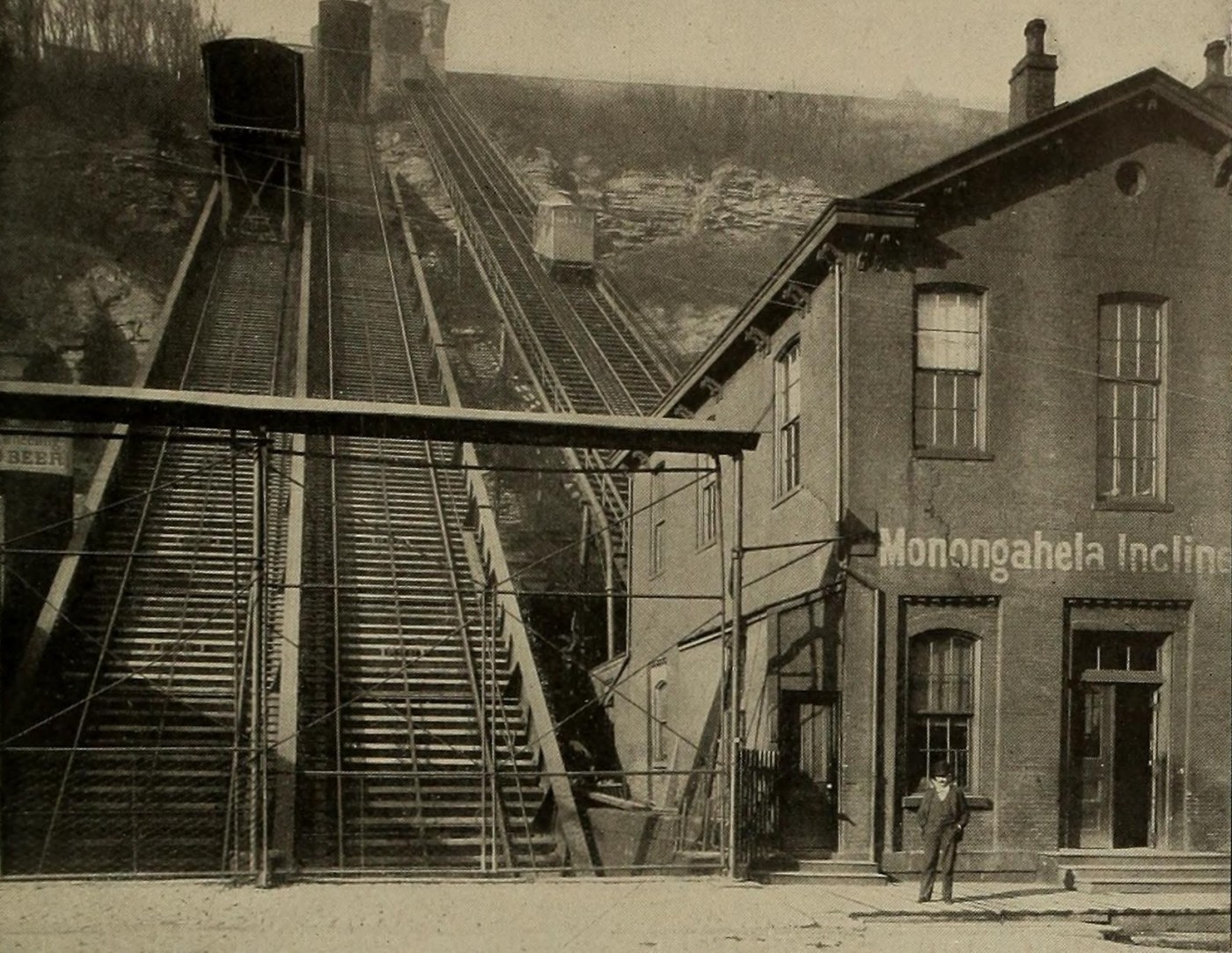
A freight version of this incline was eventually designed by John J. Endres and Samuel Diescher and opened for service on Mount Washington in 1884. The accompanying photo of both the passenger and freight inclines appeared in the June 1897 issue of Cassier’s Magazine. The Monongahela Freight Incline remained in service until 1935.
In 1974, the Monogahela Incline was listed on the National Register of Historic Places. This record-setting funicular was designated as a National Mechanical Engineering Landmark by the American Society of Mechanical Engineers in 1977.
Photo Credit: Public Domain
For more information on the Monogahela Incline, please check out https://monongahelaincline.com/history.html


Leave a comment