The formal efforts to develop what became the U.S. Numbered Highway System began at the annual 1924 meeting of the American Association of State Highway Officials (AASHO) in San Francisco.
It was at this venue that the association approved a resolution called on the U.S. secretary of Agriculture (USDA was the “umbrella” department for the Bureau of Public Roads [BPR] at this time) “ to undertake immediately the selection and designation of a comprehensive system of through interstate routes and to devise a comprehensive and uniform scheme for designating such routes in such a manner as to give them a conspicuous place among the highways of the country as roads of interstate and national significance.”
This resolution also asked the Secretary of Agriculture to appoint a joint board to be composed of members of the Bureau of Public Roads and of the State highway departments to cooperate in formulating and promulgating a system of numbering and marking highways of interstate character.” The follow-through on this request took place in March 1925, when USDA secretary appointed both BPR and state highway officials to serve on the newly authorized Joint Board of Interstate Highways.
The following month, this board had its first full-fledged meeting at BPR’s headquarters in Washington, D.C. One of the major decisions made at this gathering involved scheduling a series of regional meetings across the country whereby designated state highway officials could weigh in on the potential routes and markers for the new highway system that would essentially replace what was then the generally informal and hodgepodge network of auto trails.
It was also agreed that, following the completion of those regional meetings, the board’s members would reunite in the nation’s capital in early August to pick up where they left off in April. The first of the six regional meetings was held on May 15 and 16 in San Franciso, and the final one of these gatherings took place in Boston on June 18.
More than halfway through the interim between the Boston meeting and the reconvening of the board-at-large in Washington, D.C., the Salt Lake Tribune placed a public spotlight on the latest updates concerning Utah and the nationwide efforts of highway officials to improve upon the numerous auto trails with standardized routes and markers for a new grid of highways.
“Utah Stands at Crossroads of Great Highways Crossing Nation,” announced a headline in the July 12 edition of the Salt Lake Tribune. The accompanying article reported that Preston G. Peterson (1884-1945), chairman of the Utah State Road Commission and a member of the board, had “just received from the secretary of the joint board a map showing the combined results of the regional conferences held by members of that board.”
This article went on to highlight what seemed to be the advantageous geographical advantages for the Beehive State as outlined in the board’s draft map. “The map shows how Utah stands at the crossroads of north-and-south, east-and-west roads in this part of the country,” noted the newspaper. “It indicates a route leading roughly from Seattle to El Paso and crossing this state, as well as the better known Zion park highway, and east-and-west highways and the Yellowstone park route.”
The Salt Lake Tribune concluded this article by also addressing the other vital component of the proposed system. This newspaper stated, “Uniform marking of these national routes with assistance of the federal government, and a uniform system of road signs for such hazards as railroad crossings, sharp curves and the like, also are being considered by the joint board.”
Peterson became one of the members of the board to attend its meeting in Washington, D.C., on August 3 and 4. He finally made it back home on August 12 and the next day’s edition of the Salt Lake Tribune asserted that “he was successful in obtaining recognition for Utah in the designation of United States in Utah, linking the important highways of the state as integral parts of the federal interstate system, recommended for heaviest travel and highly susceptible to maintenance and expansion on the part of the federal government.”
The Salt Lake Tribune also made it clear that, while Peterson went to Washington, D.C., as a staunch advocate for Utah, he returned to his home state as a newly anointed regional highways leader. “Mr. Peterson was named the western chairman in charge of submitting the board’s findings and to obtain the approval of New Mexico, Colorado, Wyoming, Montana, Nevada and Washington,” reported the newspaper. “He announced that he was prepared to start work at once on this commission in order to obtain approval of the states in his jurisdiction as soon as possible.”
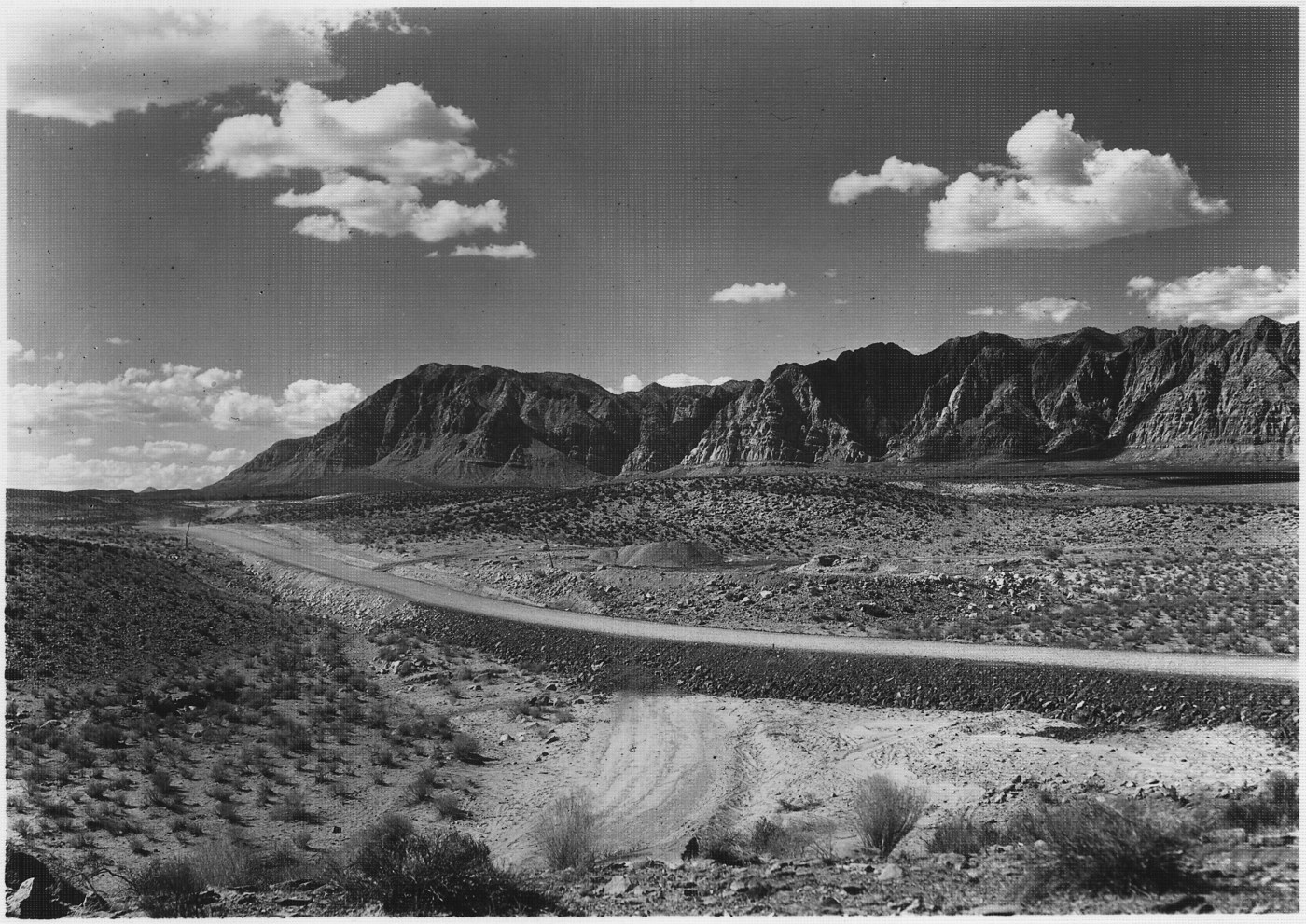
The attached photo, which was taken in 1929 by George A. Grant (1891-1964), depicts a section of U.S. Highway 91 that is about five miles (8.1 kilometers) west of the town of Santa Clara, Utah. This highway was built along the corridor of the auto trail known as the Arrowhead Trail.
Photo Credit: Public Domain
For more information on the origins of the U.S. Numbered Highway System, please check out https://www.fhwa.dot.gov/infrastructure/numbers.cfm


Leave a Reply