October 2, 2018
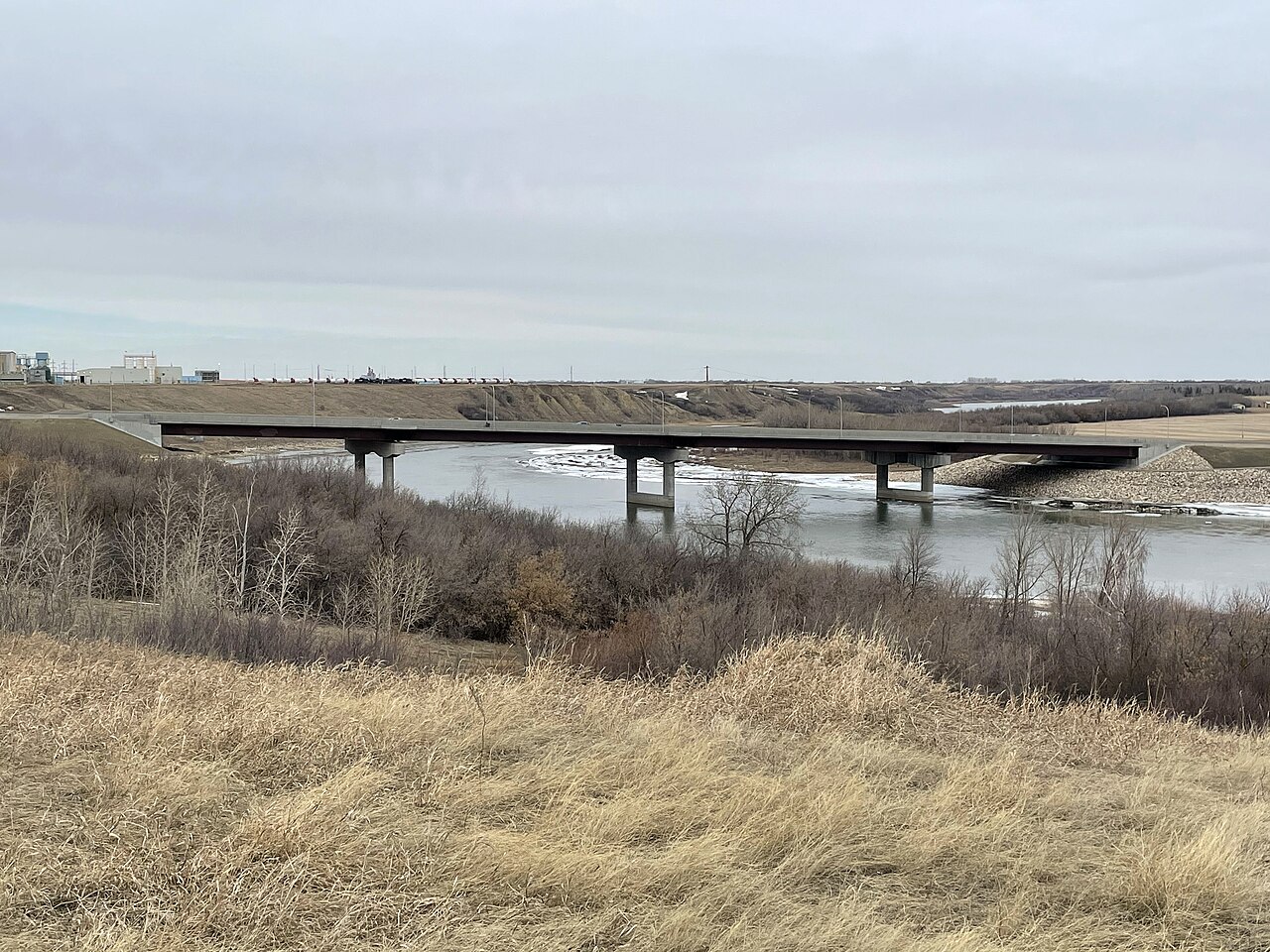
In the Canadian province of Saskatchewan, a girder bridge in the city of Saskatoon. This bridge, which crosses the South Saskatchewan River, carries six lanes of McOrmond Drive and two multi-use paths.
Originally called the North Commuter Parkway Bridge prior to its completion, this structure was renamed after a local 19th century leader of the indigenous First Nations people known as the Plains Cree. Chief Mistawasis, focused on the ultimate survival of his people and their culture during a turbulent era, became the first signatory of the agreement formally identified as Treaty 6 and ratified in 1876.
This treaty between Great Britain’s Queen Victoria (as the reigning monarch of Canada) and the Plains Cree as well as various other First Nations peoples was drawn up to help settle jurisdictional challenges within that part of the vast area known at the time as Canada’s North-West Territories. (Saskatchewan became a province in 1905.)
The Tuesday morning dedication ceremony for the bridge bearing Chief Mistawasis’ name was held not only to celebrate his life but also honor the history of all indigenous peoples in the region. The event was also used to highlight one of the darkest chapters in Canadian history, namely the forcible removal of more than 150,000 indigenous children from their families between the 1880s and 1990s. Those children were placed in residential schools, where they were often subjected to severe physical and emotional abuse.
Chief Darryl Watson of Mistawasis Nêhiyawak, a Cree First Nation band government named after Chief Mistawasis, addressed that grim legacy while speaking to the hundreds of people gathered at the new bridge. “This is just a small step, ladies and gentlemen, toward true reconciliation,” he said to those in attendance.
The next day’s edition of the Saskatoon-based Star-Phoenix also placed a spotlight on someone else at the Chief Mistawasis Bridge that morning. This newspaper stated, “Residential school survivor Frank Badger said some of the pride, self-esteem and dignity that was taken from him by the brutal treatment during his school years decades ago was restored with the opening of the bridge.”
The Star-Phoenix also reported on other notable moments that marked the opening of the Mistawasis Bridge. “Chiefs arrived on horseback from the east end of the bridge, followed by a horse-drawn cart carrying Saskatoon Mayor Charlie Clark and other chiefs and elders,” noted this newspaper. “After an Indigenous prayer, colorful dancers put on a swirling show with a victory dance.”
The newspaper further stated, “Speakers standing on a stage set up on the west side of the bridge also noted the amazing views of the South Saskatchewan River valley from the new bridge.” The other public officials in attendance included Scott Moe, premier of Saskatchewan. He remarked, “Even on a cold, early fall October day, this is a beautiful place.”
The Chief Mistawasis Bridge has a total length of 890 feet (270 meters). With a height of 71 feet (21.6 meters) above the water, it is the second tallest bridge in Saskatchewan’s largest city. (The accompanying photo of the Chief Mistawasis Bridge was taken in 2021.)
Photo Credit: Drm301 (https://commons.wikimedia.org/wiki/User:Drm310) – licensed under the Creative Commons Attribution-Share Alike 4.0 International license at https://creativecommons.org/licenses/by-sa/4.0/deed.en
A list of bridges in Canada is available at https://en.wikipedia.org/wiki/List_of_bridges_in_Canada


Leave a Reply