In April 1925, the first full-fledged meeting of the Joint Board on Interstate Highways took place at the headquarters of the U.S. Bureau of Public Roads (BPR) in Washington, D.C. This board, which was chaired by BPR’s chief Thomas H. MacDonald (1881-1957), had been established just a few weeks earlier to work on devising what ultimately became the U.S. Numbered Highway System.
One of the major decisions made at this gathering in the nation’s capital involved scheduling a series of regional meetings across the country whereby designated state highway officials could weigh in on the potential routes for the new highway system. Edward Warley (E.W.) James (1877-1967), who served as both the chief of the BPR Division of Design and the board’s secretary, was the person at the meeting in Washington who recommended having those regional meetings.
James pointed out to his fellow attendees that a cross-section of such meetings had been held a few years earlier in preparation for hammering out what was eventually enacted as the Federal-Aid Highway Act of 1921, a far-reaching law that further strengthened federal participation in the state-level construction of highways.
In the report of the Joint Board on Interstate Highways that he submitted to his boss William Jardine (1879-1955), secretary of the U.S. Department of Agriculture (USDA), on October 30, 1925, MacDonald addressed what he characterized as “a series of Group Meetings to which all States were to be invited to send official representatives authorized to act for the State in designating a tentative system of interstate routes of major importance.”
MacDonald went on to note in this report, which was formally approved by Jardine on November 18, that “there was available through the several state highway departments and in the Bureau of Public Roads a large amount of information available to all States and to the Board in assisting them to arrive at definite conclusions regarding the respective merits of roads or routes under consideration.”
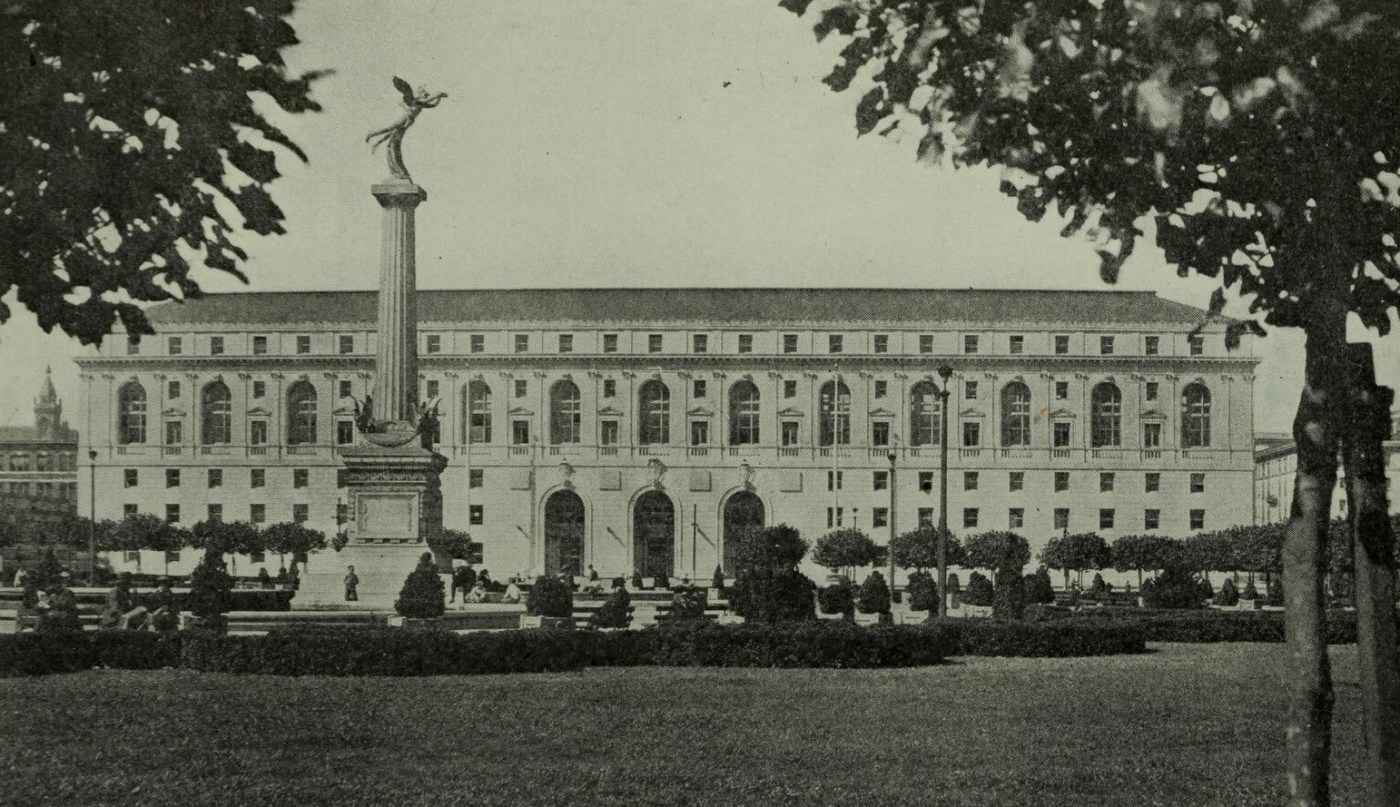
The first of these regional meetings took place in San Francisco starting on May 15, 1925. This meeting was specifically held in the California State Building, which has since been renamed the Earl Warren Building. (The accompanying postcard image of this building was created in 1924.)
Coincidentally or not, it was at the annual meeting of the American Association of State Highway Officials (AASHO) in San Francisco the previous year that the association had approved a resolution calling on then-USDA Secretary Howard M. Gore (1877-1947) “to appoint a joint board to be composed of members of the Bureau of Public Roads and of the State highway departments to cooperate in formulating and promulgating a system of numbering and marking highways of interstate character.”
James attended the May 15-16 meeting, and so did the following board members from four of the 11 western states for which this meeting was held:
- Preston G. Peterson (1884-1945), chairman of the Utah State Road Commission;
- Roy A. Klein (1885-1971), state highway engineer of the Oregon State Highway Commission;
- Robert M. Morton (1885-1969), state highway engineer of the California Highway Commission; and
- James A. French (1866-1926), state highway engineer of the New Mexico State Highway Commission.
Highway officials from three of the other seven western states were present at the meeting by invitation. These individuals were:
- LeRoy E. Laird (1874-1955), superintendent of the Wyoming State Highway Commission;
- William C. Lefebvre (1887-1965), state engineer for the Arizona State Highway Department; and
- George W. Borden (1881-1946), state highway engineer for the Nevada State Department of Highways.
The remaining four western states – Colorado, Idaho, Montana, and Washington – were represented at the meeting via mail rather than in person. These states submitted letters and maps for the board’s review and records.
The previous day’s edition of the California-based Calexico Chronicle highlighted this imminent meeting and the nationwide road challenges that seemingly had made it inevitable in the first place. This article reported, “There has been a feeling among highway officials for some time that a remedy should be found for the present confused situation in respect to interstate needs.” The Calexico Chronicle further recounted, “Information of was presented at the recent meeting of the joint board at Washington showing that overlapping of named routes is common.”
The report that MacDonald submitted to Jardine later that year provided the following rosy assessment of the first of the regional meetings: “The regular work of the meeting was carried on expeditiously and in entire harmony, and the selection of the major routes was done almost without any difference of opinion.”
This report, however, also included this statement in reference to what was described as “a very strong tendency” among the states represented to want to add even more routes: “All necessary adjustments on the major routes were at once made and the only feature of the work which will require serious review is the elimination of routes within the States of the group which were added after the interstate connections were practically agreed upon.”
During the meeting, attendees also heard from representatives of the Automobile Club of Southern California and the California State Automobile Association (based in the northern area of the Golden State) about their concerns involving possible signage on the proposed U.S. numbered highways. The board’s report confirmed that each of those organizations “agreed to file briefs covering completely certain aspects of their work which might be affected by the standardization of signs and markers on the interstate highways. There was no discussion whatever with these gentlemen and their statements were accepted as submitted.”
In its article about the meeting, the May 16 edition of the California-based Redlands Daily Facts focused in large part on the system’s potential impact on the states along the Pacific coast. This newspaper reported from San Francisco, “Two interstate routes north and south and the initial sections of three eastbound interstate routes and three from Washington and Oregon were the tentative decision of the highway conference of eleven states ending here today.”
In the final section of the article, the Redlands Daily Facts cited at least one of the key tasks with respect to proposed routes that would be addressed by the board at its next regional meeting: “Eastbound routes from California pass through [the California town of] Truckee, [California city of] Barstow and [Arizona city of] Yuma, carried across the adjacent states to make connections with routes to be selected at a Mississippi Valley joint board meeting in Kansas City May 27.”
Image Credit: Public Domain
For more information on the regional meeting of the Joint Board on Interstate Highways in San Francisco, please check out https://en.wikisource.org/wiki/Report_of_Joint_Board_on_Interstate_Highways_October_30,_1925 and https://www.fhwa.dot.gov/infrastructure/numbers.cfm


Leave a Reply