About three-and-a-half months after their first full meeting was held in Washington, D.C., members of the Joint Board on Interstate Highways reconvened in the nation’s capital to assess and address the next crucial steps for shaping a coast-to-coast uniform highway system.
This gathering of federal and state highway officials took place at the office of the U.S. Bureau of Public Roads (BPR), which was located at this time on 14th Street in the northwest part of the city, and it occurred in the wake of six regional meetings that had been held in major cities across the country to receive recommendations from the states for proposed routes and various other components of an unprecedented nationwide network of roads.
The meeting began on the morning of August 3, 1925. The only board member who did not attend this meeting was Frederick Stuart Greene (1870-1938), the superintendent of public works for New York. Edward Warley (E.W.) James (1877-1967), who wore two hats as the chief of the BPR Division of Design and the board’ secretary, served as the meeting’s acting chairman. He had the distinction of being the only person to attend each of the regional meetings.
The Associated Press (AP) reported, “The members today reviewed a mass of information obtained at regional meetings throughout the country and divided into committees to study particular routes.” These committees were formed along the lines of groups represented at the respective regional meetings and, by that afternoon, they had completed most of their work on proposed revisions to routes for the future highway system. Following up on a suggestion made by James, the members agreed to postpone any decisions on these recommended changes until BPR employees had created a map including those possible changes.
One of the other pivotal decisions made by the board on that first day was the unanimous approval of a motion by William Otis Hotchkiss (1878-1954), chairman of the Wisconsin State Highway Commission, that new highway system should be numbered rather than named.
In another significant action, the members approved the motion of Oklahoma Department of Highways chairman Cyrus Avery (1871-1963) to adopt the proposed uniform shield for the entire system. This shield had been doodled by Frank F. Rogers (1858-1942), Michigan state highway commissioner and president of the American Association of State Highway Officials (AASHO), and modified by James at the board meeting in April. On the second day of the August meeting, the board approved a motion made by California Highway Commission state highway engineer Robert M. Morton (1885-1969) to adopt a version of the shield that would include not only “U.S.” but also the applicable route number and state where each shield would be located.
Another major development at this meeting involved the board’s adoption of recommendations for various other signs and markers for the new system. These recommendations were made by a committee that consisted of James, Rogers, and the Indiana State Highway Commission’s maintenance superintendent Albert Harrison Hinkle (1880-1951).
On August 4, as a follow-up on what had been agreed upon the previous day, board members received and reviewed a map of the proposed system that included newly amended routes. Other than requesting a few additions to this map, attendees generally concurred with the revisions.
The following members were appointed as group chairmen who would transmit copies of that map to the states in their respective regions:
- WESTERN GROUP: Preston G. Peterson (1884-1945, chairman of the Utahn State Road Commission;
- MISSISSIPPI VALLEY GROUP: Bion Harmon Piepmeier (1885-1974), chief engineer for the Missouri Highway Commission;
- LAKES GROUP: Frank T. Sheets (1890-1951), chief engineer of the Illinois Highway Department;
- SOUTHERN GROUP: Herbert C. Dietzer (1887-1955), state highway engineer for the Mississippi State Highway Commission;
- NORTH ATLANTIC GROUP: William G. Sloan (1875-1960), New Jersey state highway engineer; and
- NEW ENGLAND GROUP: William F. Williams (1859-1929), Massachusetts commissioner of public works.
In another action taken on the second and final day of this meeting, the board directed James to establish a committee that would assign numbers to each of the system’s routes. AP reported, “The actual grouping of these roads into main arterial highways was abandoned today by the full [board], and was turned over to a [committee], which, after making tentative designations, will submit recommendations to the various States for approval.”
AP further noted, “The exact routing of the main highways will not be determined until the [committee] makes its recommendations to the various State highway officials, who will have the power to make minor changes.”
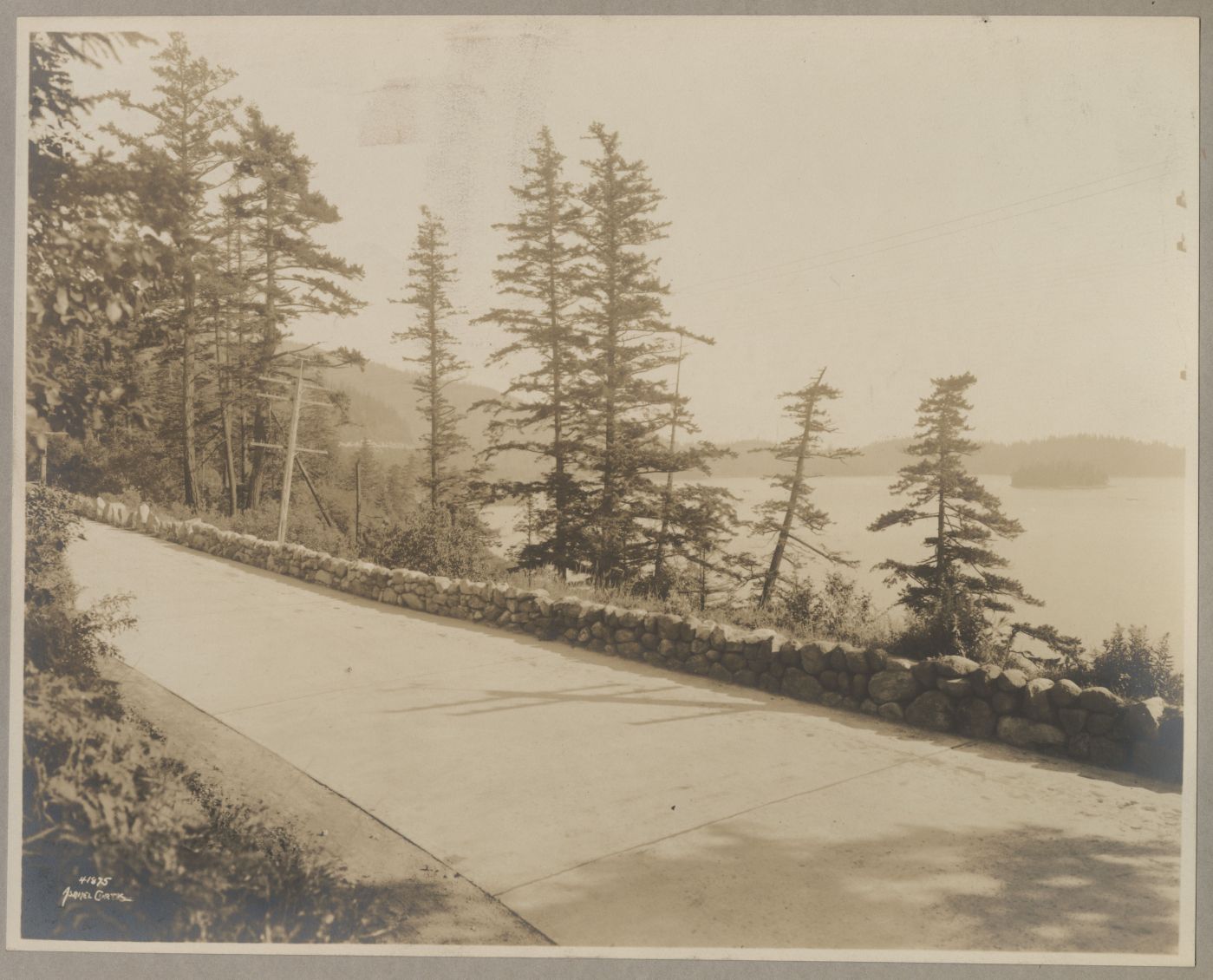
In all these ways and others, the second full-fledged meeting of the board charted a considerably clearer-than-before course for bringing about what ultimately became the U.S. Numbered Highway System. (The accompanying photo of a road in Maine was taken sometime around 1925.)
Photo Credit: Public Domain
For more information on the August 1925 meeting of the Joint Board on Interstate Highways, please check out https://en.wikisource.org/wiki/Report_of_Joint_Board_on_Interstate_Highways_October_30,_1925 and https://www.fhwa.dot.gov/infrastructure/numbers.cfm#a8


Leave a Reply